Trip Guide

Trip Guide: Sardinia East Coast Hike Adventure

Ready to hike Sardinia’s east coast where ancient shepherd trails meet turquoise Mediterranean waters? This guide covers everything you need to show up confident and prepared for six nights of coastal hiking, wild camping, and beach hopping along the Gulf of Orosei.

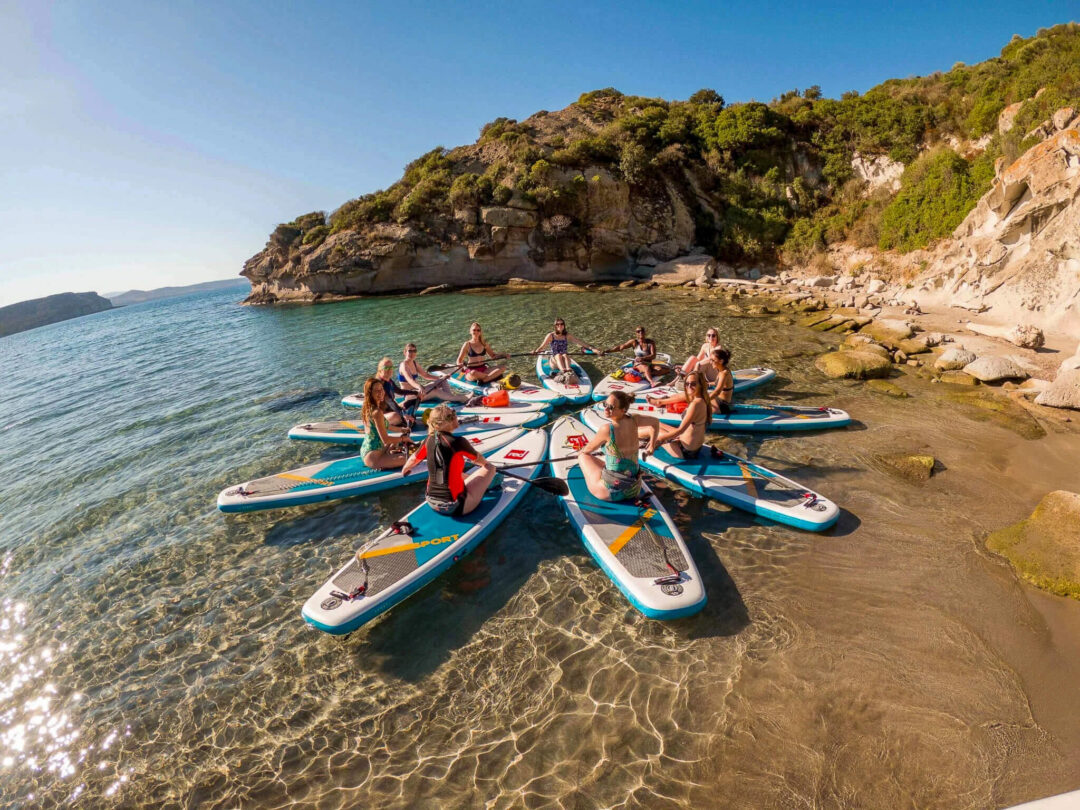
You’ll trek paths through protected wilderness, camp on beaches that tourists can’t reach by road, and swim in hidden coves with caves cut into limestone cliffs. For three nights you’ll sleep under stars, including one unique night camping in a sea cave.

Here’s what you need to know.

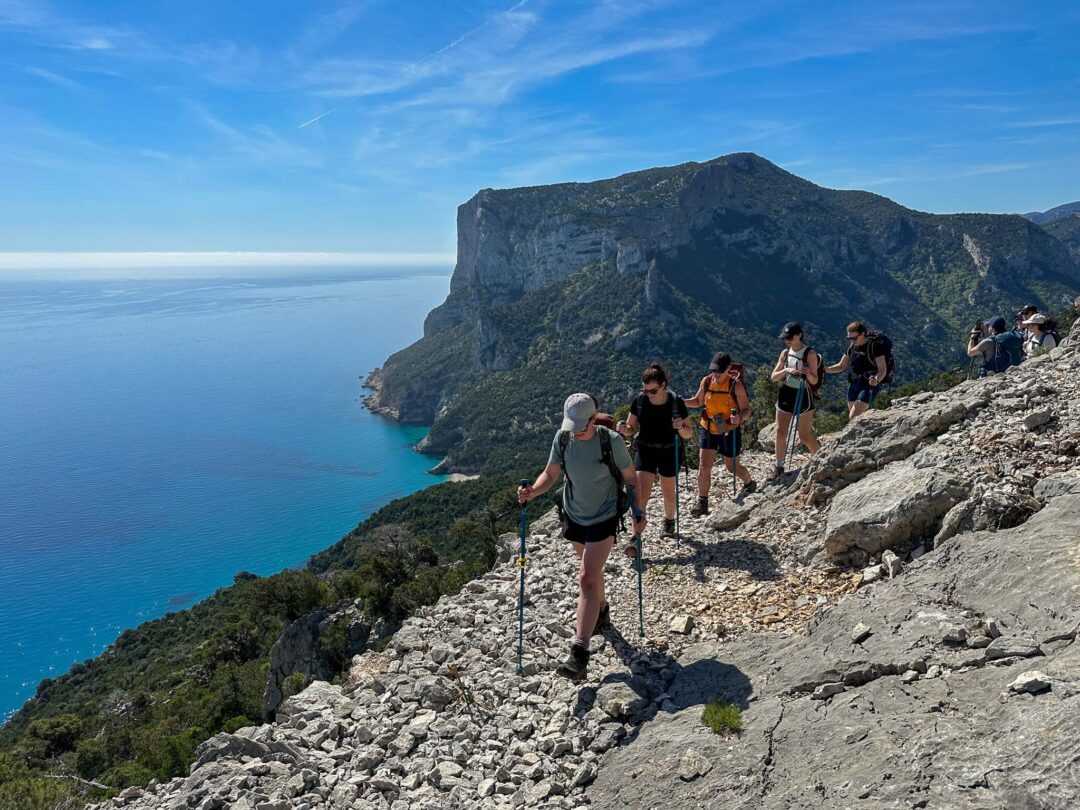
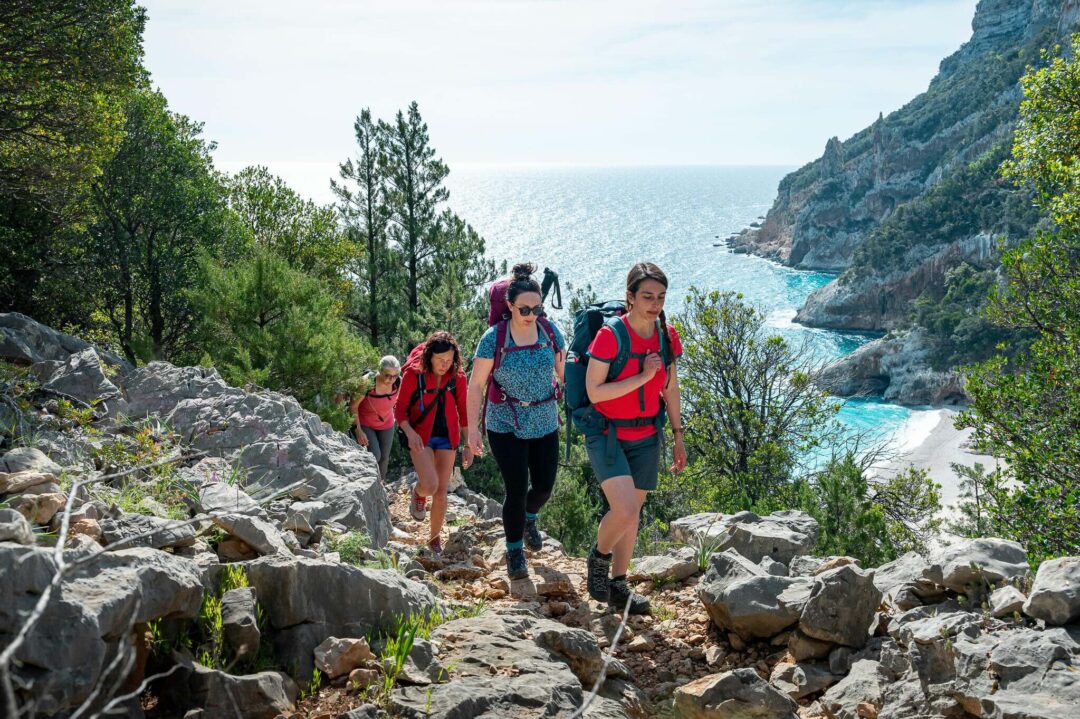
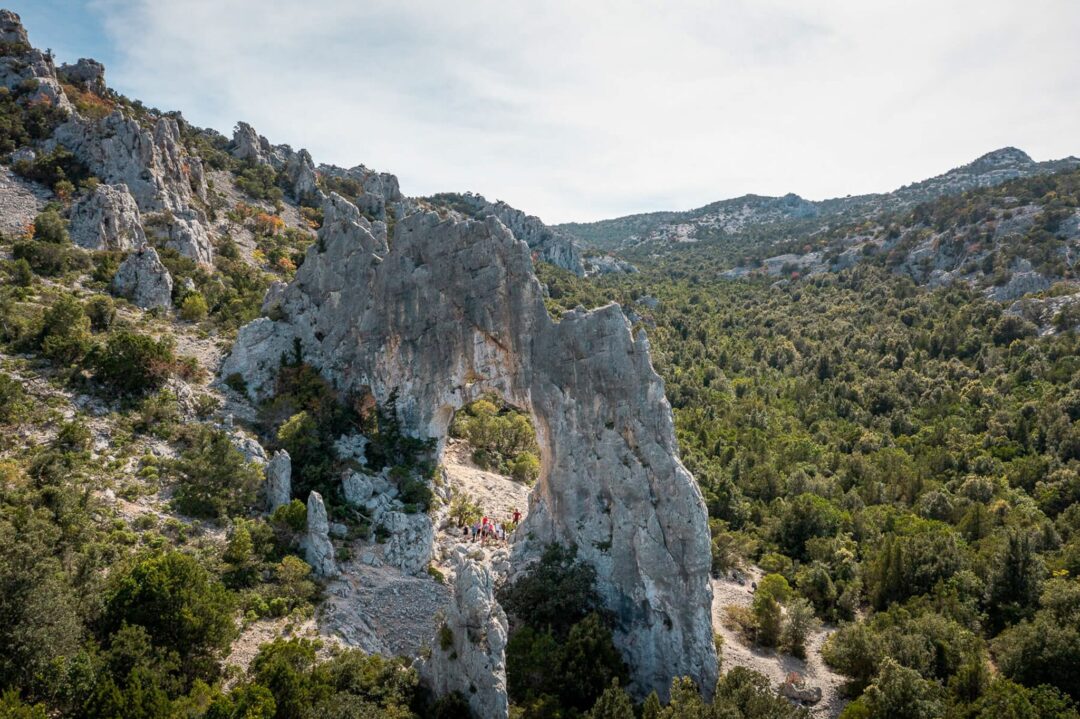
Rocky hike trail along Sardinia’s east coast cliffs and pine forest valleys
Women hiking along a rocky coastal trail on Sardinia’s east coast with cliff and sea views

Getting There

Getting to Sardinia’s east coast is straightforward. Most people fly into Olbia Airport (OLB) in the northeast of the island. From there, it’s approximately 2.5 hours drive south through Sardinian countryside and along coastal roads to reach the Golgo Plateau, our starting point.

We’ll pick you up from Olbia Airport and drop you back at the end of the trip on our set time, group transfer.

Which flights should I book?

Look for flights landing in Olbia by early afternoon to make our group pickup. For departure, book afternoon flights from Olbia. Full details of transfer times are available in your customer portal after booking.  Direct flights are available from London, or connections through Rome or Milan. Airlines like EasyJet Jet2, British Airways and Ryanair fly this route regularly.

Suggested Flights
  • LGW – OLB -12:55 – 16:35 | EZY8345
  • OLB – LGW – 10:30 – 11:55 | EZY8348
Group Transfers
  • Arrival Day: Pick up at Olbia Airport at 17:35
  • Departure Day: Pick up at Olbia Airport at 8:30

Can I fly into a different airport?

Olbia is recommended as its closest. Both Cagliari (CAG) and Alghero (AHO) airport are over a 2hr 30 min drive and would require a private transfer. This can be booked with our Booking Team.

What if I want to arrive early or stay later?

Go for it. Sardinia is beautiful and it’s well worth spending some extra time there to explore.

What happens if my flight is delayed?

If you’re delayed, you’ll need to arrange transport to meet the group at the refuge – our group transfers run on schedule and can’t wait. Your host and our bookings team will help where possible. This is why travel insurance covering delays and missed connections is mandatory.

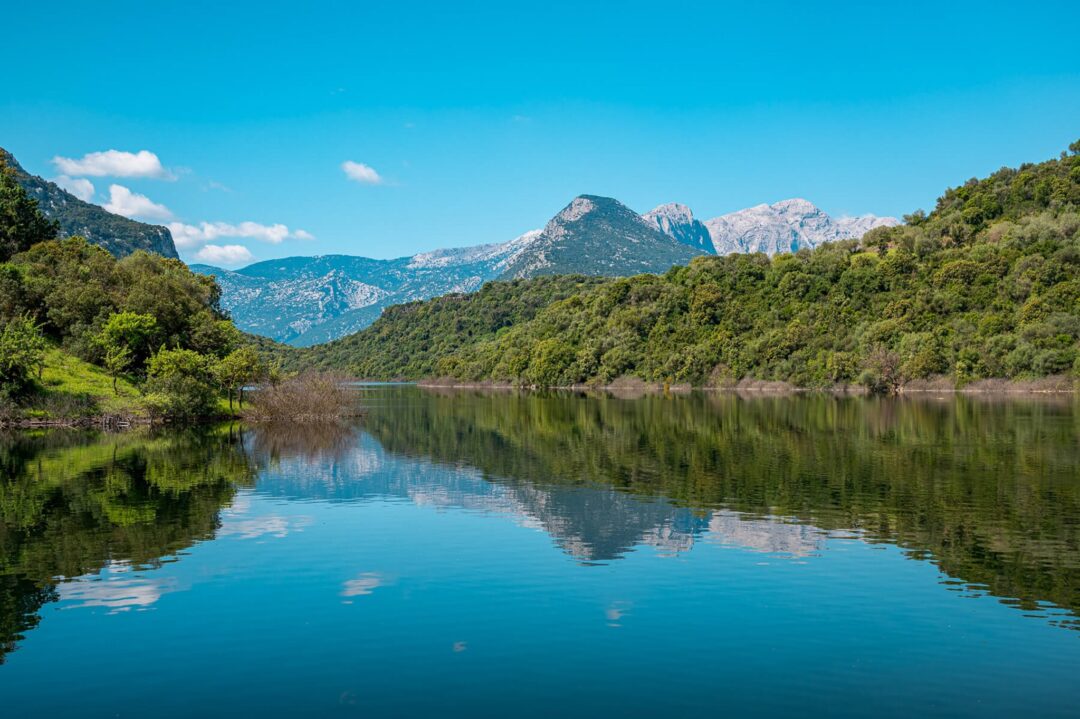
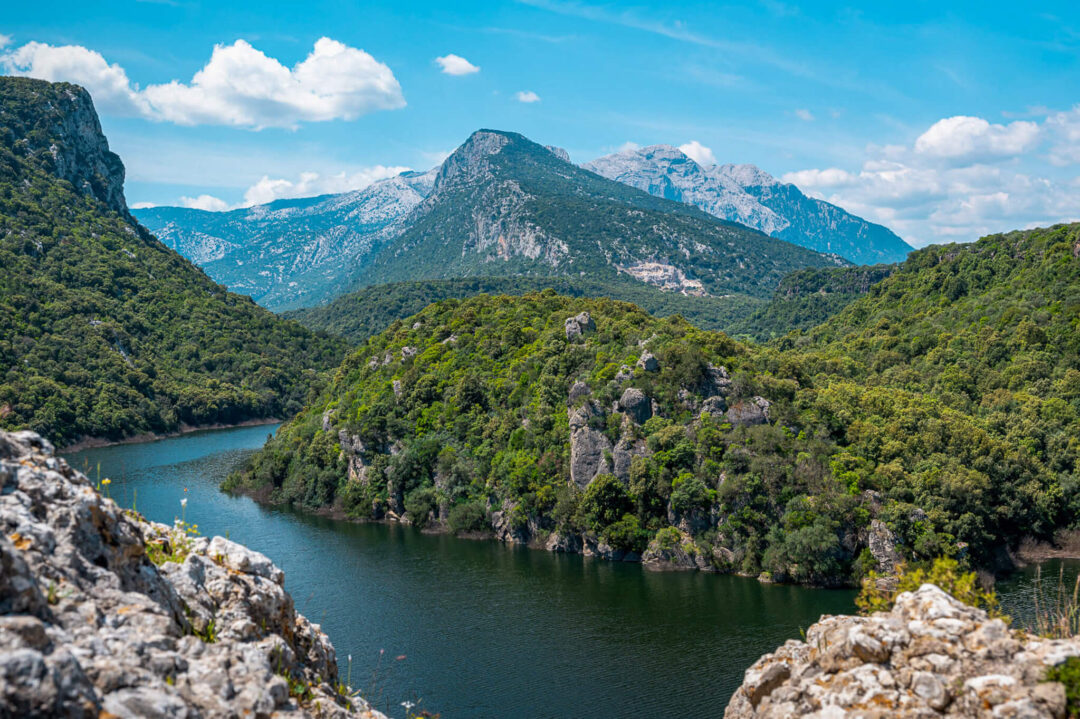
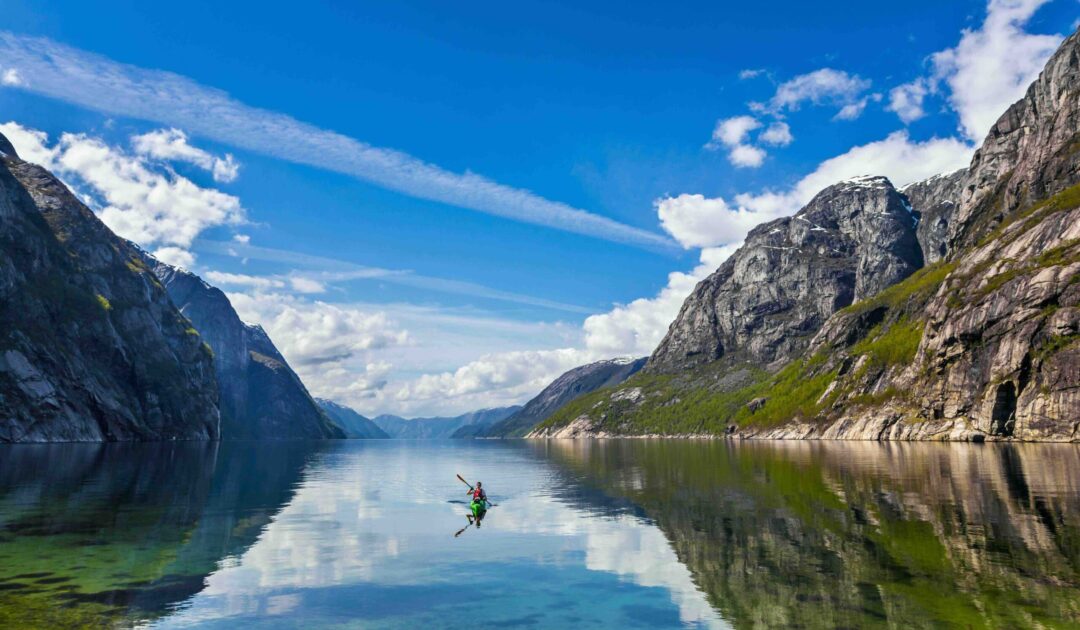
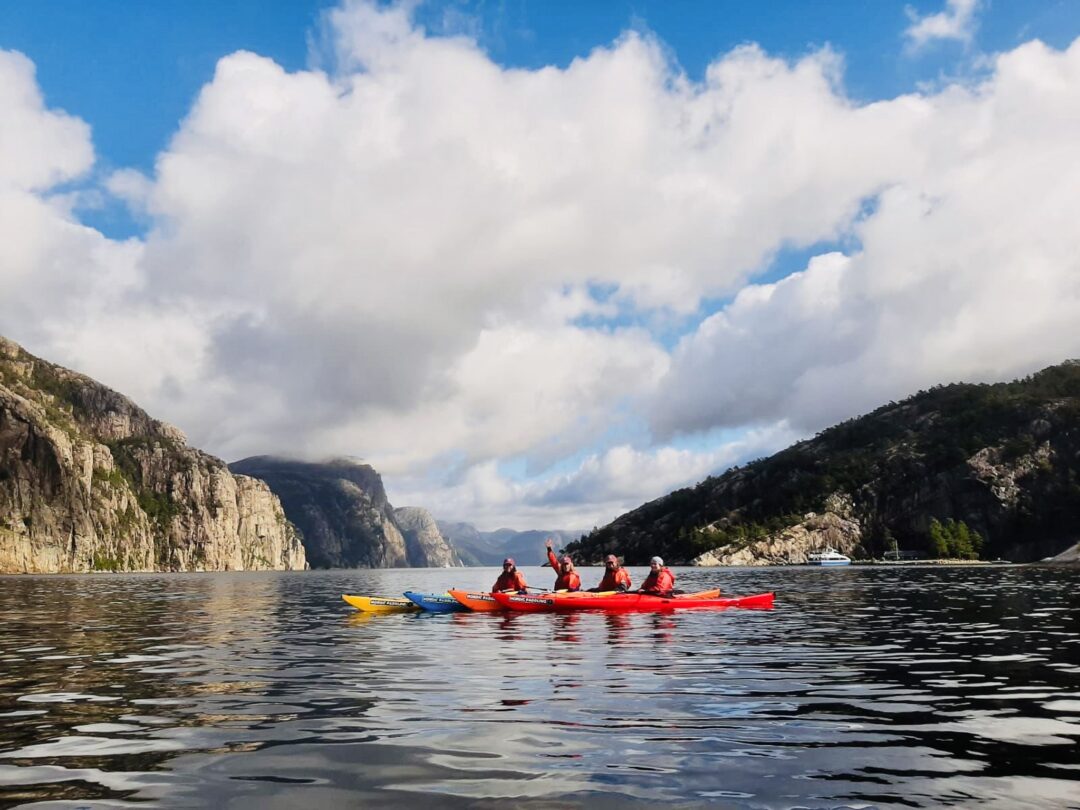
Sardinia east coast coastal hike view over a calm lake with mountains and blue sky

Fitness & Skill Level

This trip is rated as challenging – you’ll be active for 5-6 hours daily, but although you won’t be carrying your kit, you’ll be dealing with uneven terrain, elevation gain, consecutive active days and hiking under Mediterranean sun.

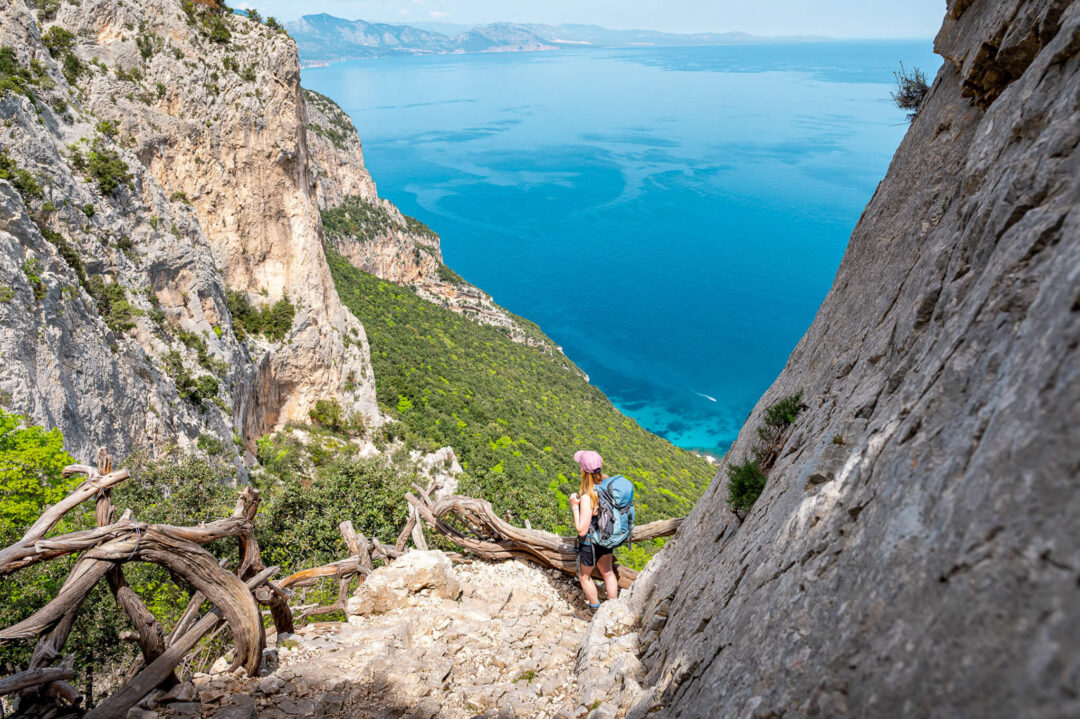
These are hikes with technical footing rather than distance challenges. You’ll cover up to 15km daily (distances vary), navigating ancient paths that can be overgrown, rocky, and occasionally steep. Some sections also require climbing ancient staircases built by shepherds or walking along exposed edges, so a head for heights is really important.

You need decent baseline fitness. If you regularly do long walks and hikes, tackle hills and maintain an active lifestyle, you’ll manage fine. The heat and terrain make it more demanding than a flat 10km walk at home though.

Consecutive days matter more than individual hike difficulty. By day four, your legs will feel it.

Experience Requirements

No multi-day hiking experience is necessary, but you should be comfortable with walking on uneven terrain and not concerned about narrow clifftop paths. You’ll be hiking with a daypack only (your luggage is transferred), which makes it significantly easier. This is also a great chance to try out wild camping as part of your hiking adventure.

Accommodation considerations

Accommodation is varied; from a refuge with triple rooms shared with other Gutsy Girls) and camping in your own tent, to shared rooms at a hotel with beach views. Some nights are properly off-grid with basic facilities, so if you need constant creature comforts every night, choose a different trip.

Camping gear is provided (tent, sleeping mat, pillow). You just need to bring a sleeping bag. You’ll carry your essentials in a daypack, and you’ll need to be comfortable camping in rustic conditions.

I'm worried I'm not fit enough - how can I prepare?

Start now with regular cardio and longer walks with elevation. Find hills or do stair training 2-3 times per week too to build strength and endurance. The fitter you arrive, the more you’ll enjoy it. Swimming is good cross-training for this trip.

What does a typical hiking day look like?

Breakfast around 8am, pack daypacks, start hiking 9-10am. Hike, long lunch stop 1-1.5 hours at a beach or scenic spot, continue hiking throughout the afternoon, arrive at accommodation late afternoon. Dinner around 7-8pm. Some days include boat transfers to reach remote beaches.

Will there be time to swim?

Absolutely, you’re hiking to beaches, so there will be swimming stops in the Mediterranean during hikes and free time at camp spots – don’t forget to bring your swimsuit in your daypack!

Can I opt out of activities if I'm tired?

The trip is structured as a multi-day coastal trek, so although you can take a slower pace and rest during the breaks, on some days once you’re out you’ll need to keep going to reach each night’s accommodation. There’s also no road access to some locations.
What if the weather is bad?

Sardinia in summer typically has minimal rain. If weather genuinely affects safety, your guides will adjust plans. You’ll still get all included experiences, just potentially in different order. Mediterranean storms are brief, but pack a lightweight rain jacket just in case.

How heavy will my daypack be?

You’ll carry water (2-3 litres), snacks, layers, sun protection, and personal items. Expect 5-7kg depending on how much water you carry. For the camping section of the trip you won’t need to carry your possessions or tent. Instead you’ll pack your essentials in a duffel bag (provided) that we’ll transport to the next location for you every evening, along with your tent. Any of your remaining kit not needed on the camp will be transported from your first accommodation to your last.

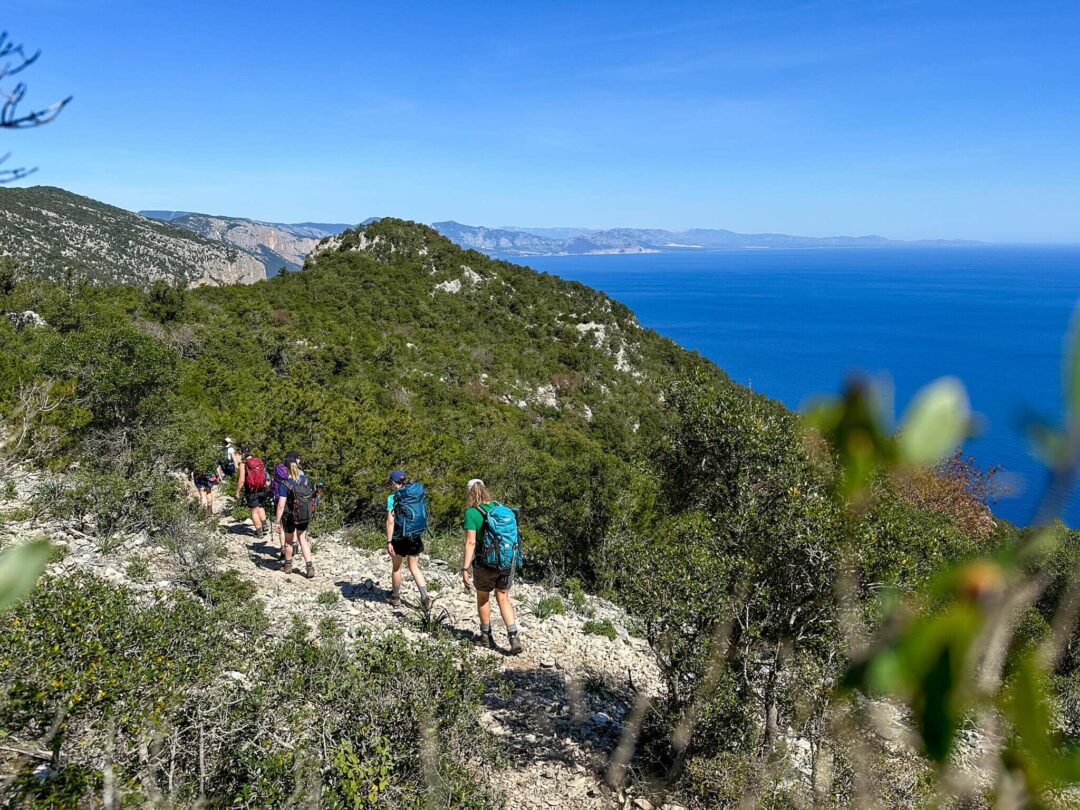
Women hike along a coastal trail with sea views across a Mediterranean hillside landscape

Sleep & Eat

This trip features varied accommodation that reflects the coastal trekking adventure.

Night 1-2: Hikers’ Refuge Simple, clean refuge on the Golgo Plateau where many hikers start multi-day treks. You’ll stay in triple rooms with basic facilities – think rustic charm, not luxury. Hot showers are available though, as well as WiFi.

Night 3-5: Camping Three nights under stars at stunning beach locations. Two nights are at organized campsites near the beach with toilet and shower access, however one night will be wild camping with no nearby toilet and definitely no showers.
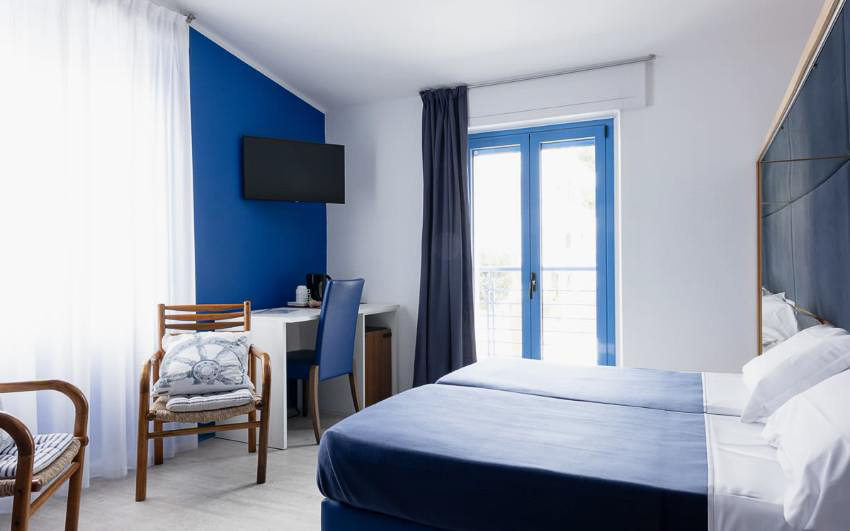
Night 6: Beachfront hotel Finish the trip with a stay at a beautiful beachfront hotel in a small seaside town. For your final night you’ll sleep in comfortable rooms with proper facilities.

Food

All meals are included, from dinner on arrival (Day 1) to lunch on departure (Day 7). Expect traditional Italian cuisine designed to fuel active days – pasta, fresh bread, local meats and cheeses, seasonal vegetables, and of course, gelato stops.

Breakfasts are hearty, lunches eaten at scenic spots and dinners full of regional dishes. Some evenings you’ll also eat at local restaurants.

What's the refuge actually like?

Basic but comfortable with triple rooms, shared bathrooms, hot showers, and a communal dining area. It’s clean, functional and perfect for hikers who prioritize location and adventure over amenities.

Do I have to share a tent?

No, every guest will have their own tent on the trip. This will be dropped off by the team at your next location, so you don’t have to worry about carrying it with you all day.

What if I've never camped before?

No problem, it’s all part of the adventure. You’ll be shown how to pitch your tent on the first night and guides are on hand to help. You’ll be camping at some of Sardinia’s most beautiful beaches, so the location makes the basic facilities worth it.

Can you cater for dietary requirements?

We can cater for vegetarian, gluten-free, and dairy-free diets, as well as certain allergies, but options will be more limited than you’re used to. Unfortunately we can’t cater for vegans on this trip – Sardinian cuisine is built on cheese, meat, and dairy.

If you’ve got specific needs and want an honest chat about what’s realistic, get in touch before booking. We’d rather talk it through now than have you disappointed (and hungry) later.

Is there WiFi?

There’s WiFi when you’re in civilization. Data may work in certain sections on the hike, but will be patchy or non-existent when you’re camping on remote beaches or hiking along cliff lines.

What are the shower facilities like when camping?

For two nights you’ll have basic but functional (although possibly not heated) showers. On the night you wild camp in the cave, there are no showers but you can rinse off in the sea. You’ll be roughing it, but that’s how you access these incredible locations that tourists can’t reach.

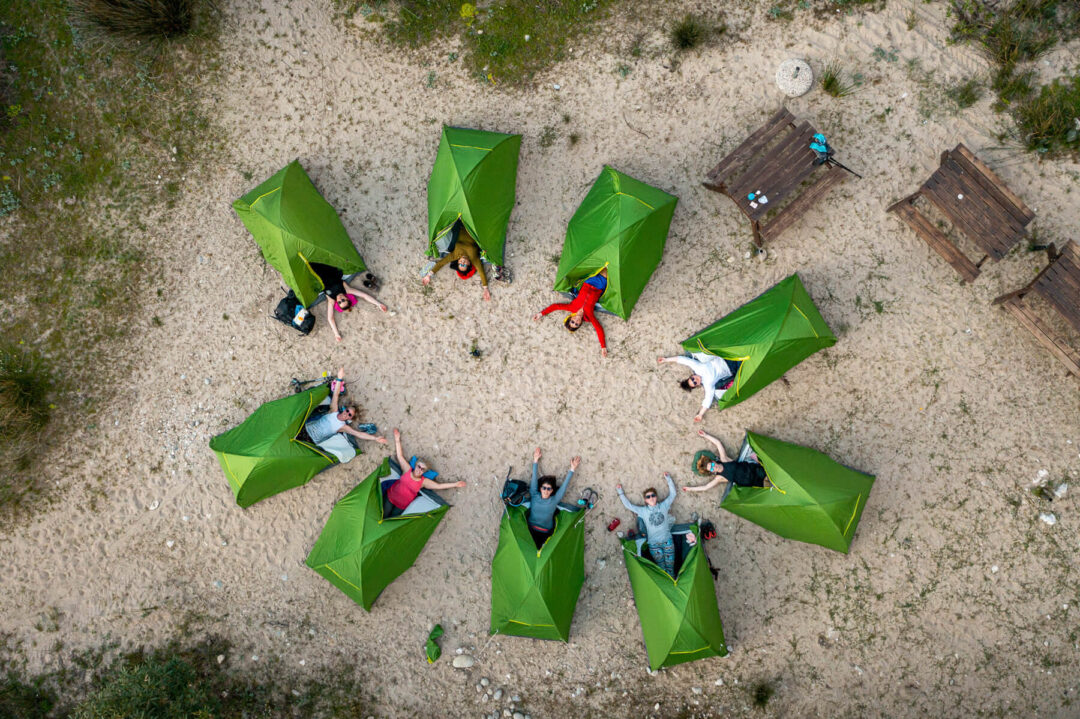
Women gathered around green tents on a sandy coastal campsite, outdoors adventure hike setting
Bright hotel bedroom with a double bed, blue window frame, and TV on the wall

Weather

Sardinia in summer means a Mediterranean climate – hot, dry, and sunny. Expect temperatures of 25-32°C (77-90°F) during hiking season (May through October). Strong sun, minimal rain, but coastal winds can provide relief. September and October offer slightly milder temperatures (22-28°C) and possibly autumn storms.

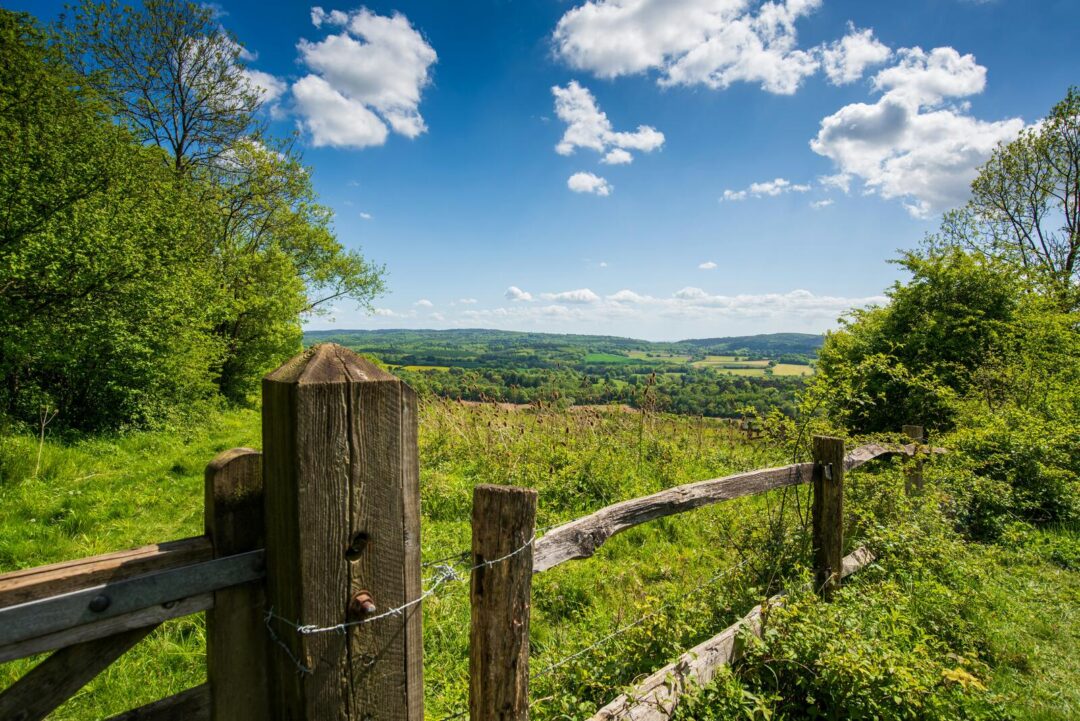
The terrain varies from rocky coastal paths to ancient shepherd trails through dense Mediterranean vegetation. You’ll hike along cliff tops with sea views, through forests, and down to secluded beaches.

Pack for heat: sun protection is essential even if it doesn’t feel as hot – if the sun is out, sunblock should be on. Heat exhaustion is also real, so our guides monitor water intake and pace the group accordingly.

What's the best time to go?

May-June and September-October offer milder temperatures (22-28°C) and fewer tourists. July-August are the hottest and busiest months (28-32°C), but also when the Mediterranean is warmest for swimming. All months are dry with minimal rain.

What if there's rain?

Mediterranean rain is rare and storms are usually brief in between June – October. If weather genuinely affects safety, your guides will adjust plans accordingly. Pack a lightweight rain jacket, but you’ll likely never need it. Sardinia is one of Europe’s driest regions in summer.

Does weather affect the boat transfer?

Sea conditions could affect boat transfers between beaches, but there are always alternative hiking routes. Guides have backup plans for all activities.

Turquoise river winding through forested mountains under a blue sky in East Sardinia

Good to Know

Money: Budget €50-100 for the week for drinks outside meals, extra gelato (you’ll want it), and souvenirs. Most places accept cards, but bring some cash for smaller vendors. The town on your final stop has ATMs.

Tipping: Tipping is not compulsory on our adventures, but if you’ve had a great trip and brilliant service, a tip for your guide or host is always appreciated. We recommend giving €20-€30, or whatever you can or feel is the right amount.

Communication: WiFi is available in the refuge and hotel, but (unsurprisingly) nonexistent while camping. Phone coverage varies – good in the towns, spotty in the countryside and on remote beaches.

Do I need travel insurance?

Yes, this is mandatory for all Gutsy Girls trips. We always advise that you buy it as soon as you book, not just before you’re due to travel. Your policy must cover: travel delays, trip cancellation, medical emergencies and evacuation, baggage loss, and all activities including hiking and wild camping

What if I get injured while hiking?

Tell your guide immediately. Guides carry first aid kits and have emergency protocols, so if you can be treated on the trail you will be, otherwise we can get you to the nearest hospital. Your travel insurance should cover medical treatment and emergency evacuation.

How many guests on this trip?

Max 7 guests.

Why aren't all guides and instructors female?

We work with the best guides available, male or female. There are fewer women in outdoor guiding roles, so we prioritise expertise and guest experience. We vet every guide carefully and monitor feedback closely to ensure all guides align with our ethos and standards. We also hope more trips like ours encourage more women to find new activities and become guides themselves.

Women hiking along a steep coastal cliff, overlooking turquoise sea during a coastal adventure hike
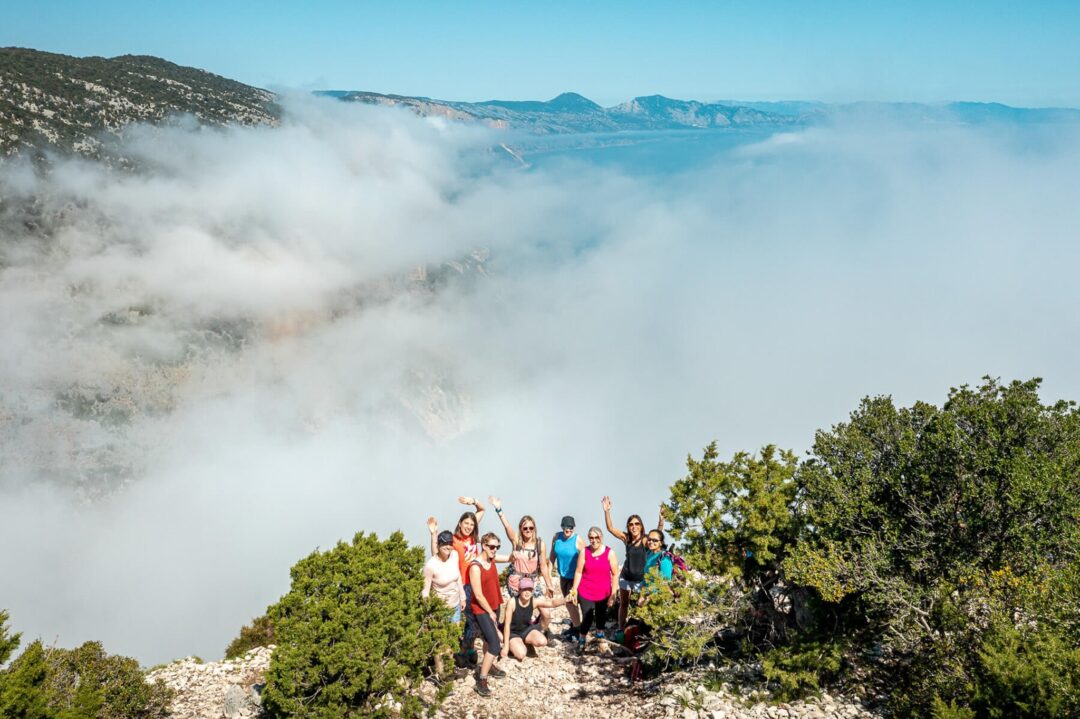
Women hikers stand on a rocky ridge above sea fog on a mountain trail in coastal scenery

Packing List

What We Provide

    • Tent
    • Sleeping mat
    • Hiking poles
    • Small duffel bag for your essentials whilst camping.

What You Need to Bring

Essential Hiking and Camping Gear:

    • Hiking boots with good grip and ankle support – Mandatory for safety
    • 20-30 litre daypack for carrying water, food, layers
    • 2-3 litre water capacity (bottles or hydration bladder)
    • Electrolytes (optional but recommended in heat)
    • Sleeping bag (2-3 seasons)
    • Camping pillow (optional)

Clothing:

    • Lightweight, fast-drying hiking clothes (leggings or hiking trousers, wicking t-shirts)
    • Long-sleeve top and trousers to protect from sun and bushes
    • Hiking shorts (optional)
    • Layers for temperature changes (fleece or light jumper for cool evenings)
    • Swimwear (you’ll want this for beach stops)
    • Sun hat – essential
    • Underwear and socks (bring extras)
    • Comfortable shoes for evenings at camp/accommodation
    • Sun & Weather Protection:
    • High factor sunscreen
    • Sunglasses
    • Lightweight rain jacket (just in case)

Personal Kit:

    • Head torch (essential for camping)
    • Personal toiletries
    • Quick-dry towel
    • Dry bags or packing cubes for organising camping essentials
    • Blister plasters
    • Personal medications
    • Insect repellent

Optional but Recommended:

    • Camera
    • Playing cards
    • Earplugs (for camping)

Packing Tips

Fabric Choices: Lightweight, fast-drying, sweat-wicking fabrics only. You’ll be hiking in heat and your clothes need to dry quickly if they get wet. Avoid cotton entirely – it absorbs sweat, stays damp, and causes chafing. Synthetic or merino base layers work best.

The Camping Luggage Reality: For your nights under canvas, there’s limited space for your luggage in the transfer. Therefore, you just need to pack essentials for three nights into a smaller duffel bag (provided), which will be taken each night to your next camping spot. You’ll be reunited with your main bag on the third camping night.

Daypack Strategy: Your daypack carries everything you need during the day. Don’t overpack – you’ll be carrying it for 5-6 hours. Essentials include: water (2-3 litres), snacks, sun protection, layers, personal items. Keep it under 7kg if possible.

Footwear is Non-Negotiable: Hiking boots with good grip and ankle support are mandatory. The terrain is rocky, uneven, and sometimes steep. Trainers or walking shoes aren’t allowed for safety reasons. Make sure your boots are broken in before this trip as new boots can cause blisters.
Hand Luggage Priorities: Wear your hiking boots on the flight, and pack one set of hiking clothes, swimwear, and essential medications in carry-on in case your checked luggage is delayed. There won’t be many opportunities to buy any missing essentials.

Are hiking boots mandatory?

Yes,hiking boots with good grip and ankle support are mandatory. The terrain is rocky, uneven, and sometimes steep, so trainers or walking shoes aren’t allowed for safety reasons. Make sure yours are broken in before you arrive; new boots cause blisters.
What do I wear hiking?

Lightweight, fast-drying, sweat-wicking fabrics only. We recommend  synthetic or merino base layers as they work best. Avoid cotton entirely; it absorbs sweat, stays damp, and causes chafing.
What size daypack do I need?

Keep it manageable,   Pack water (2–3 litres), snacks, sun protection, layers, and personal items, and aim to keep the total weight under 7kg. Your main kit will be moved for you each day so you don’t need to carry a big backpack.

What should I prioritise in hand luggage?

Wear your hiking boots on the flight and pack one set of hiking clothes, swimwear, and essential medications in your carry-on in case your checked luggage is delayed. There won’t be many opportunities to buy missing essentials.

Women hiking a rocky coastal trail with the sea and cliffs in the background

Trip Code SARNUAECH6 – Include this code in any message so we can find your trip straight away.