Activities
How to Get Fit for Cross Country Skiing (Trust Me, You’ll Need This)
2nd August
5 Min Read

Latest blog post articles
Upcoming
Types of Skiing Explained: Alpine, Nordic, Touring & SkateActivities
2nd August
5 Min Read
Three hours into your first day of cross country skiing: your legs are screaming, your lungs are burning, and everyone else is disappearing into the distance while you’re bent over your poles wondering what possessed you to book this trip.
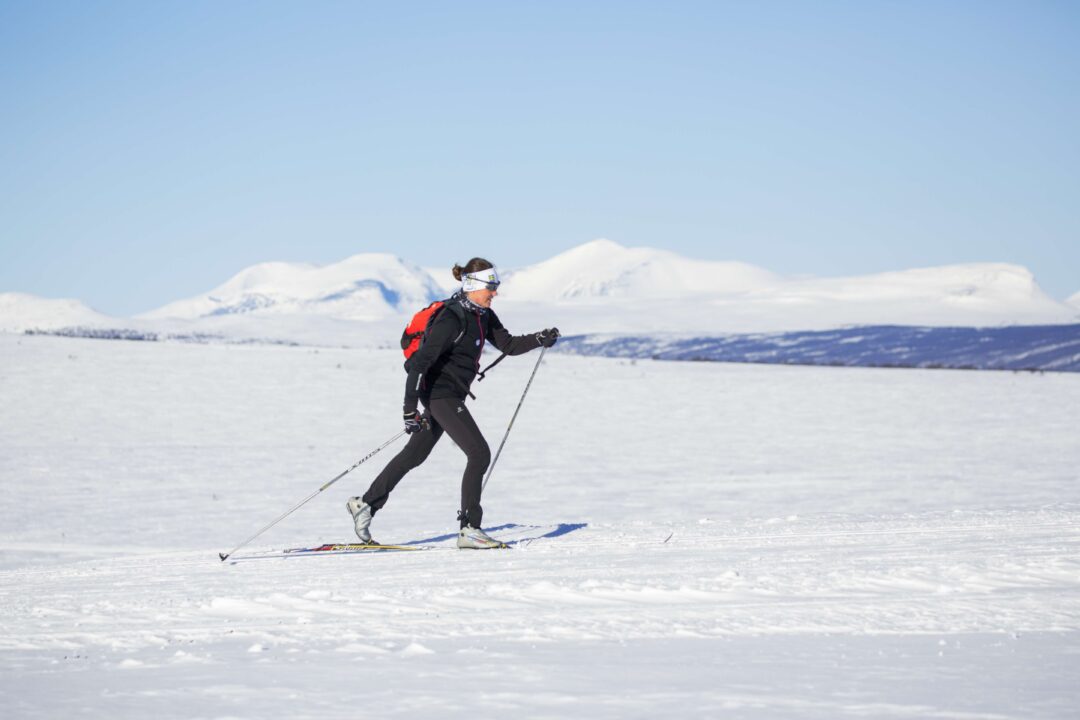
Cross country skiing will take you to remote corners of the world where chairlifts can’t reach, and you’ll earn every incredible view through your own effort. The good news? Getting ski-ready is about smart preparation, not months of intense training. Depending on your current fitness, you might need a few weeks or a few months. You don’t need to be a marathon runner (though if you are, you’ll love this sport), but you do need stamina to enjoy the adventure.
Cross country skiing isn’t a HIIT class, you won’t be gasping for breath and dripping sweat the entire day. It’s steady effort spread across hours. Think of it like a long hike where your heart rate stays moderately elevated throughout, with spikes when you’re climbing hills or pushing through challenging sections.
Your body uses everything – legs for propulsion, arms for pole work, core for balance and power transfer. Unlike downhill skiing where gravity does most of the work, every metre you move forward is down to your own effort. That gentle uphill that looks like nothing? Your quads will be burning.
Cross country skiing is an aerobic activity as your muscles use oxygen to produce energy over long periods. Your heart rate will be moderately elevated for extended periods, unlike anaerobic activities such as HIIT classes or sprint intervals, which are short, intense efforts that leave you breathless.
For cross country skiing, focus on aerobic training:
Zone 2 training is perfect for ski preparation – this is roughly 60-70% of your maximum heart rate, or the intensity where you’re working but can still chat with a friend. You’ll feel like you’re working, but you can sustain it for long periods. This builds the aerobic base that powers you through long days on snow.
Skip the high-intensity stuff for ski prep – burpees and sprint intervals might make you sweaty, but they won’t build the steady endurance you need for hours on snow.
If you’re starting from a lower fitness base, resist the urge to go from zero to hero overnight. Trying to smash out a 5km run when you haven’t exercised in years is how injuries happen, and an injury will set your preparation back weeks or months.
Don’t leave it until the last minute either as cramming all your fitness preparation into the 3 weeks before your trip won’t work. It takes 4-6 weeks minimum to see any improvements in your aerobic fitness.
There’s also loads of proven programmes. Couch to 5K plans build fitness while your body adapts. If you’re starting from minimal fitness, consider working with a personal trainer for a safe, progressive plan.
Also listen to your body. Mild muscle fatigue is normal. Sharp pains or feeling completely wiped out means you’re pushing too hard, too fast.
Running, cycling, swimming, hiking, rowing – for ski prep, they all build the same thing: an aerobic base. Your cardiovascular system doesn’t care which one you pick, so choose whichever you’ll actually do 3-4 times a week.
Running is the easiest to fit in (no gym, no equipment, just get out the door) which is why it’s often the default. Never run before? Start with run-walk intervals using a beginner-friendly plan, about 30 minutes, 3 times a week, to start building your aerobic base. Already a runner? Forget the speedwork and focus on building the time you spend running at a steady, conversational pace. Slow and steady builds the aerobic base you need.
The key is sustained moderate effort in Zone 2. Whether that’s a 45-minute bike ride, an hour-long swim, or a hilly hike, pick something you can tolerate doing 3-4 times a week. Consistency with an activity you don’t hate beats sporadic attempts at running you’ll quit.
Your legs do most of the work, generating power for forward motion, stabilising on uneven terrain, and dealing with constant small adjustments that keep you upright.
Regular strength training 2-3 times a week brings multiple benefits beyond just skiing preparation. You’ll develop stronger bones, better balance, injury prevention, and everyday functional strength that makes life easier.
Get your technique right first. Start with bodyweight versions and focus on proper form before adding any resistance. Consider a few sessions with a personal trainer if you’re new to strength training.
Your core transfers power from your arms through to your legs and keeps you stable when the terrain gets interesting.
Pilates is perfect for cross country skiing preparation. It builds exactly the type of core strength you need – deep stabilising muscles that work while your limbs are moving. You don’t need fancy reformer classes (though we love them) – mat Pilates at home works brilliantly.
YouTube is your friend as there are excellent free Pilates videos on there that focus on core stability and control.
Regular practice builds strength gradually. 15-20 minutes of focused Pilates three times a week will develop the core stability you need.
Cross country skis are narrow, the terrain is uneven, and you’re moving at speed. Balance training pays huge dividends in both performance and injury prevention.
This doesn’t need dedicated gym time. Just make it part of your daily routine.
Remember what we said earlier? It takes 4-6 weeks minimum to see any improvement in your aerobic fitness, with significant improvements coming at 3-6 months. The sooner you start preparing, the better.
The key: Regular training beats sporadic intense efforts. Three quality sessions per week will serve you better than cramming everything into the final few weeks.
If you can only manage 3 workouts a week, make them cardio – this is going to be your biggest help for cross country skiing. Strength and balance work are bonuses on top.
Don’t worry about perfecting cross country skiing technique beforehand. That’s what your guides are for, and trying to learn from YouTube videos usually creates more problems than it solves. Focus on the fitness foundation – the technique will come with good instruction and practice on snow.
There’s no shame in building your foundation first, we run our cross country ski trips every year.
Put in the preparation now, and you’ll spend your time enjoying incredible wilderness instead of just surviving it.

Bookings Team
We are a small team of women who plan the trips, host them, answer your emails and walk, ski and paddle the routes ourselves. When a post has no single name on it, it usually means several of us had something to add.
Activities
2nd August
5 Min Read
More from us