Trip Guide

Trip Guide: Via Ferrata Hut to Hut in the Dolomites

Five consecutive days on the Via delle Bocchette, one of the most complete and view-fuelled via ferrata systems in the world. You’ll cross the entire Brenta Dolomites from north to south, moving hut to hut, clipped onto fixed cables, ladders and iron pegs across terrain that demands your full attention from start to finish. When you’re not moving across metal, you’ll be covering the rest of the distance on hikes through the mountains. This guide covers everything you need to arrive prepared.

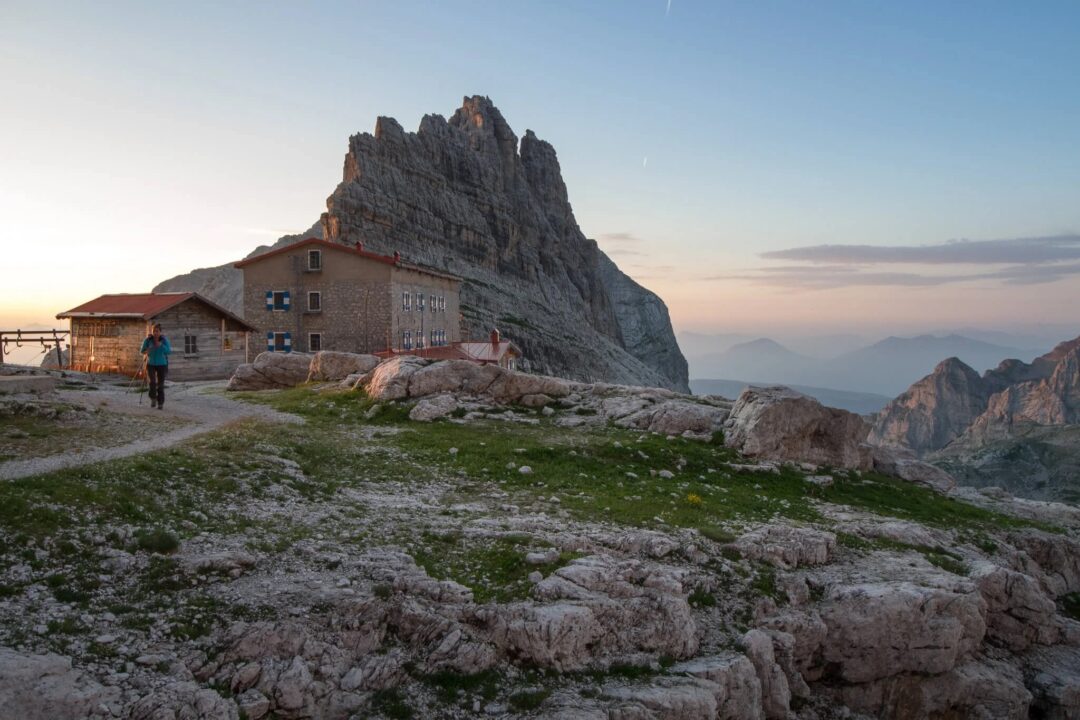
Woman walking past a mountain hut in the Dolomites under a rocky peak at dusk
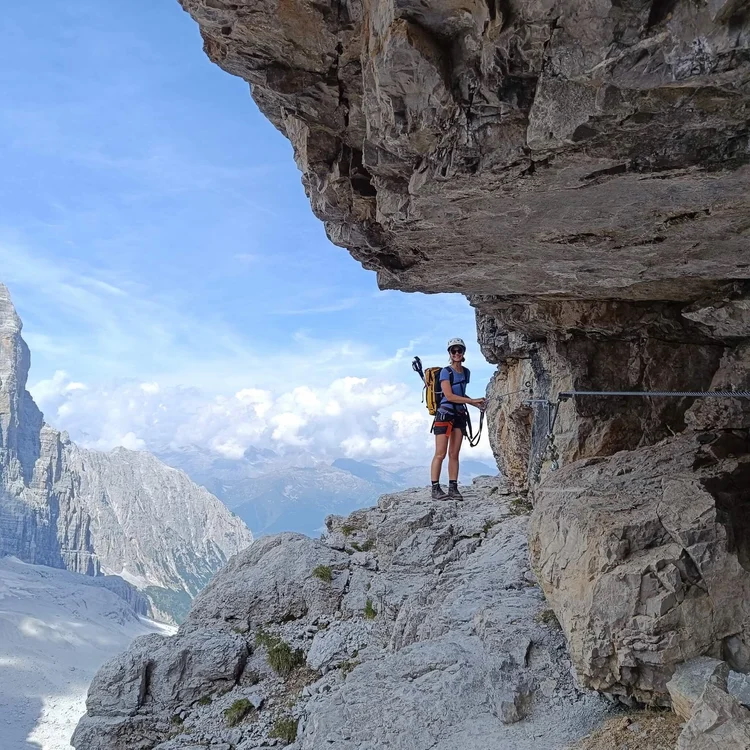
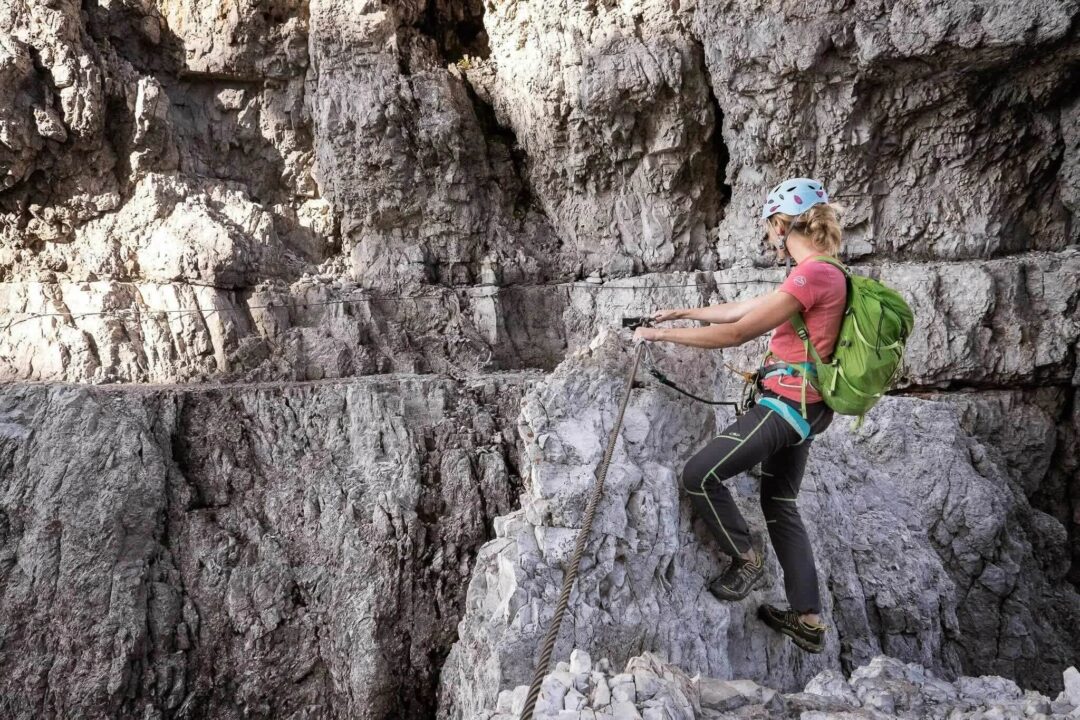
Woman hiking a via ferrata on a steep rock ledge in the mountains, wearing a safety harness and backpack

Getting There

Fly into Verona (VRN). A private group transfer is included from Verona Airport on both arrival and departure days, taking you on the approximately two hour journey to your first hotel in Madonna di Campiglio.

Nearest Airport: Verona Villafranca (VRN)
Meeting Point: Verona Airport

What time are the airport transfers?

July

  • Arrival Day: Pick up at Verona Airport at 11:55
  • Departure Day: Drop off at Verona Airport at 15:50

September

  • Arrival Day: Pick up at Verona Airport at 17:00
  • Departure Day: Drop off at Verona Airport at 16:35

How do I get to the Brenta Dolomites?

Fly into Verona (VRN), then meet our group transfer to take you the rest of the way to our first hotel in Madonna di Campiglio. Several airlines fly the route, including British Airways from London Gatwick, however you’re welcome to book any flights that align with the transfer times (which can be found in your customer portal) Not sure if your flight times work? Drop us a message.

Suggested flights

July

  • LGW – VRN –  7:50 – 10:55 | BA2588
  • VRN – LGW – 17:50 – 21:00 | BA2590

September

  • LGW – VRN – 12:55 – 16:00 | EZY8337
  • VRN – LGW – 18:35 – 19:40 | EZY8338

What if my flight is delayed or cancelled?

Transfers run on time and can’t wait unfortunately, even for flights listed on the trip page. If you miss the transfer, you’ll need to arrange your own transport to meet the group. We’ll support you with local information on the day, and your host will be on hand to support you. Comprehensive travel insurance covering delays and missed connections is essential so that you’re not stuck with unexpected spends.

Can I arrange a private transfer if I can't make the scheduled transfer?

Yes, private transfers can be arranged at an additional cost. Contact the bookings team in advance to organise this.

Should I spend extra time in Verona?

If you have time, it’s worth it. Verona is a stunning historic city with a Roman amphitheatre, medieval streets, excellent restaurants and wine bars. It’s also the setting of Shakespeare’s Romeo and Juliet. More information at visitverona.it/en.

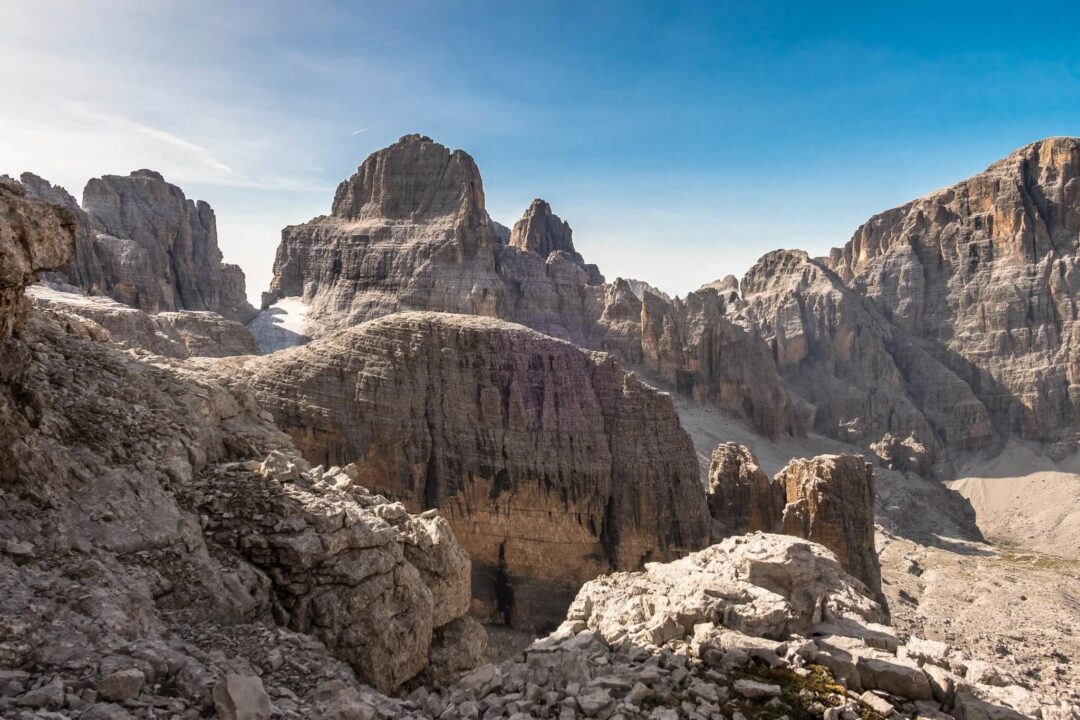
Dolomites rocky mountain landscape for a via ferrata hut-to-hut route in the Italian Alps

Fitness & Skill Level

This trip is rated challenging. You don’t need prior via ferrata experience, but you do need solid mountain fitness, a genuine ease with heights, and confidence on steep and rocky terrain. If you regularly hike with real ascents, run or train consistently, you’re in the right territory. If it’s been a while since your last big day in the hills, or you felt wobbly last time you were up high, this is not the trip to ease back in on.

    • 5–7 hours of activity each day across five consecutive days
    • Via ferrata sections that run 3–4 hours within each day
    • Daily ascents of 700–1,000m over rock, scree, ladders and exposed ledges
    • Three of the four via ferrata days carrying your overnight kit between huts

What makes this different from a hiking week: Although you’ll also spend sections of each day hiking on the ground, when on the via ferrata you’ll use your whole body. You’ll be using grip strength, pulling yourself up ladders and bracing on exposed sections for hours at a time. The Bocchette Centrali and Bocchette Alte both include sustained sections with significant drops on one or both sides.

Heights: If you’re even remotely scared of heights, this isn’t the trip for you. You need to arrive knowing that, not find out as you clip in for your first day on the via ferrata.

Communal living: Four of your six nights are in busy mountain rifugios with shared dormitories, communal bathrooms and open dining spaces. Earplugs are on the packing list for a reason.

Training: Build cardiovascular fitness and leg endurance. We recommend regular hiking with elevation, incline treadmill sessions, running or cycling. Strength work matters too: squats, lunges, step-ups and grip or pulling movements will all pay off when you hit the mountains. You need to arrive fit enough to handle Day 5 feeling like Days 1–4 haven’t already happened.

How fit do I need to be?

This trip is rated challenging. You’ll be active for 5–7 hours a day at altitude, across five consecutive days with no rest day. Strong cardiovascular fitness, good leg endurance and upper body strength are all required. Via ferrata uses your full body, especially your grip strength and pulling muscles. If you regularly hike with significant ascents and train consistently, you’re well placed.

Do I need previous via ferrata experience?

No. But you do need solid mountain fitness, confidence on steep and exposed terrain, and a genuine head for heights. This trip is designed for regular hikers who are ready to step things up, not as a first introduction to the mountains.

What does the via ferrata actually involve?

Via Ferrata translates as “Iron Way”, which is what it literally is. You clip your harness directly onto a fixed cable as you move, ensuring you’re always attached to the mountain. The route uses metal ladders, pegs, stirrups and fixed cables to take you across terrain that would otherwise require technical climbing skills. Somewhere between scrambling, hiking and climbing, but sustained, exposed and physical.

Do I need to be comfortable with heights?

Yes, genuinely. The Bocchette Centrali and Bocchette Alte sections include sustained exposure with significant drops on one or both sides. If heights affect you at all, be honest before booking. There’s no way around the exposure on this route.

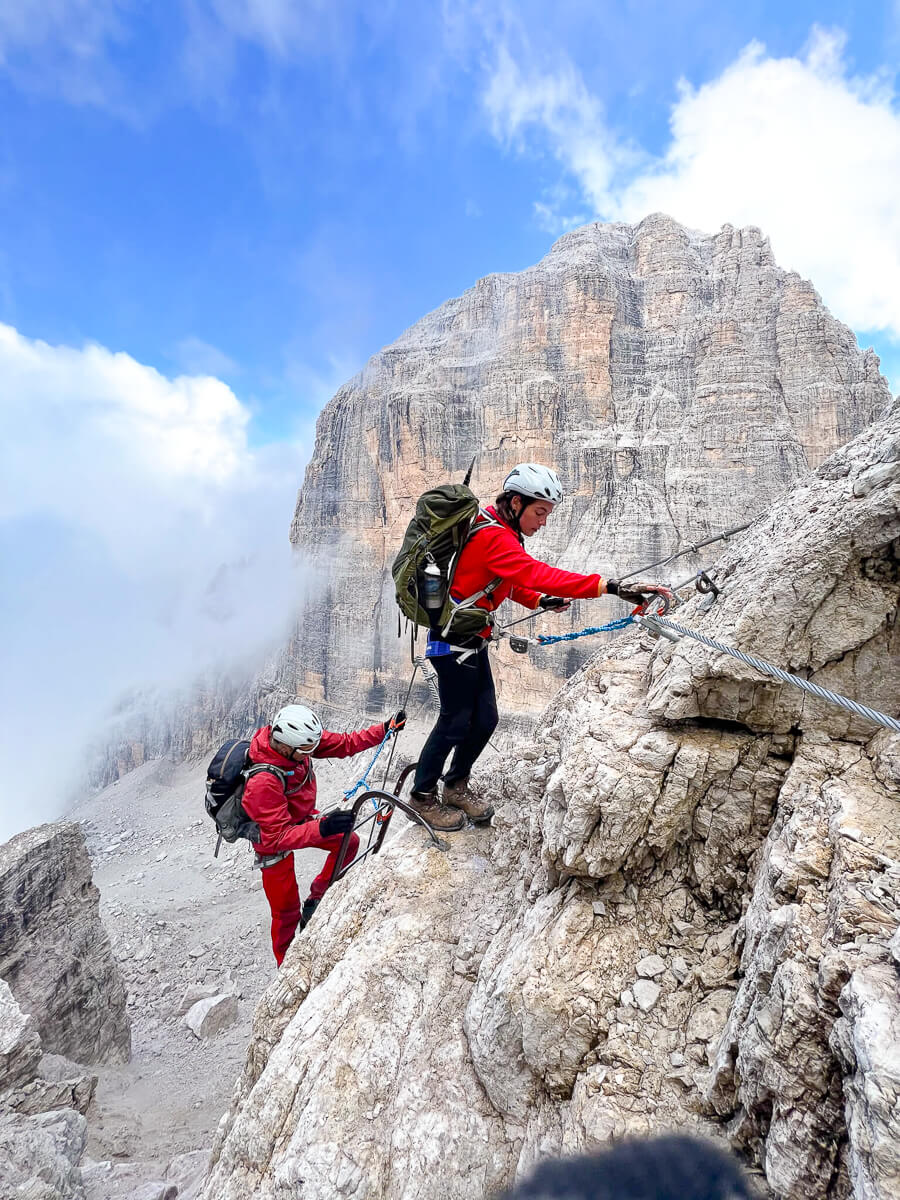
Women climbing a via ferrata along a rocky ridge in the Dolomites, with harnesses and safety cables.
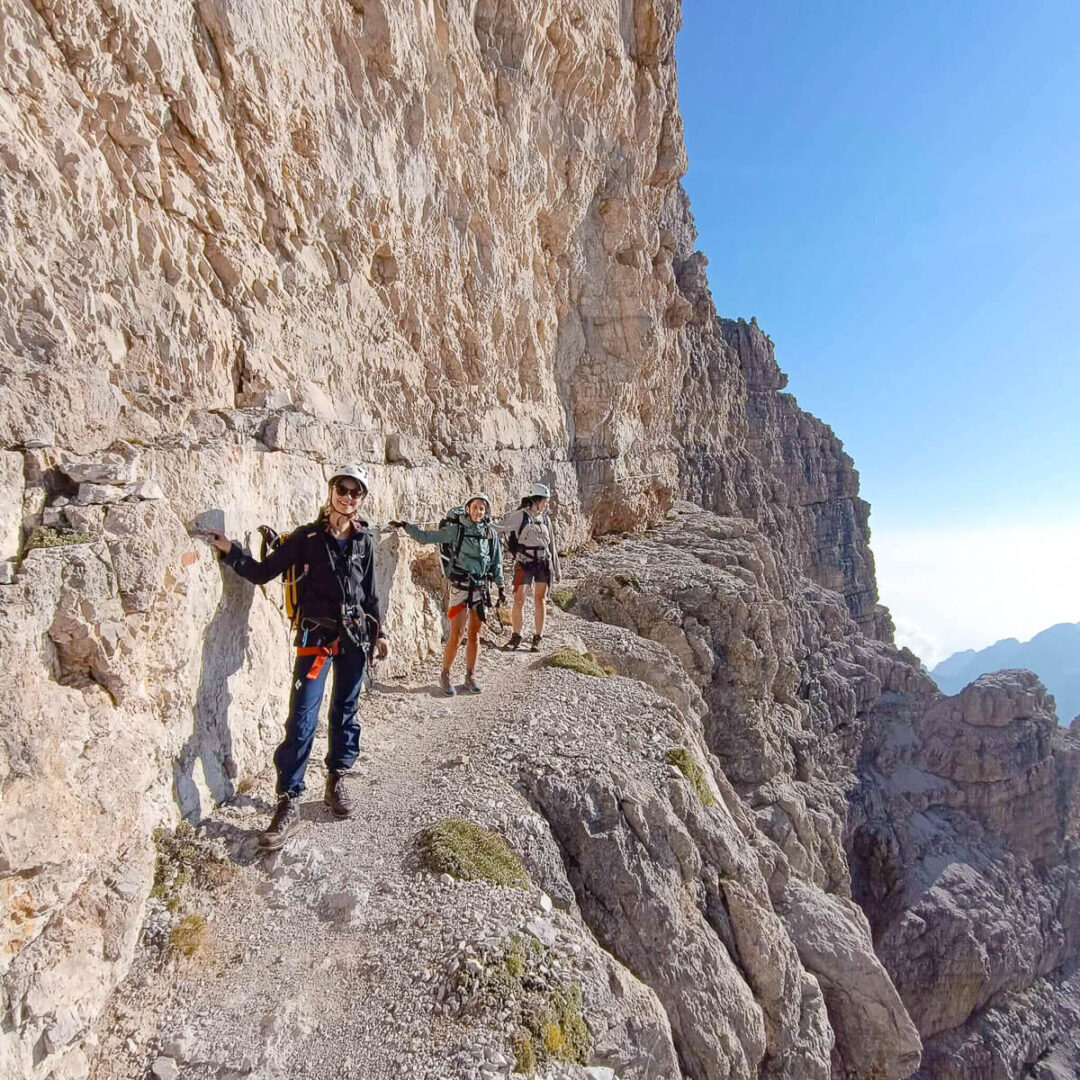
Women hiking along a via ferrata on rocky cliffs in the Dolomites, with mountain scenery in the distance.

Sleep & Eat

Accommodation

Hotel (2 nights): The first and last nights are at a three-star hotel in Madonna di Campiglio – comfortable rooms, a restaurant and mountain views, making it a good place to prepare and recover.

Rifugios (4 nights): The rest of the trip is spent moving hut to hut, sleeping in shared dormitories in traditional Italian mountain rifugios. These are working mountain huts with communal bathrooms, shared dining rooms and early mornings. The food is hearty, the vibe is excellent, and the views from the terrace are worth every step it took to get there.

Towels are provided at the hotel. Bring your own lightweight travel towel for the rifugio nights. A sleeping bag liner is also required – you can hire one for €18 or bring your own.

Food

All meals are included from arrival dinner to departure breakfast – six breakfasts, five packed lunches and six dinners. Departure day lunch at Aquardens and drinks with meals (other than hot drinks at breakfast) are not included however.

At the hotel, dinners are from the restaurant. In the rifugios, evenings mean three-course dinners of traditional local dishes served in the communal dining room. Breakfasts at the huts are simple and filling, with bread, butter, ham, cheese, jam and hot drinks. Some huts also offer extras like yoghurt, muesli or eggs. Packed lunches are then provided each day for the trail.

Dietary requirements: Vegetarian, vegan, gluten-free and dairy-free diets can be catered for with advance notice, though options will be much more limited than you’re used to. Kitchens in the rifugios are basic and cross-contamination can’t be guaranteed.

Please tell us about any dietary requirements when you book as if you wait until arrival, we may not be able to accommodate you – the huts are remote and meals need to be planned in advance.

What is the accommodation like?

Two nights in a comfortable three-star hotel in Madonna di Campiglio, with a restaurant and the option to book a session in the sauna (not included in the trip cost unfortunately). For four nights you’ll be back to basics in traditional mountain rifugios – shared dormitories, communal bathrooms and shared dining rooms.

Are towels provided?

Towels are provided at the hotel for the first and last nights. Bring your own lightweight travel towel for the four rifugio nights.

Do I need a sleeping bag?

A sleeping bag liner is required for the rifugio nights. You can hire one for the trip for €18 or bring your own.

Are there laundry facilities?

There are no laundry facilities at the hotel or in the rifugios. Pack travel wash or soap flakes if you need to hand-wash anything during the week.

What is the food like at the rifugios?

Hearty, comforting and traditional. You’ll have three-course dinners of local alpine dishes served in the communal dining room each evening, followed by a simple but filling breakfast to set you up for the day. Packed lunches are then handed out to be eaten on the trail. It’s fuel-focused food to get you through the long day.

Can you cater for dietary requirements?

Yes, vegetarian, vegan, gluten-free and dairy-free diets can be accommodated with advance notice. However please be aware that options will be more limited than you might be used to and cross-contamination in rifugio kitchens can’t be guaranteed against. Let us know when you book, otherwise we won’t be able to help.

Are drinks included?

Hot drinks at breakfast are included. All other drinks at the huts and hotel are at your own cost. The rifugios have small bars where you can buy drinks, snacks and extras, but bring cash, as card payments at altitude are unreliable.

What about departure day lunch?

Lunch at Aquardens on departure day is not included so please budget for this separately.

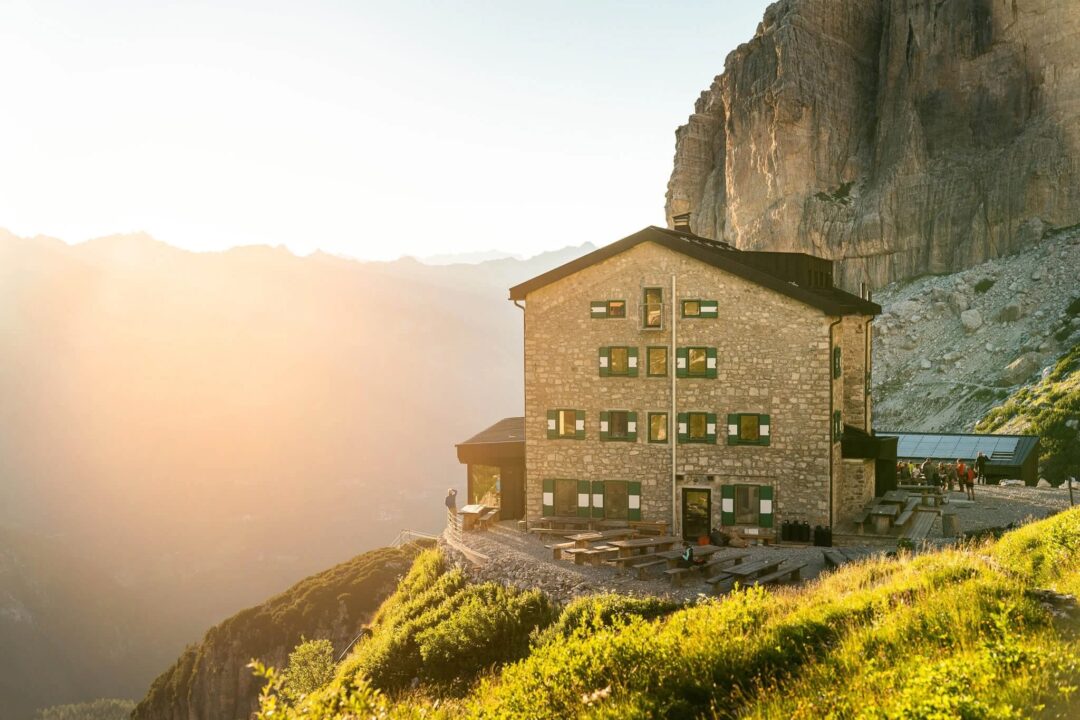
Mountain hut in the Dolomites at sunrise, with trail views over steep cliffs and valley below
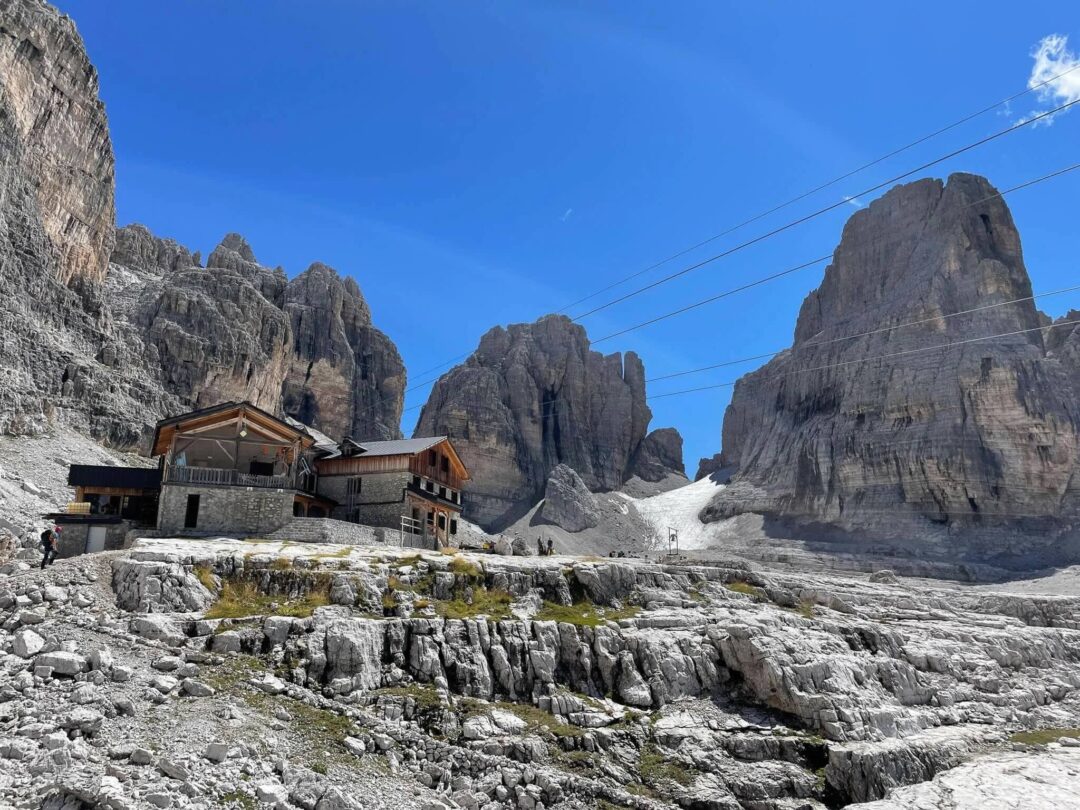
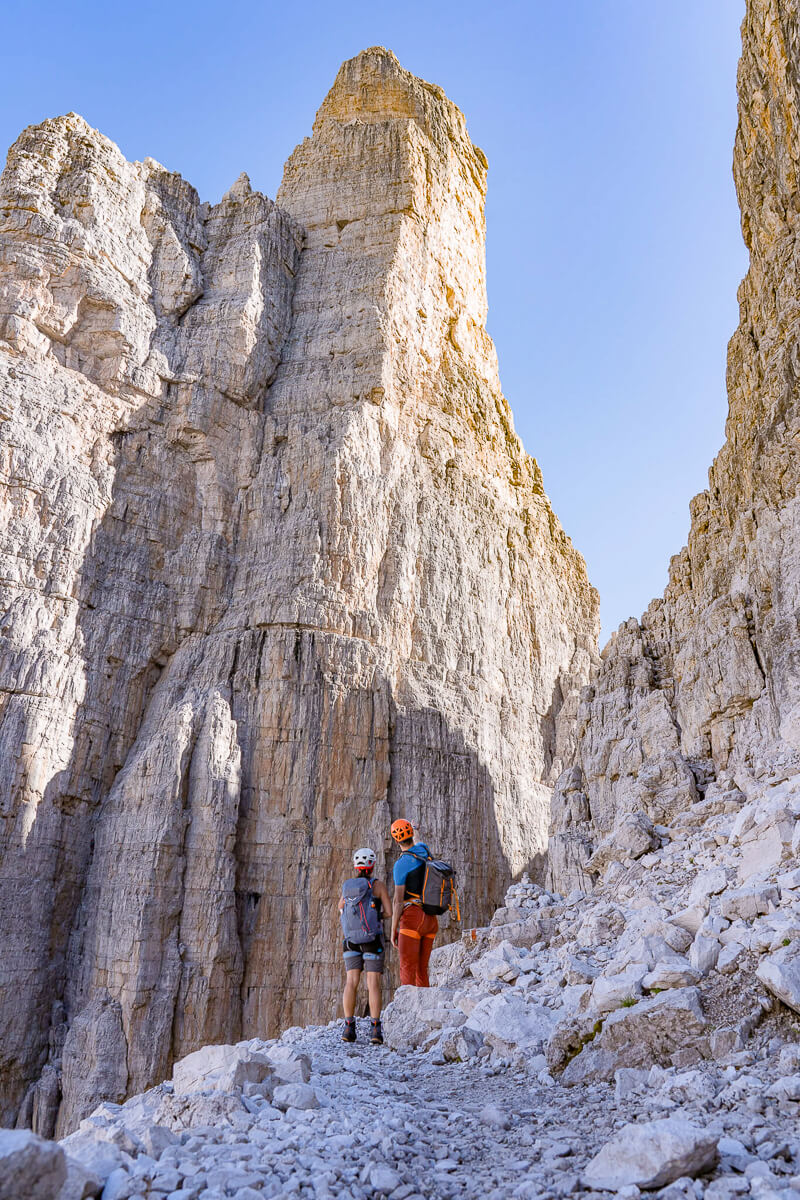
Dolomites via ferrata hut in a rocky mountain valley with steep peaks under a blue sky

Weather

The Brenta Dolomites in summer can be varied and conditions change quickly, particularly at altitude. Daytime temperatures typically range from 10–20°C in the mountains, but exposed ridges and early mornings can feel significantly cooler. The region is often sunny and clear, but afternoon weather can shift fast.

You’ll be spending most of the week on exposed terrain above the valley. A full layering system and a waterproof jacket are essential every single day. The metal cables and ladders can be very cold first thing in the morning too so light gloves are on the packing list for good reason.

What is the weather like in July?

Typically 10–20°C in the mountains, with cooler temperatures on exposed ridges, in the early mornings and at higher elevations. It’s often sunny and clear to see every dramatic view, but mountain weather can turn quickly so wind, rain and cloud are all possible. Pack for everything regardless of the forecast.

Is the itinerary flexible?

Yes. Guides monitor conditions daily and will adjust the plan where needed. Safety comes first and if conditions make a section unsafe, there are alternatives in place. You’ll still get the full route where conditions allow.

What should I bring for the cold metal sections?

Light gloves. The fixed cables and iron pegs can be very cold first thing in the morning, even in July. Gloves don’t take up much space and will be necessary for those early morning starts.

What should I wear each day?

Quick-dry layers you can add and remove easily, hiking trousers or leggings, and a waterproof and windproof jacket. Layering is the best approach to five days of varied mountain weather.

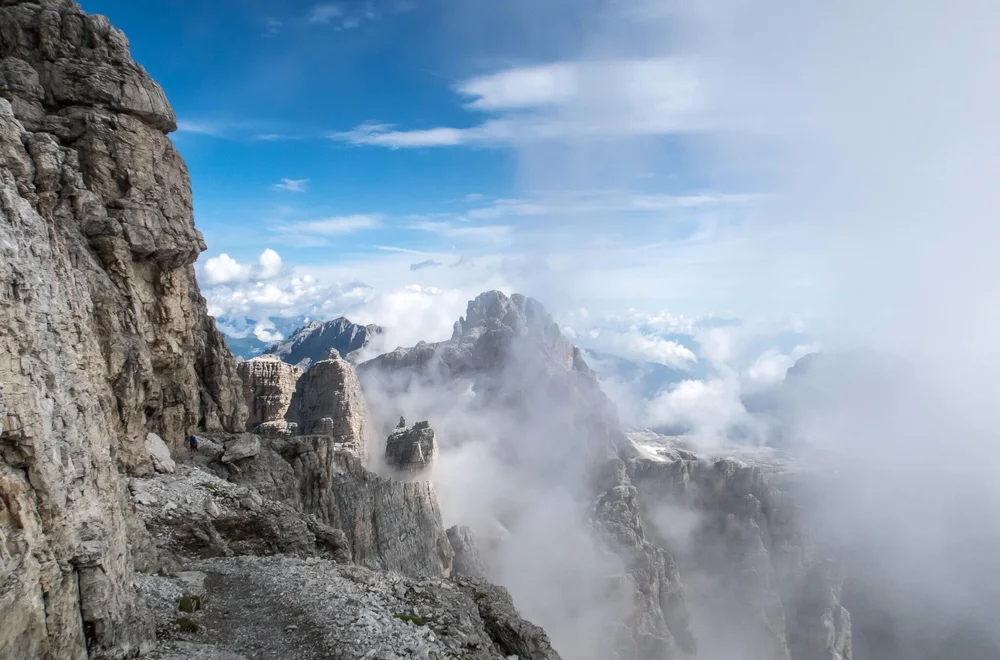
Rocky mountain ridge with clouds, Dolomites—view from a via ferrata route

Good to Know

Money: Bring cash (euros) for this trip. Most places in Italy take card, but connectivity in the mountains is unreliable, so card payments at the huts may not work — better to assume they won’t and carry enough cash. The huts have small bars selling snacks, drinks and ice cream.

Given that same patchy mountain connectivity, don’t expect reliable signal or WiFi once you’re moving between huts.

Tipping: Tipping is not compulsory on our adventures, but if you’ve had a great trip and brilliant service, a tip for your guide or host is always appreciated. We recommend giving €20-€30, or whatever you can or feel is the right amount.

How many guests on this trip?

Max 5 guests.

Why aren't all guides female?

We work with the best guides available, male or female. There are fewer women in technical mountain guiding roles, so we prioritise expertise and experience. We vet every guide carefully and monitor feedback closely.
When should I buy travel insurance?

As soon as you book, not the week before you fly. Booking early means you’re covered if you need to cancel before departure, not just for issues while you’re away. Your policy should cover travel delays, missed connections, trip cancellation, medical emergencies and evacuation, baggage and equipment loss, and all activities on your itinerary.

What happens if weather affects a planned activity?

Guides will adjust the plan if conditions make an activity unsuitable. The order of activities may change and a level of flexibility is key. Safety comes first throughout the week.
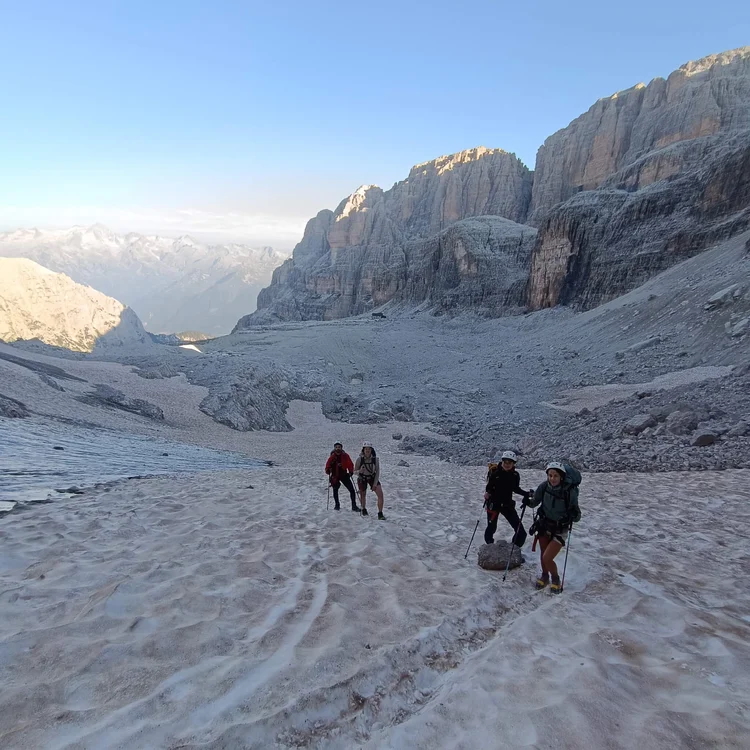
Hikers on a snowy mountain trail with backpacks in the Dolomites, passing high rock faces at dawn
Woman hiking a via ferrata route on a rocky cliff face in the mountains with a safety rope and harness

Packing List

What We Provide:

    • Via ferrata equipment: harness, helmet, carabiners and all technical gear
    • Crampons (if required depending on trail conditions)

What You Need to Bring:

Hiking & Via Ferrata Kit:

    • Hiking boots with ankle support — mandatory for the via ferrata, must be well broken-in before arrival
    • 30–35L daypack (maximum 8kg packed weight)
    • Quick-dry t-shirts (not cotton)
    • Long-sleeve tops for sun protection (not cotton)
    • Fleece jacket
    • Breathable, waterproof and windproof jacket
    • Waterproof trousers
    • Light insulated or down jacket (for cooler mornings and evenings)
    • Hiking trousers, leggings or shorts (quick-dry and breathable)
    • Hiking socks
    • Light gloves (metal cables are cold in the mornings)
    • Trekking poles (optional)

Rifugio Nights:

    • Sleeping bag liner (available to hire for €18 on arrival, or bring your own)
    • Lightweight travel towel
    • Hut shoes — light sandals or flip flops for use inside the rifugio
    • Sleepwear
    • Earplugs (recommended for shared dorm rooms)

Aquardens (Departure Day):

    • Swimwear
    • Sandals or flip flops

Essential Kit:

    • Water bottle — 2 litres minimum
    • High-SPF sunscreen
    • SPF lip balm
    • Sunglasses with strap
    • Sun hat or cap
    • Rehydration tablets (useful if weather is hot)
    • Simple first aid kit
    • Compeed or Moleskin blister plasters
    • Headtorch
    • Emergency whistle
    • Insect repellent
    • Any personal medication
    • Snacks — energy bars, nuts, dried fruit
    • Cash in euros — card payments at the rifugios are unreliable
    • Travel adaptor
    • Dry bags for inside your pack

Optional:

    • Power bank for your phone
    • Trekking poles

Pack weight: Your pack is on your back all week, including on the via ferrata. Keep it under 8kg — every extra kilo counts on a 30-metre ladder.

Boots must be worn in: Hiking boots with ankle support are mandatory, you will not be permitted on the via ferrata in trainers. They must be broken in before you arrive. Blisters on day two of a hut-to-hut are not a recoverable situation.

No cotton: You’ll be sweating on climbs and cooling fast on exposed ledges. Merino or synthetic only, cotton holds moisture and gets cold.

Pack gloves: Metal cables are cold in the mornings. A thin pair takes up almost no space and makes a real difference on early sections.

Cash in euros: Card payment is unreliable at the rifugios. Bring €50–€80 to cover drinks and extras across four hut nights.

Sleeping bag liner: Rifugios provide blankets but a liner is standard. Hire one on arrival for €18 or bring your own.

Hand luggage priorities: Hiking boots (wear them on the plane), prescription medication, and your sleeping bag liner if bringing one.


What boots do I need?

Hiking boots with ankle support are mandatory for the via ferrata — you will not be permitted to take part in trainers or trail runners. The terrain is steep, rocky and exposed, and ankle support matters as much as grip. Whatever you bring, they must be well worn in before you arrive.

What size pack do I need?

A 30–35L daypack with a maximum packed weight of 8kg. You’ll be carrying it on the via ferrata sections as well as the hiking days, so weight matters. Pack smart.

Do I need a sleeping bag?

A sleeping bag liner is required for the rifugio nights. You can hire one for €18 or bring your own.

What should I prioritise in hand luggage?

Your hiking boots. Madonna di Campiglio is not the place to discover your hold luggage is delayed and starting five days of via ferrata without the right footwear is not an option.

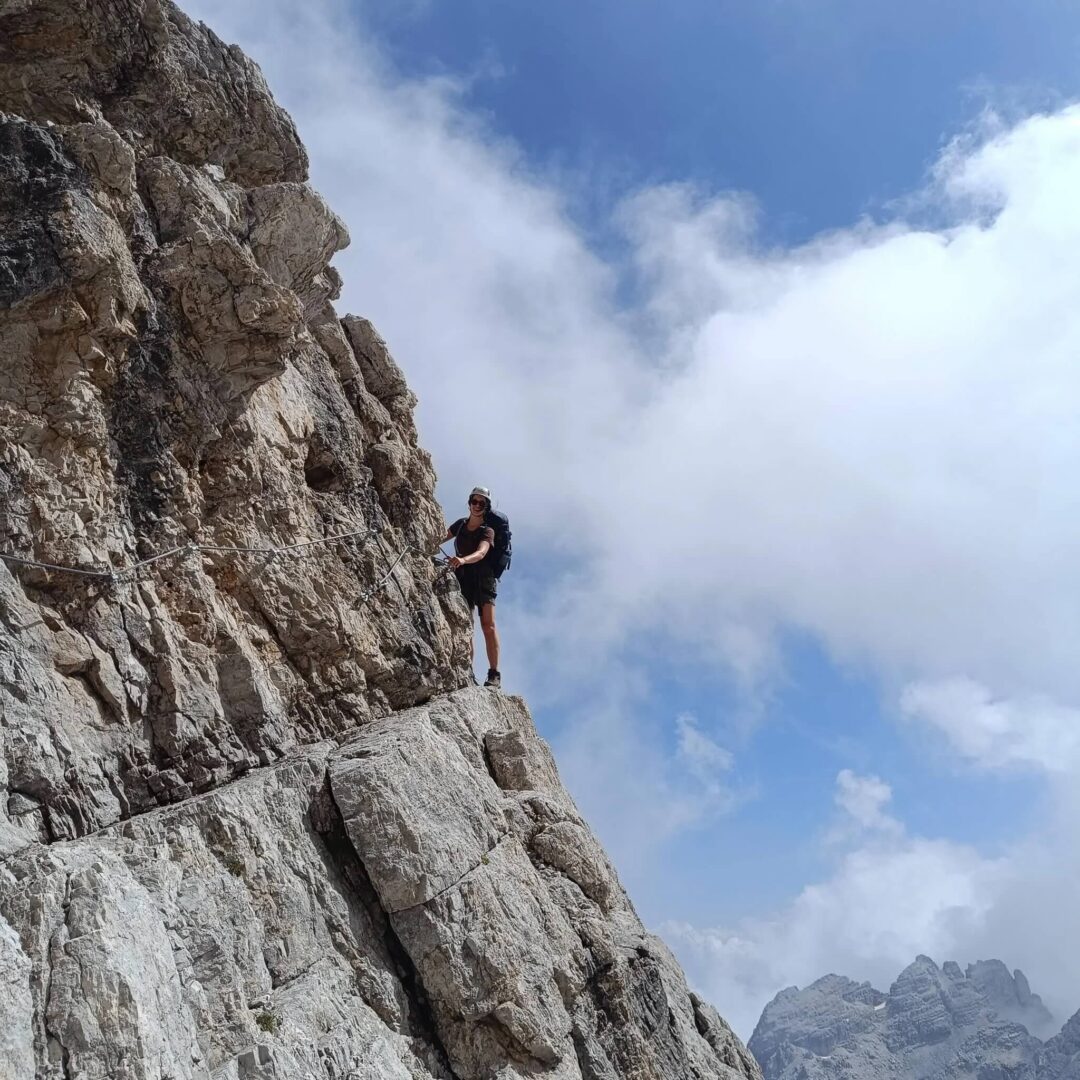
Woman standing on a rocky cliff edge in alpine mountainous terrain, surrounded by cloud and peaks
Two women via ferrata hikers on rocky Dolomites cliffs, wearing helmets and harnesses

Trip Code ITACMBVIA- Include this code in any message so we can find your trip straight away.