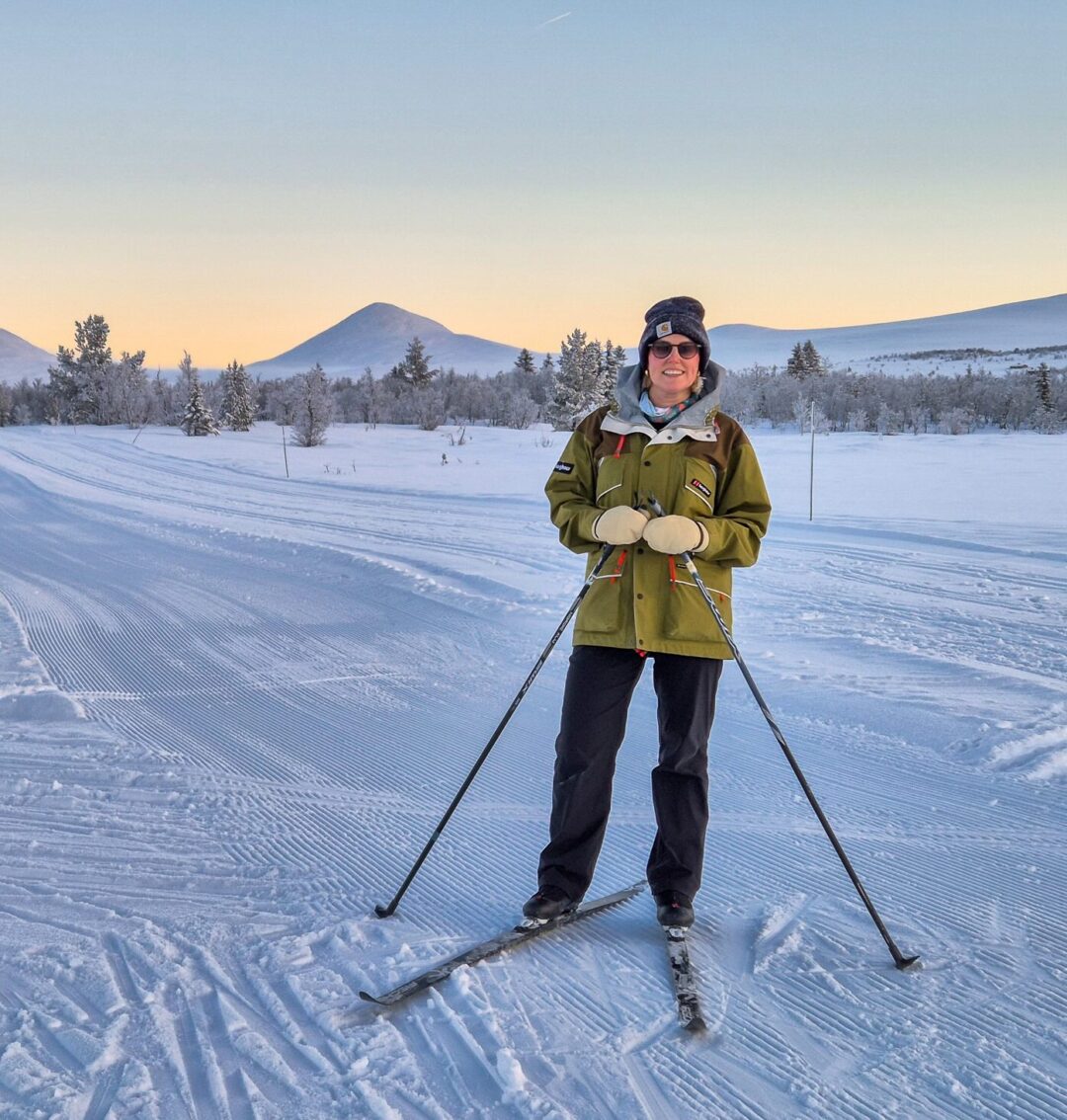
Trip Guide

Trip Guide: Dog Sledding Expedition in Swedish Lapland

Ready to learn how to mush a team of dogs through Swedish Lapland? This isn’t your typical winter break. You’ll spend six nights switching between a range of winter activities before having a go at working with a pack of Alaskan huskies who live for this stuff. This adventure gives you dog sledding, backcountry skiing and snowshoeing experience, as well as the opportunity to try one night of wilderness living.

Woman riding a dog sled with a team across a snowy landscape in winter.
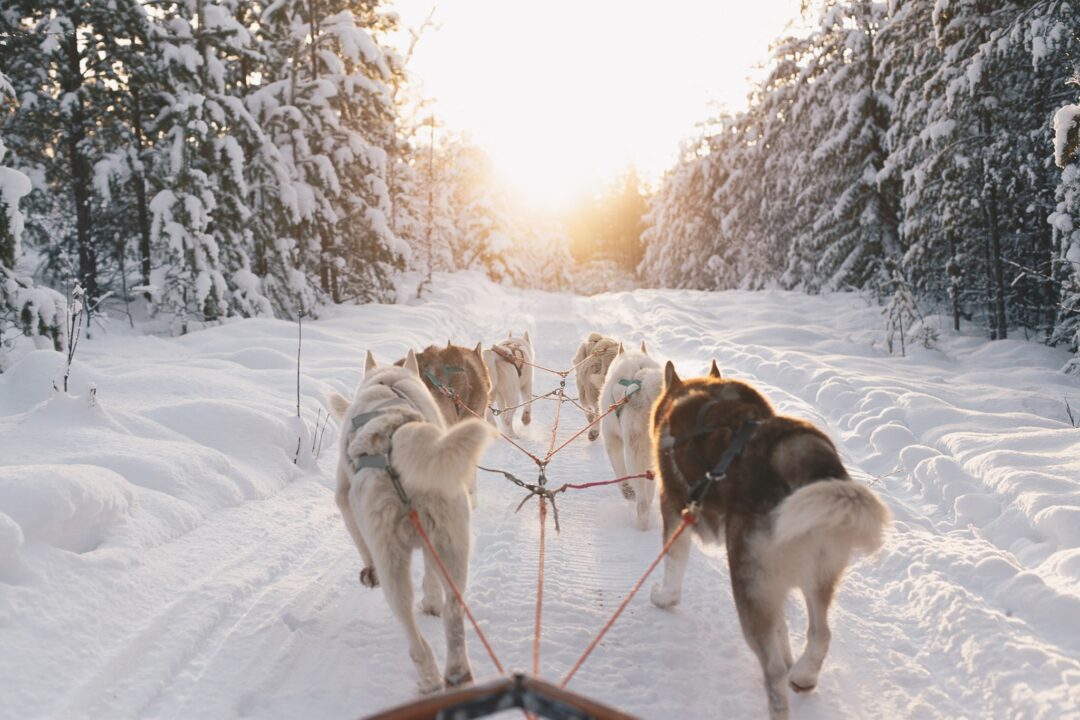
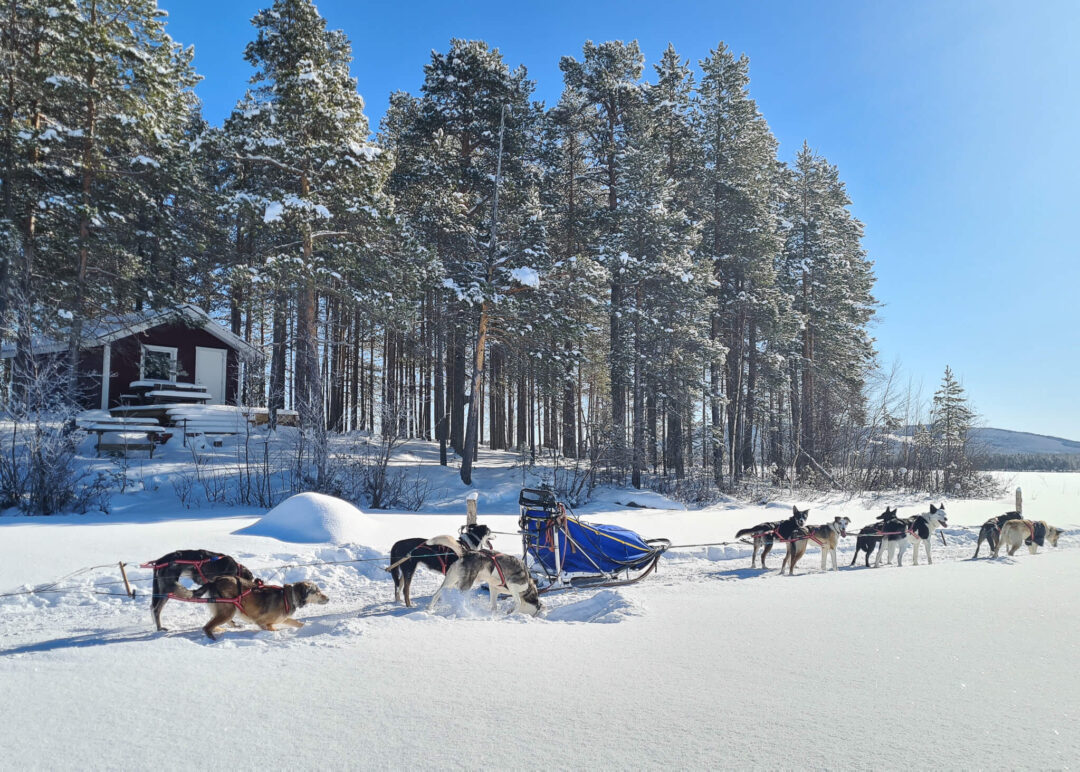
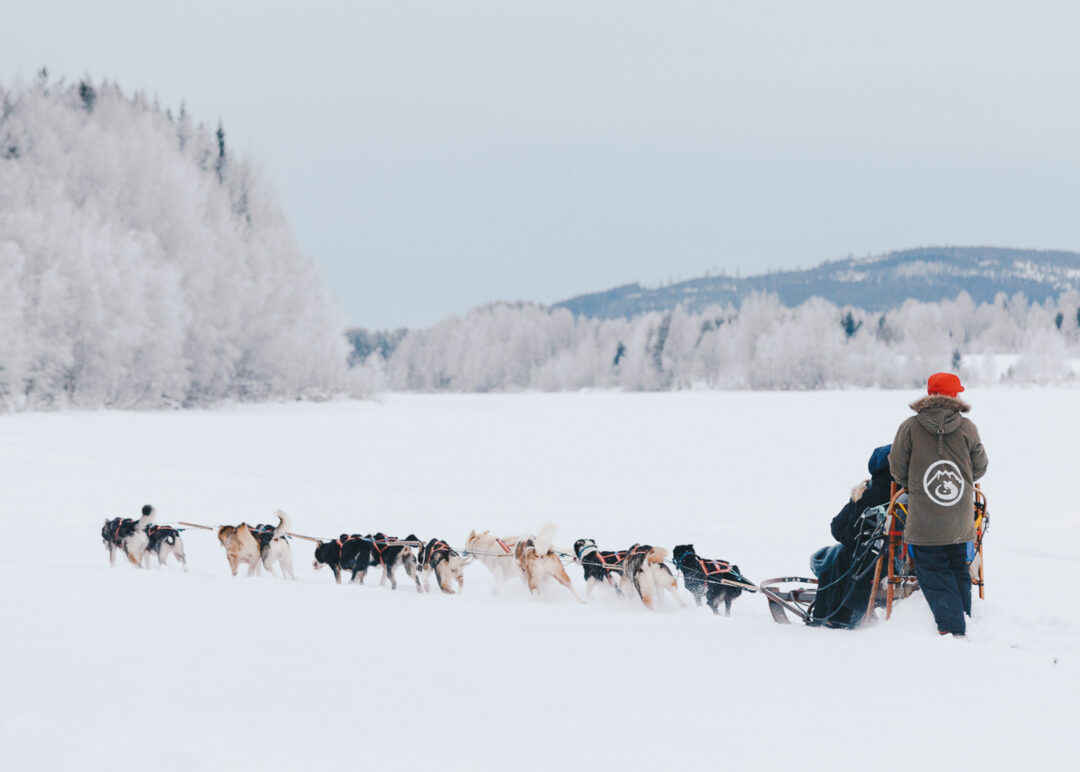
Dog sled team in snowy Swedish Lapland forest, with tracks and snowy mountains at sunrise

Getting There

The nearest airport is Umeå, about an hour’s drive from the eco-hotel. There are no direct flights from the UK, so you’ll route via Stockholm Arlanda and take a short domestic hop up to Umeå. Stockholm is served by loads of flights from across the UK, so getting that first leg is easy, and we’ve listed the Umeå flight times below rather than every UK-to-Stockholm option.

We’d recommend, where you can, booking both legs together with the same airline. That way your connection is protected if the first flight runs late, whereas separate bookings leave the onward flight at your own risk. You’ll find the Stockholm–Umeå leg with SAS, and our suggested flights line up with the included transfer.

Prefer to stay on the ground? There’s also a high-speed train from Stockholm Central or Arlanda Central to Umeå Central, around six hours, and the transfer collects from the station as well as the airport. Full flight and transfer times are below.

Which flights should I book?

SAS is the best option for flights from Sweden Arlanda to Umea, however any flight that gets you in there in time for the transfer works.. For January trips you’ll need to arrive into Umea airport by early afternoon and book a flight out at around the same time. For flights in April, you’ll also need an early afternoon arrival, but to depart on a mid-afternoon flight. SAS is the best option for flights from Sweden.

What about private transfers if my timings don't match?

We can arrange private transfers to and from Umeå for 1632 SEK per car one-way, or to and from Vindeln for 583 SEK per person one-way. Please let us know in advance if you’re going to want to organise this.

What about the overnight train option?

The night train goes to Vindeln (not Umeå) and is spot on if you want the journey to be part of the adventure. You’ll need to arrange a separate 20-minute taxi to our base hotel, and there’s no discount for skipping the group transfer. But waking up with the wilderness outside your window beats airport connections any day.

What if my flight gets cancelled or delayed?

You’ll need to sort your own transport to catch up with the group – transfers can’t wait. This is why travel insurance matters. In remote locations, replacement transport can be limited and expensive. Your host will help coordinate locally, but prepare for this possibility.

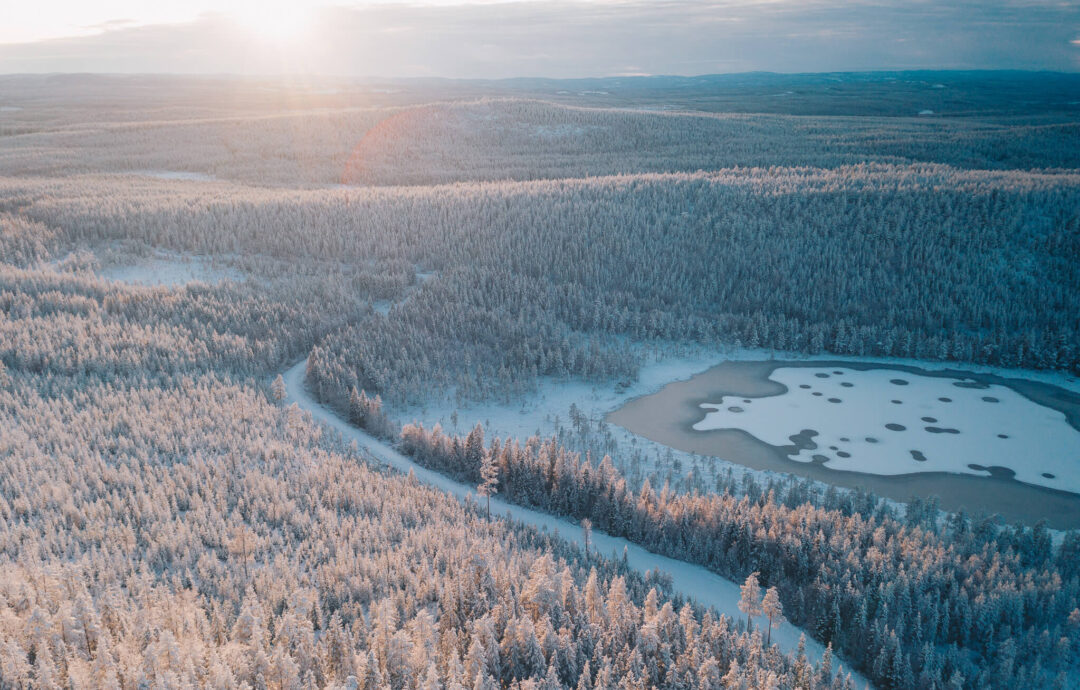
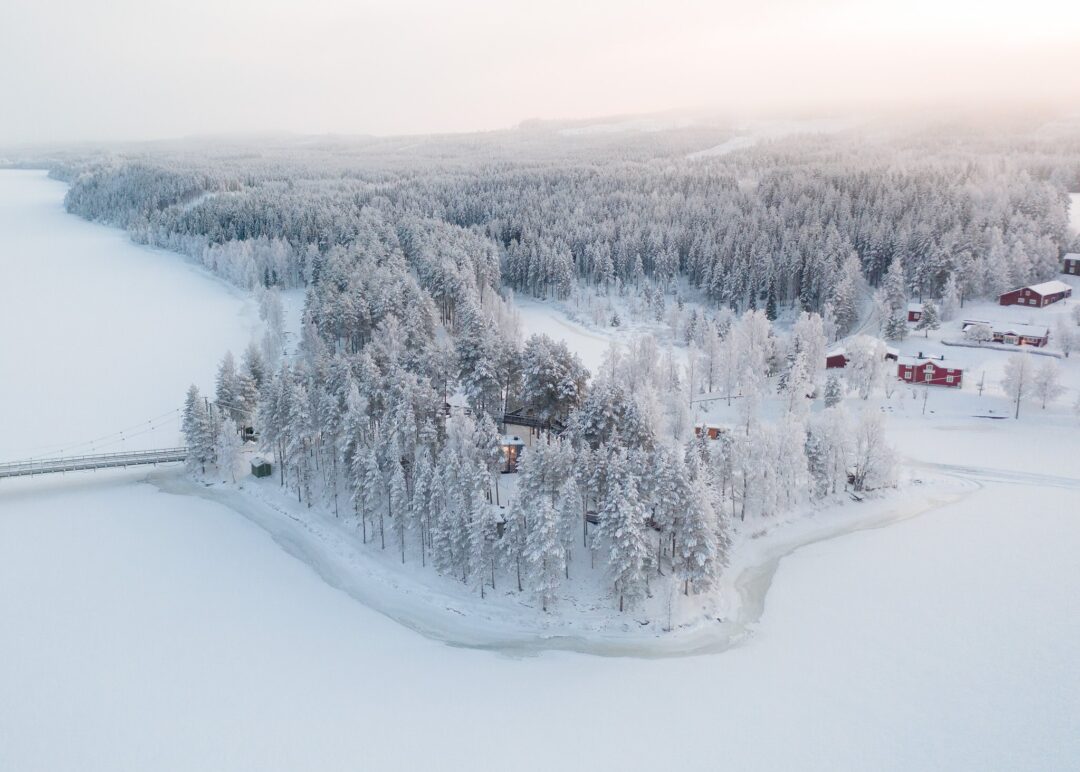
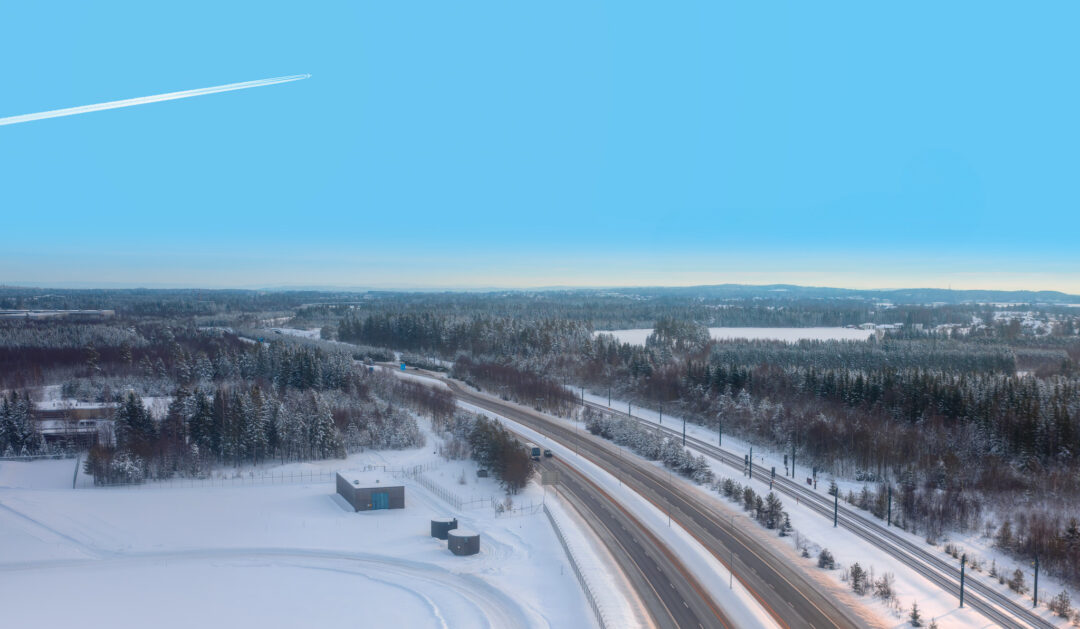
Aerial view of snowy forest and winding river in winter landscape

Fitness & Skill Level

This trip is rated moderate. No single day is hard. What adds up is doing something every day, in the cold, while learning as you go.

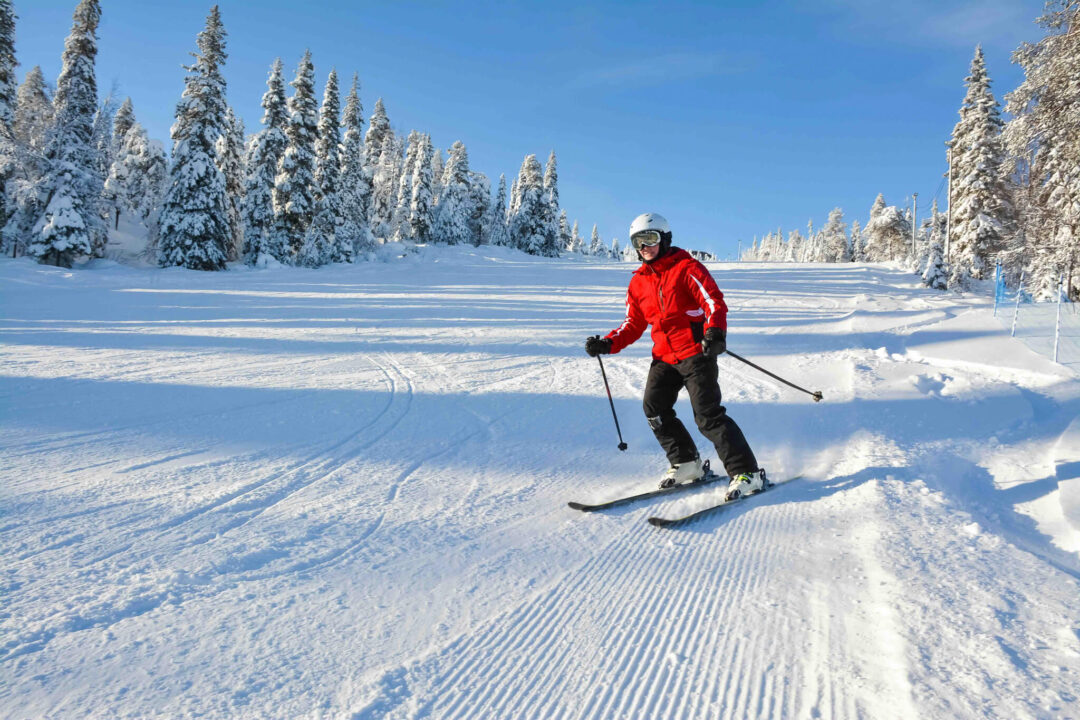
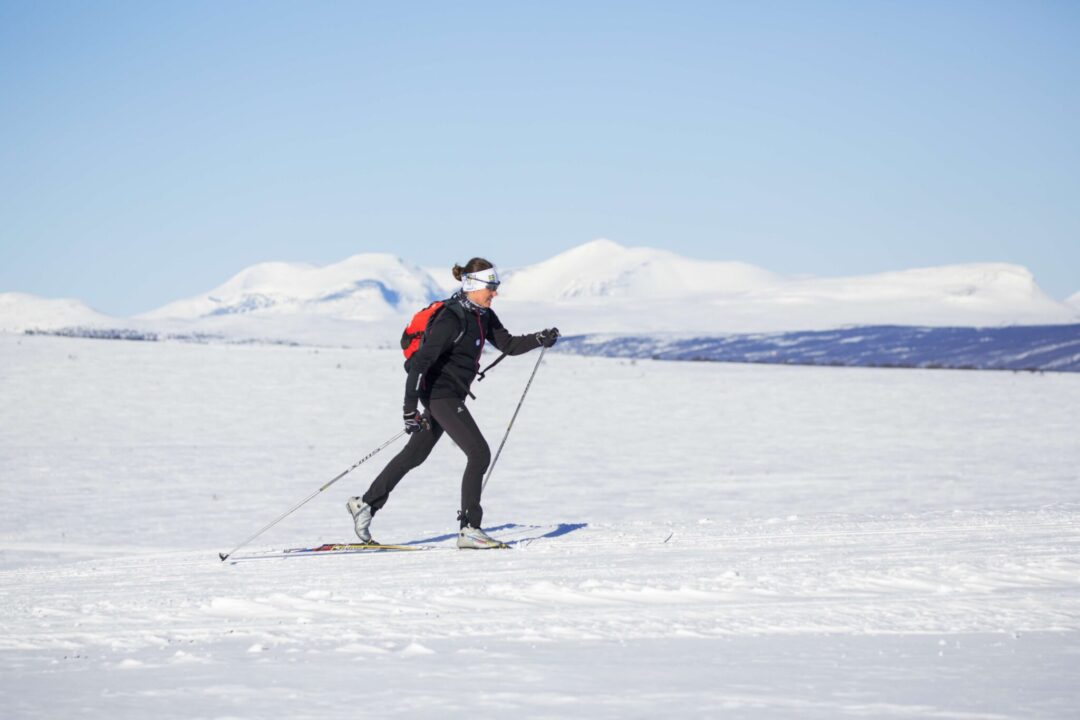
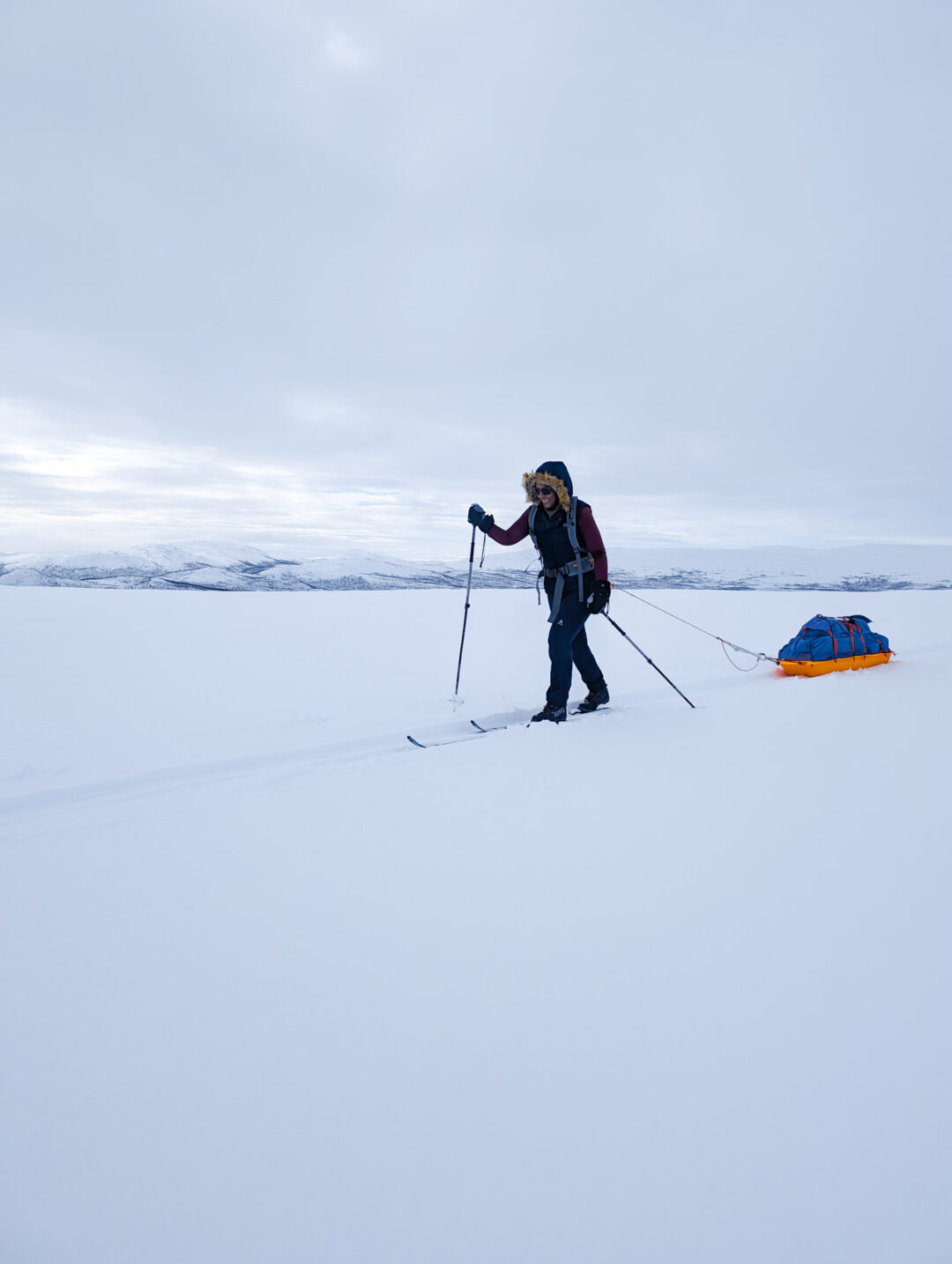
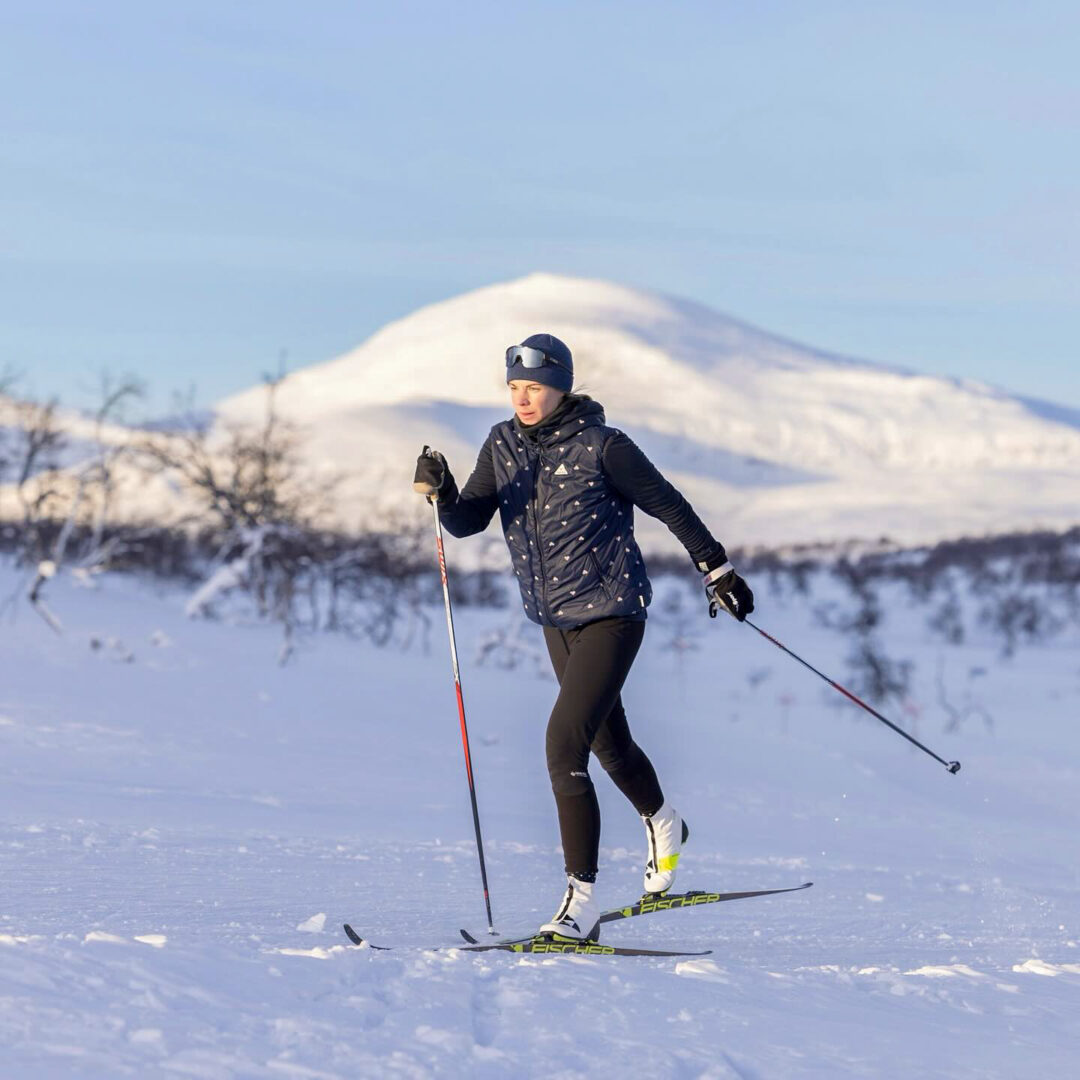
The ski day is the gentlest, at beginner pace and flat along the frozen river. The snowshoe day is longer, and walking in deep snow is more work than walking on a path. The snowmobile day is easier on the legs and harder on the arms than people expect.

The dog sledding is the one to train for. You stand on the runners rather than sit, kick to help the team up the rises, hold the brake on the descents and shift your weight through the corners. Then there is harnessing, feeding and settling the dogs at the cabin. They do the pulling. You do everything else.

Cold is the multiplier across all of it. Simple jobs take twice as long in mittens, so eat more than you think you need and drink more than you feel like drinking. The cabin night asks less of your legs and more of your attitude.

You will be fine here if you are comfortable being on your feet most of the day, several days running. To arrive feeling strong, build up with regular cardio plus anything that works your legs and core, because balance is what makes standing on a moving sled easy rather than tiring.

Skill

This trip is rated beginner. No experience is needed for any of it, and most people arrive having done none of it before.

Dog sledding is taught from scratch: a full safety briefing, then harnessing your team, reading their body language, the commands, the brake and the corners. The huskies are seasoned professionals who know these trails better than your guide does. Your job is learning to work with them rather than against them.

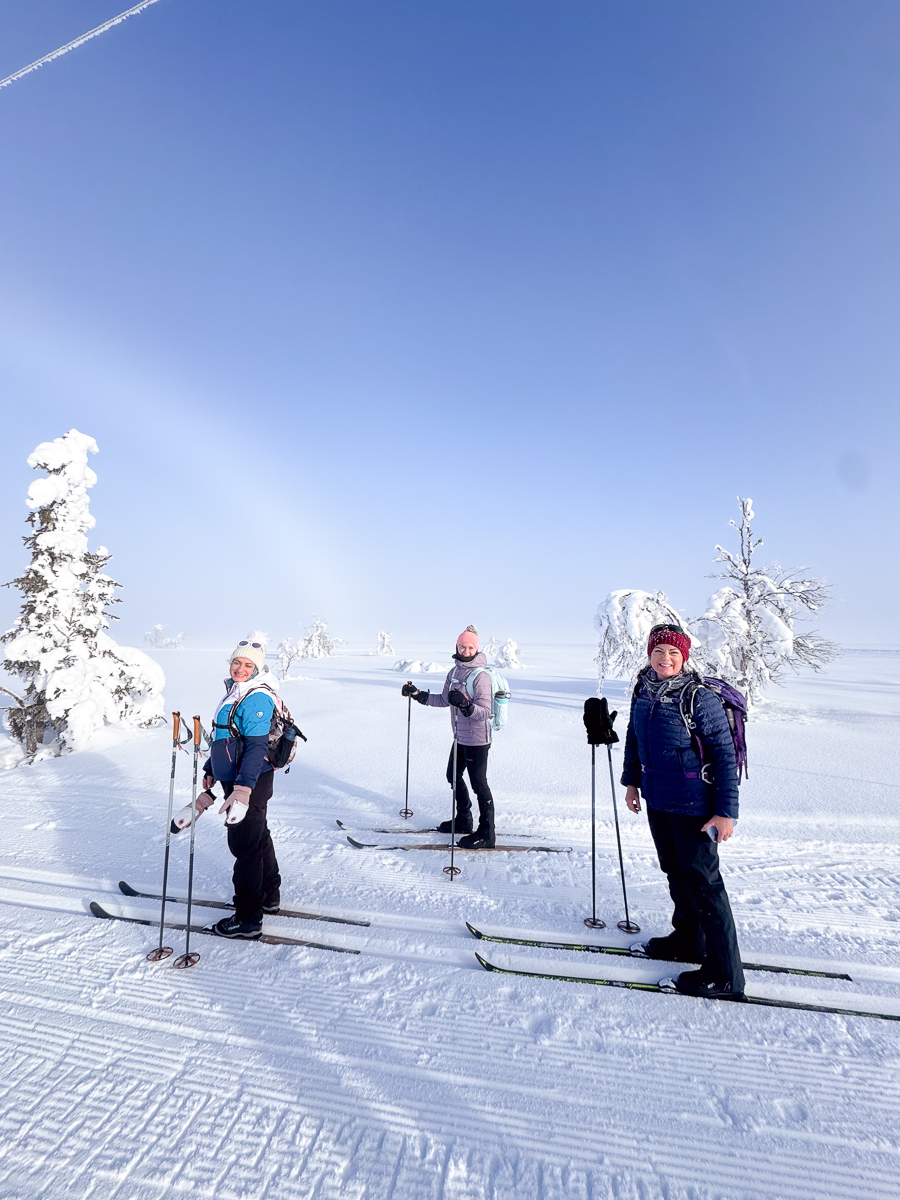
The ski session is an introduction on flat ground, and snowshoeing takes about ten minutes to get the hang of. One practical point on the snowmobiles: bring your driving licence if you want to drive one, otherwise you ride as a passenger.

How should I prepare physically for the trip?

We recommend doing medium to high-intensity cardio 3 times a week for around 45 minutes. Running, HIIT, cycling, spin classes – stuff that gets your heart pumping. Walking and yoga won’t cut it for the cardio demands.

Balance and core strength are also important for cross-country skiing and dog sledding, so that’s where yoga comes in handy. There’s also Pilates, or add exercises like squats and lunges to your routine.

What's a typical day actually like?

Up for breakfast, then 3-4 hours of morning activity, a lunch break, 2-3 hours afternoon activity or spa time, then dinner and a chance to fully chill. The wilderness cabin night is different – you’ll help prepare dinner and settle the dogs, then have time for stargazing or night snowshoeing.

How do I prepare for the wilderness cabin?

One night you’ll be off-grid with basic facilities, shared sleeping arrangements, and outdoor toilets. It’s clean and warm inside, but zero home comforts. If you’ve never done this before, practice sleeping with less and using facilities that aren’t pristine. If this sounds like your idea of hell then this probably isn’t the trip for you.

Can I skip activities if I'm tired or not feeling it?

Once you embark on the dog sledding expedition there’s no way back until you take a paws at the final hotel.

If you think you might be tired doing that much exercise consecutively, start building up your strength and stamina now so that you can enjoy your trip.

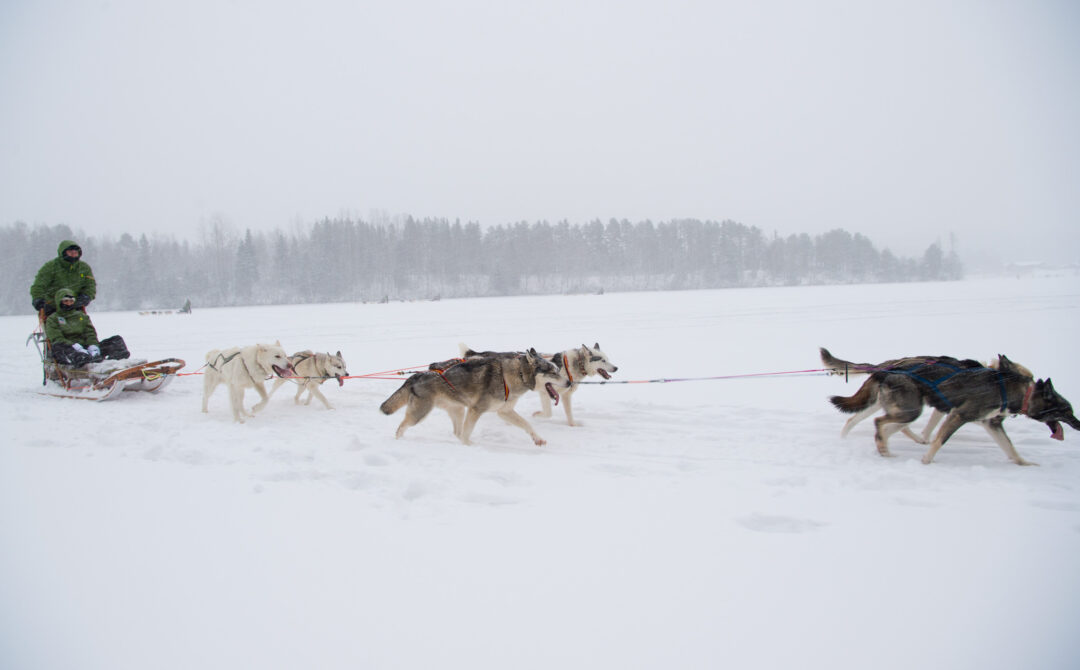
Dog sledding team running across snowy Swedish Lapland landscape in light fog

Sleep & Eat

You’ll spend four nights in an eco-hotel tucked into the forest, one night in a wilderness cabin with zero modern amenities, and your final night in a comfortable hotel in Umeå before flying home.

The eco-hotel is sustainably heated and built from natural materials, with comfortable beds, en-suite bathrooms, Wi-Fi and long views over the forest and the river. It is a good place to land after an active day.

The wilderness cabin is the real deal. What it lacks in electricity and running water it makes up for in the fact that you got there behind your own team of dogs. There are outside toilets and shared sleeping space, close quarters on wooden bunks, and it is only for one night. It is the price of staying somewhere this remote, and it is worth paying.

All meals, from dinner on arrival to breakfast on departure, are included. Expect hearty Swedish food built to fuel active days: locally sourced wild game, fresh produce and warming three-course dinners rather than fancy restaurant presentation. The eco-hotel is KRAV-certified organic and works with local hunters, farmers and foragers.

In the cabin, food is simpler but just as satisfying, with stews and traditional dishes cooked over the fire. Your farewell dinner in Umeå gives you a taste of Swedish city dining.

What's the eco-hotel actually like?

Nestled in nature by forests and the river, the hotel is geothermally heated and fully committed to living by its eco status. Rooms have comfortable beds, en-suite bathrooms with a shower, TV, WiFi and tea and coffee facilities.

What is the wilderness cabin like?

One night is spent off-grid in a wilderness cabin with no electricity or running water and an outside toilet. It is close quarters in there: wooden bunks, some of them wide enough for two, so you may end up sleeping side by side with another guest. Own duvet each, and it is warm.

The heat comes from a wood-burning stove and the light from candles, so after the eco-hotel it will feel basic, but that is rather the point. Bring a power pack if you want to keep your phone charged for photos.

Can you handle dietary requirements?

Yes, we cater to all dietary requirements including vegetarian and vegan. However, please inform us of allergies or preferences in advance and be aware that options may be more limited than you’re used to. Reindeer is part of traditional Sami culture – trying it is optional.

What about laundry during the trip?

The hotel can do laundry for an extra cost – you simply drop it at reception in the morning and collect it the next day. If things just need a quick rinse though we recommend some travel wash and a dunk in your bathroom sink.

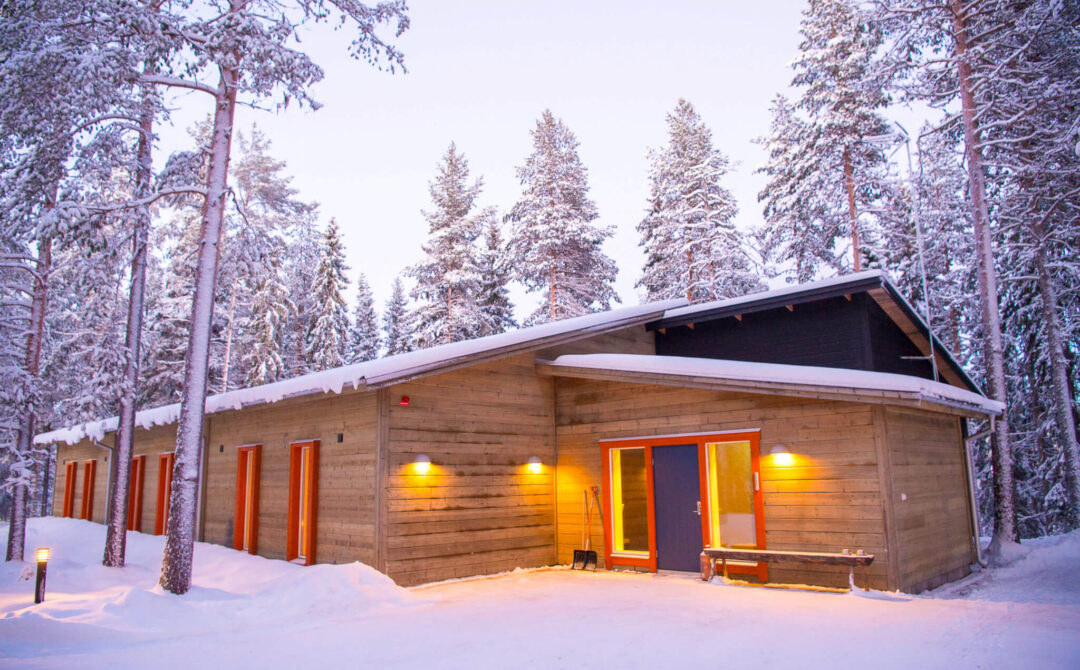
Snowy wooden cabin in a forest at dusk, Sweden Lapland winter lodge exterior
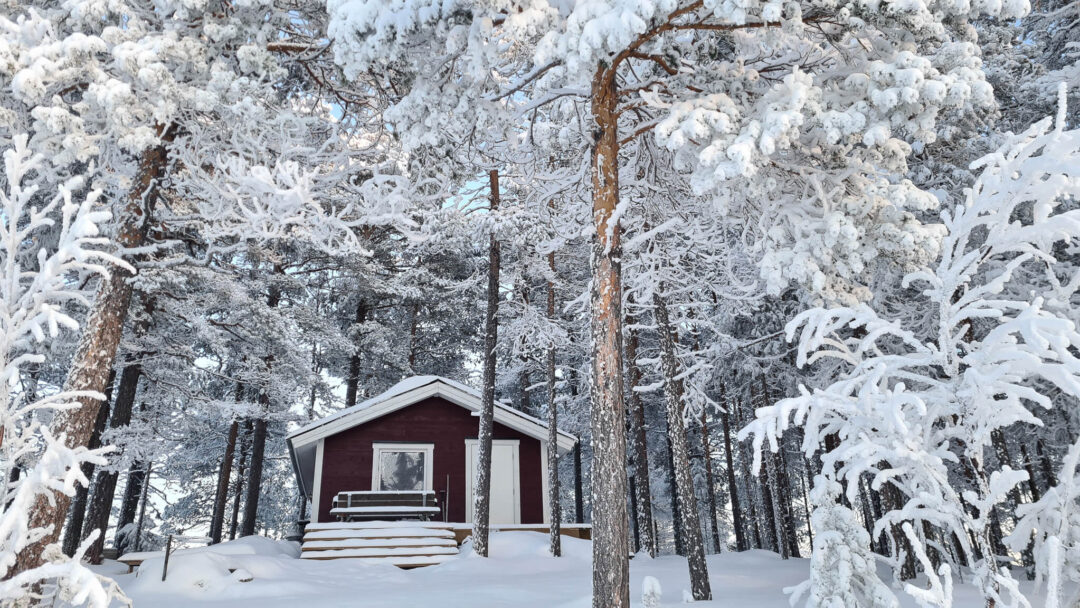
Snow-covered cabin in a pine forest with tall trees dusted in fresh snow

Weather

January temperatures are about -10°C to -20°C, but sometimes lower, whilst April offers slightly milder conditions (-5°C to -15°C) with longer days. The Swedish cold is dry instead of damp, but still demands respect and a lot of base layers.

How does weather affect the activities?

Guides monitor conditions and adjust plans for safety. However most of the time the key is proper layering and staying active. If you’re dressed correctly and moving, -20°C feels manageable.

What if there's not enough snow?

Swedish Lapland usually has pretty good snow covering from January through to April. What varies though is fresh snowfall, which affects conditions. Our guides know how to work with all snow types though, from fresh powder to packed trails.

Will it get too cold for the dogs?

The Alaskan huskies are born for this weather. Their coats and paws are designed for snowy and icy conditions and they’re just as happy curled up in a snowstorm as they are by a fire. If the weather gets too cold for the dogs, then it will definitely be too cold for you so there’s no way you’ll be going out in it.
Dog sledding team pulling sled through snowy forest in a winter landscape

Good to Know

Communication: Wi-Fi is available at the eco-hotel and the hotel in Umeå, but there’s none at the wilderness cabin — no electricity out there means no WiFi either.

Money: Most places in Sweden accept card, so there’s no need to carry much cash. A small amount of local currency is worth having for personal expenses and tipping.

Tipping: Tipping is not compulsory on our adventures, but if you’ve had a great trip and brilliant service, a tip for your guide or host is always appreciated. We recommend giving 200-300 SEK, or whatever you can or feel is the right amount.

Why aren't all guides and instructors female?

We work with the best guides available, male or female. There are fewer women in outdoor guiding roles, so we prioritise expertise and guest experience. We vet every guide carefully and monitor feedback closely to ensure all guides align with our ethos and standards. We also hope more trips like ours encourage more women to find new activities and become guides themselves.

What happens if weather affects a planned activity?

Guides will adjust the plan if conditions make an activity unsuitable. The order of activities may change and a level of flexibility is key. Safety comes first throughout the week.

How many guests will be on this trip?

Max 8 guests.

When should I buy travel insurance?

As soon as you book. Your policy should cover trip cancellation, medical emergencies and evacuation, baggage loss, travel delays and missed connections, and all activities included in your itinerary — snowmobiling, dog sledding and backcountry skiing included.

Packing List

What We Provide

    • Snowshoes
    • Hiking poles
    • Skis and ski poles
    • Available to Rent (£65 for the full trip):
    • Polar boots
    • Thermal trousers
    • Thermal jacket
    • Gloves

What You Need to Bring

Snow Kit

    • Warm, waterproof hiking boots — mandatory, not included in the clothing rental
    • 25 litre daypack for carrying layers and lunch
    • Thermal base layer tops — synthetic, wool, or silk, at least 2 sets
    • Thermal long johns — synthetic, wool, or silk, at least 2 sets
    • Warm fleece or wool mid-layer top
    • Fleece sweatpants or thermal leggings (mid-layer for legs)
    • Light synthetic or down insulated jacket
    • Breathable, waterproof, windproof shell jacket
    • Breathable, waterproof, windproof thermal trousers or ski salopettes (or rent these)
    • Warm packable insulated or down jacket (for stops and campfire lunches)
    • Selection of warm socks in different thicknesses — wool is best
    • Warm winter gloves (or rent these)
    • Glove liners and/or hand warmers if you run cold
    • Warm hat
    • Buff — two if you can (one for your neck, one as a headband)
    • Sunglasses with UV protection — snow reflects UV intensely even in winter
    • Headtorch

Off the Snow

    • Casual warm evening clothes
    • Nightwear
    • Slippers or shoes for the hotel
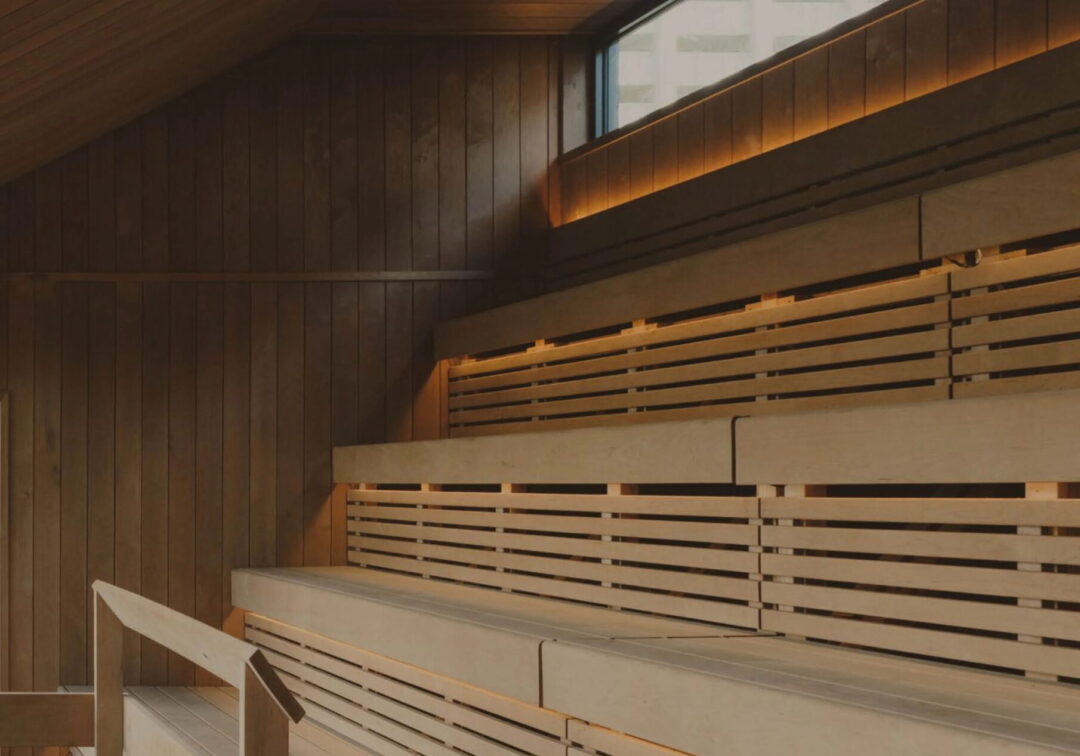
    • Swimwear for the sauna and ice bathing
    • Sandals (plastic ones for the sauna)
    • Neoprene booties and gloves for ice bathing (optional)
    • Travel towel (for swimming and sauna — bath towels provided at the hotel)
    • High-SPF sunscreen and SPF lip balm
    • Toiletries and any prescription medication
    • Paracetamol and ibuprofen
    • Compeed or Moleskin blister plasters

Other Kit

    • Insulated water bottle
    • Thermos for hot drinks on activity days
    • Snacks
    • Driving licence


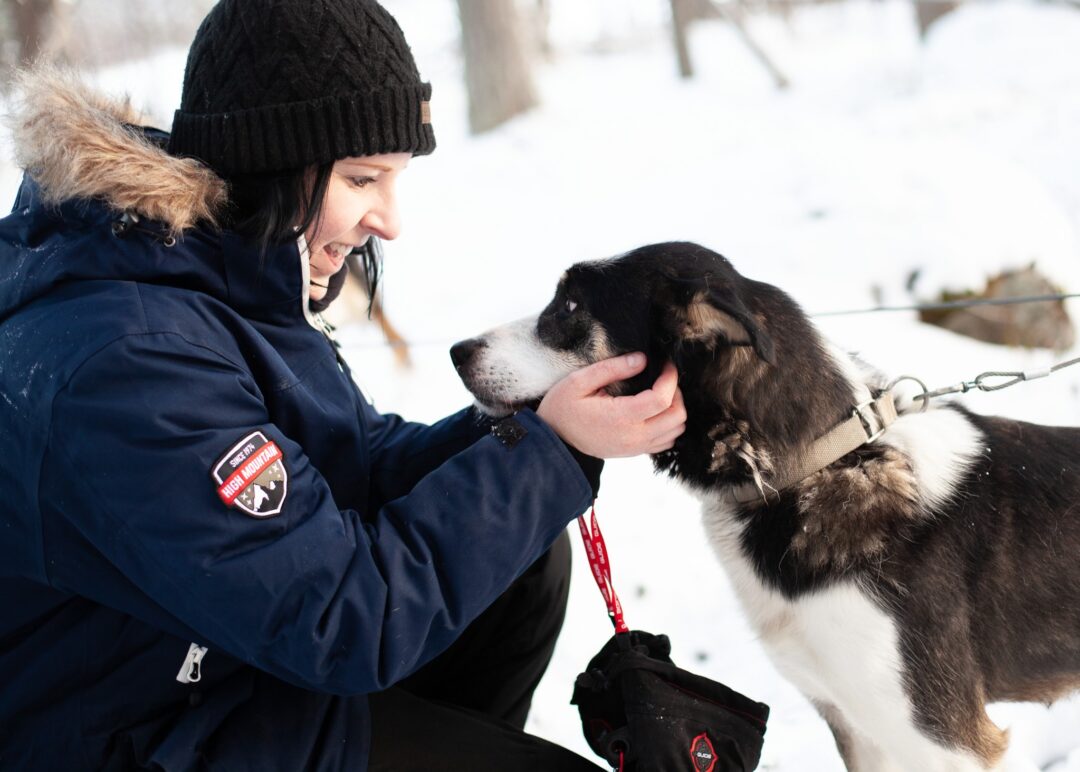
Woman stroking a sled dog in snowy Swedish Lapland during a dog sledding expedition
Snowy forest valley with cabins and a frozen river in Swedish Lapland

Trip Code SWEGRADOG – Include this code in any message so we can find your trip straight away.