Fitness & Skill Level
This is one of the toughest trips we run. No prior snowshoeing, glacier or winter camping experience is needed, but you do need to be fit, and you need to have trained for it.
The Conditions
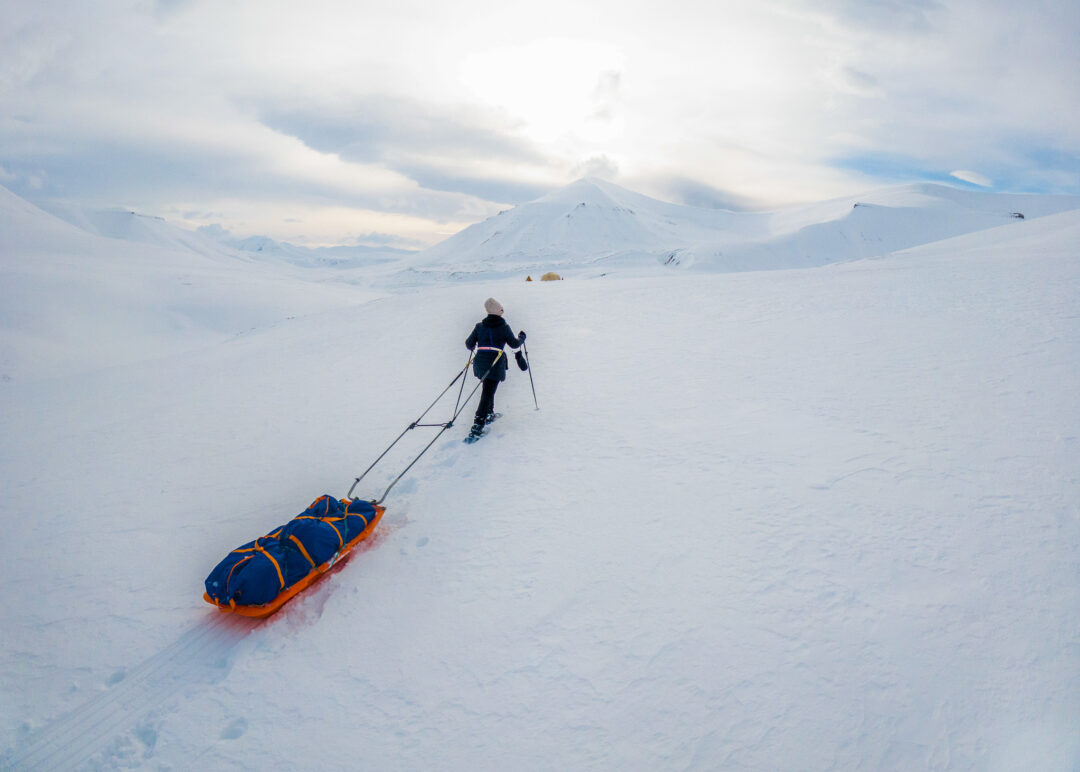
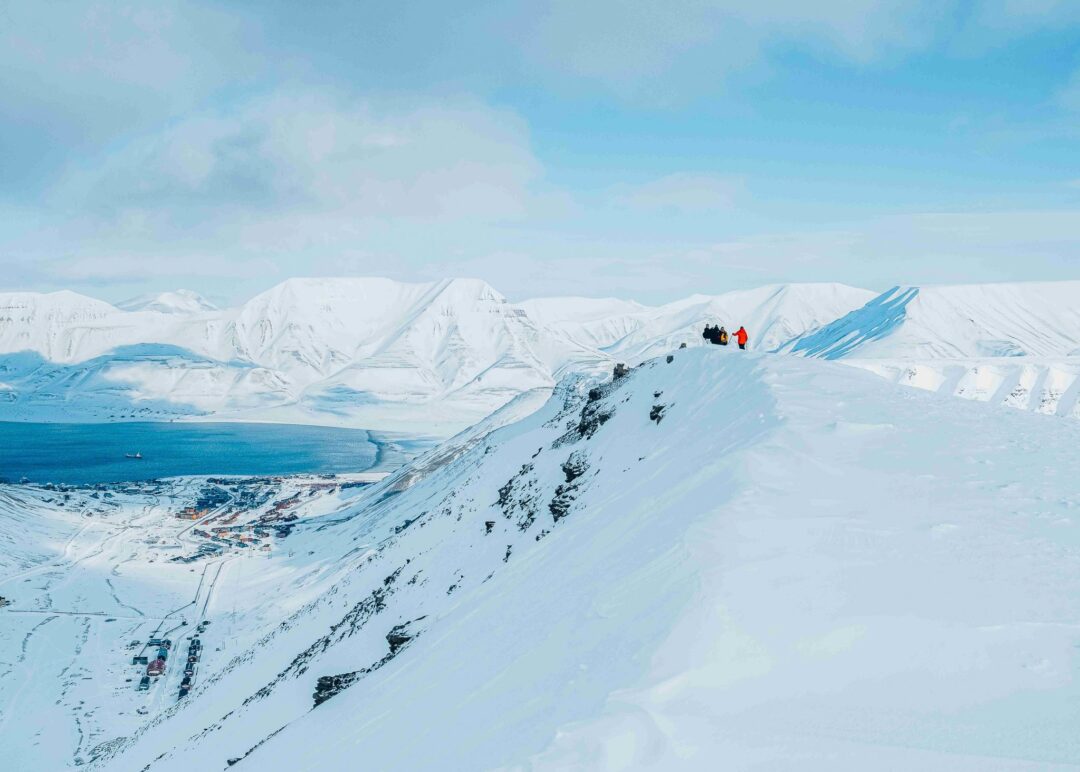
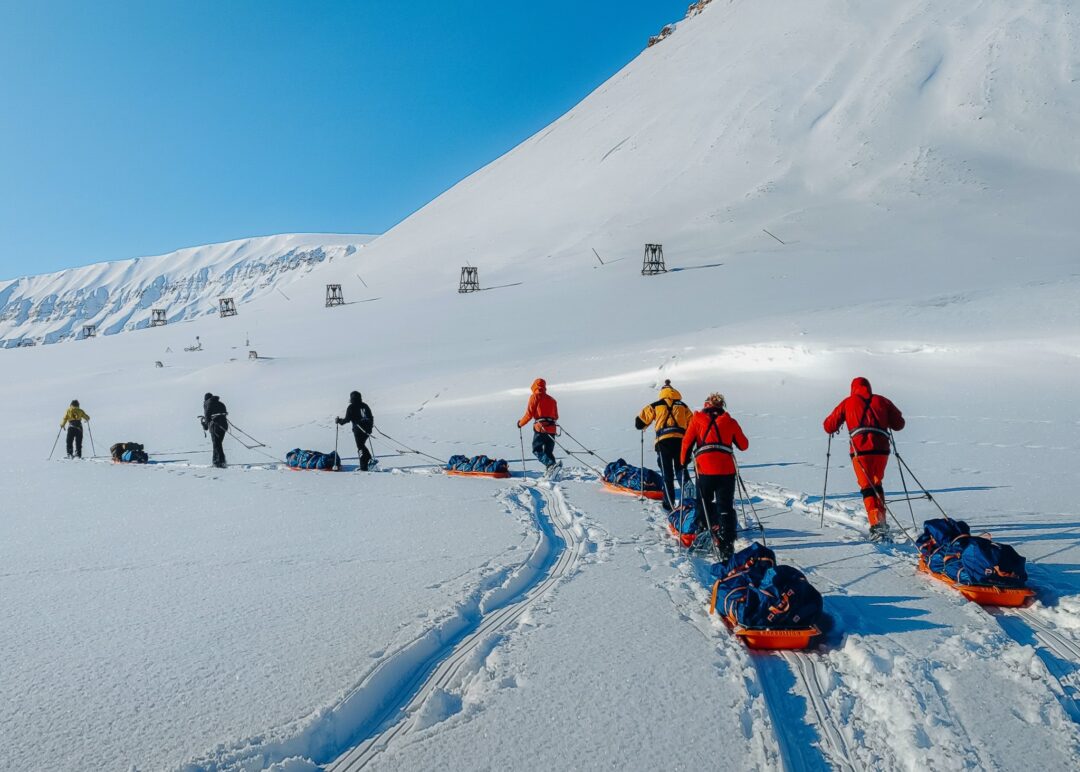
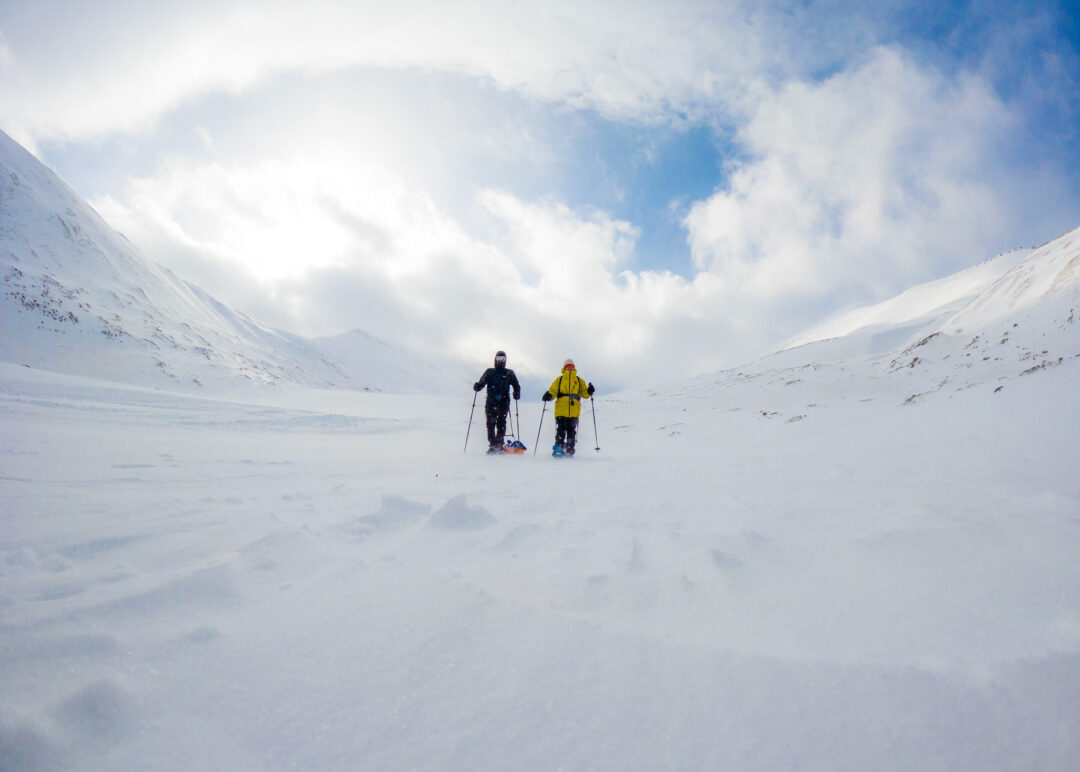
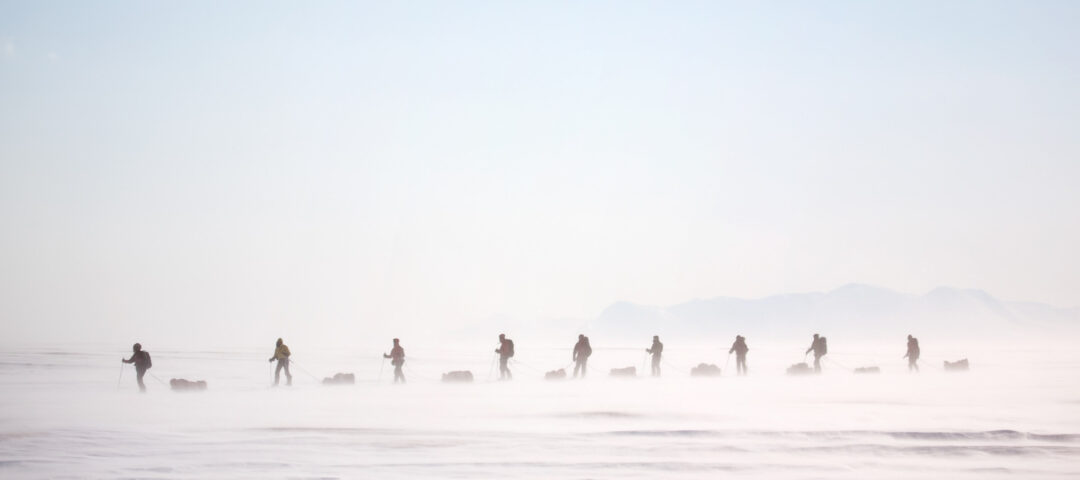
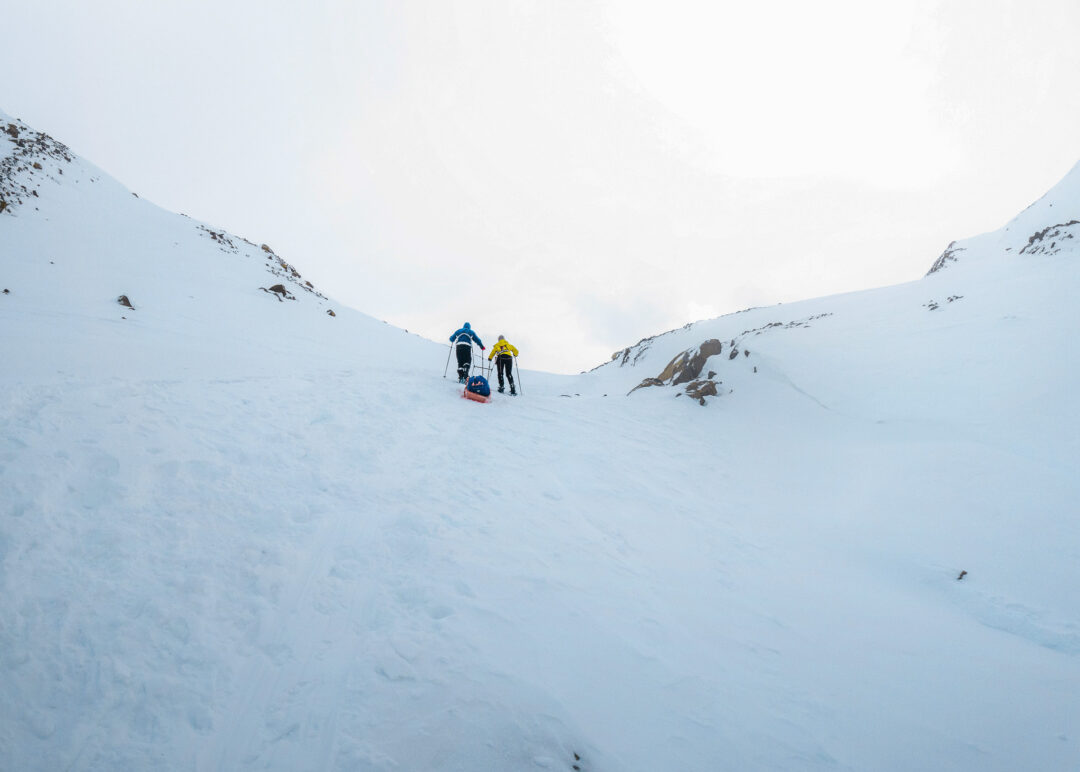
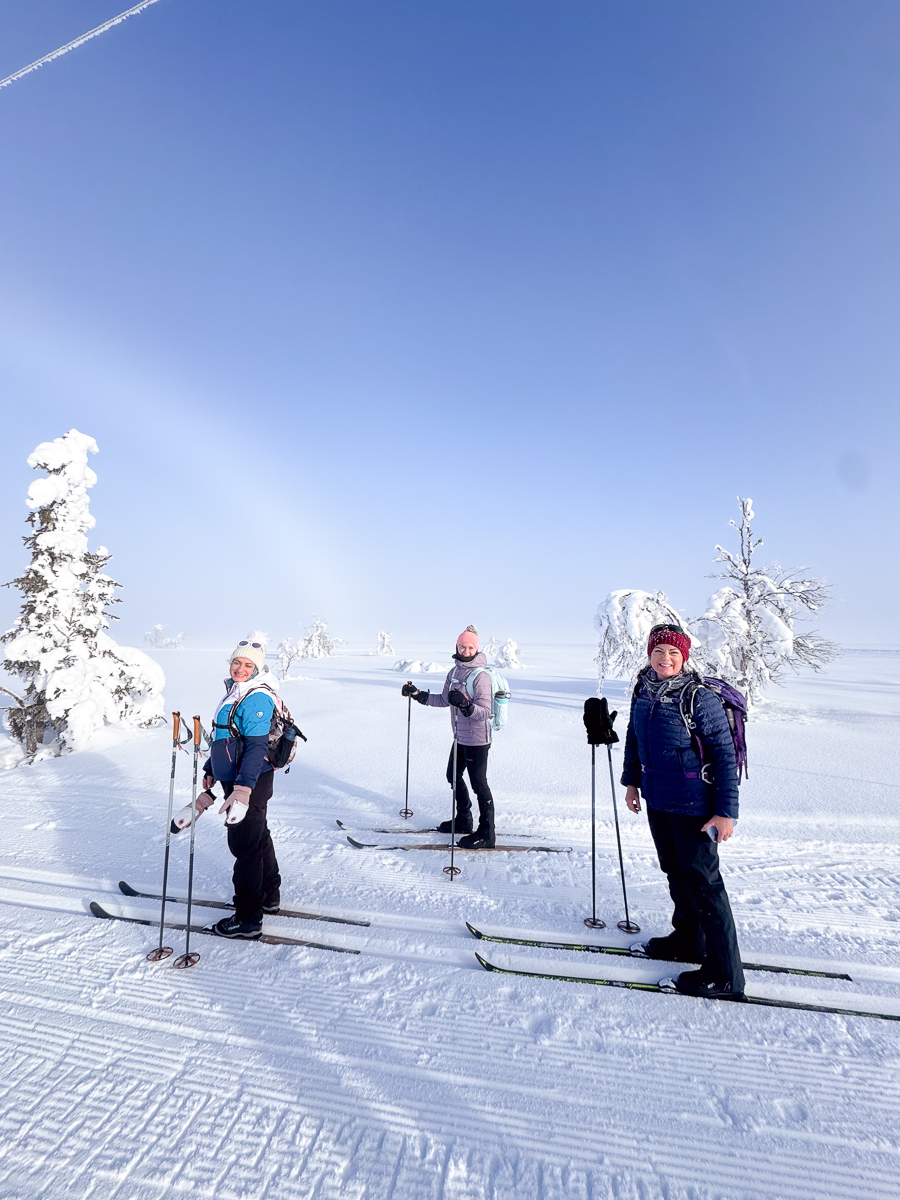
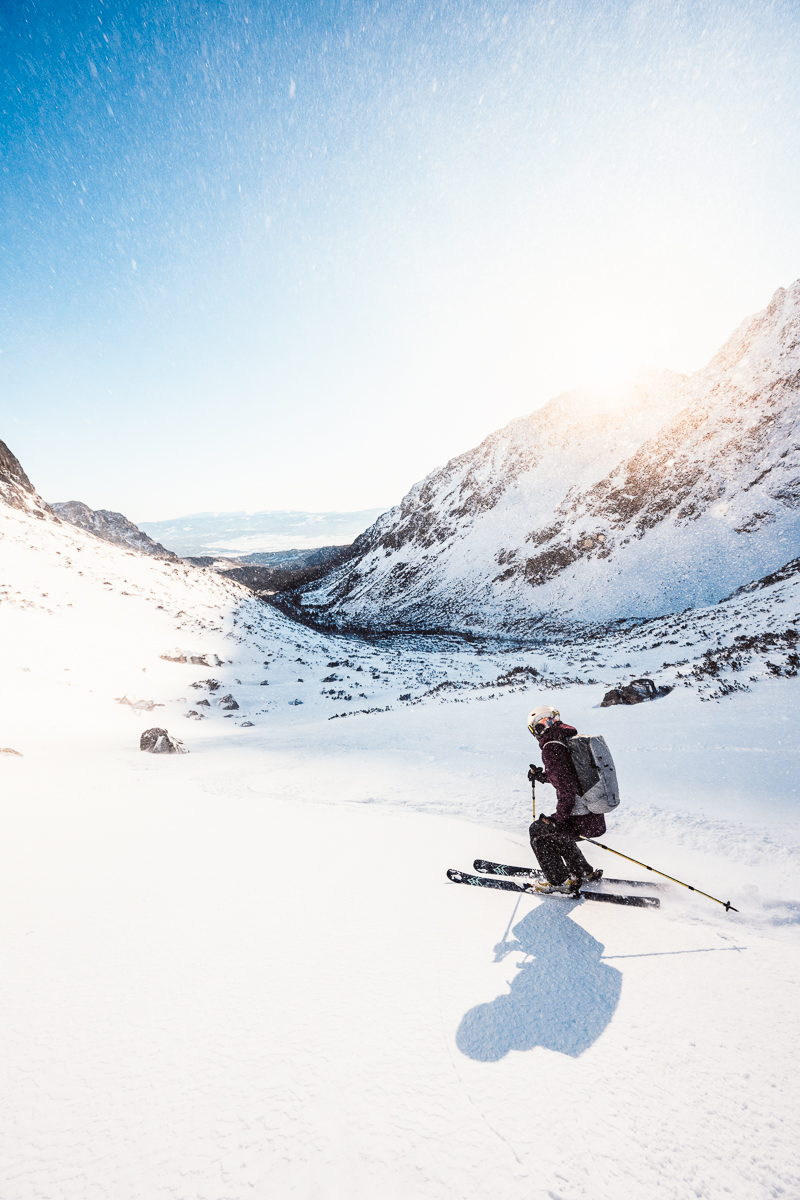
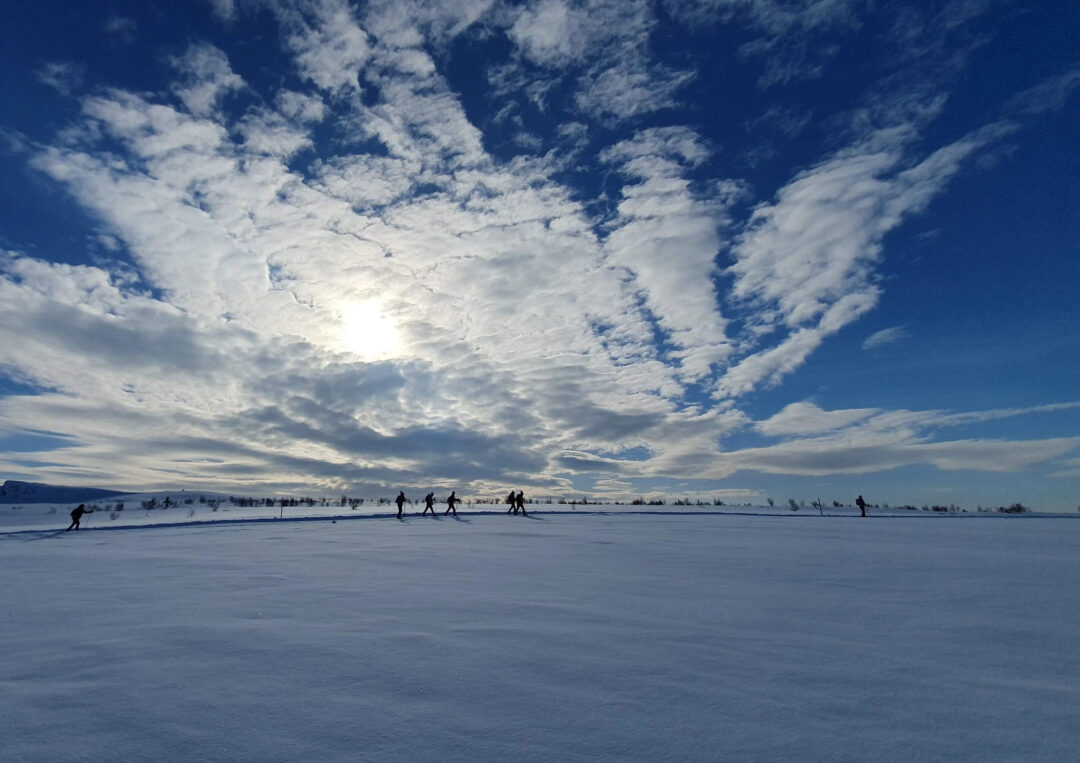
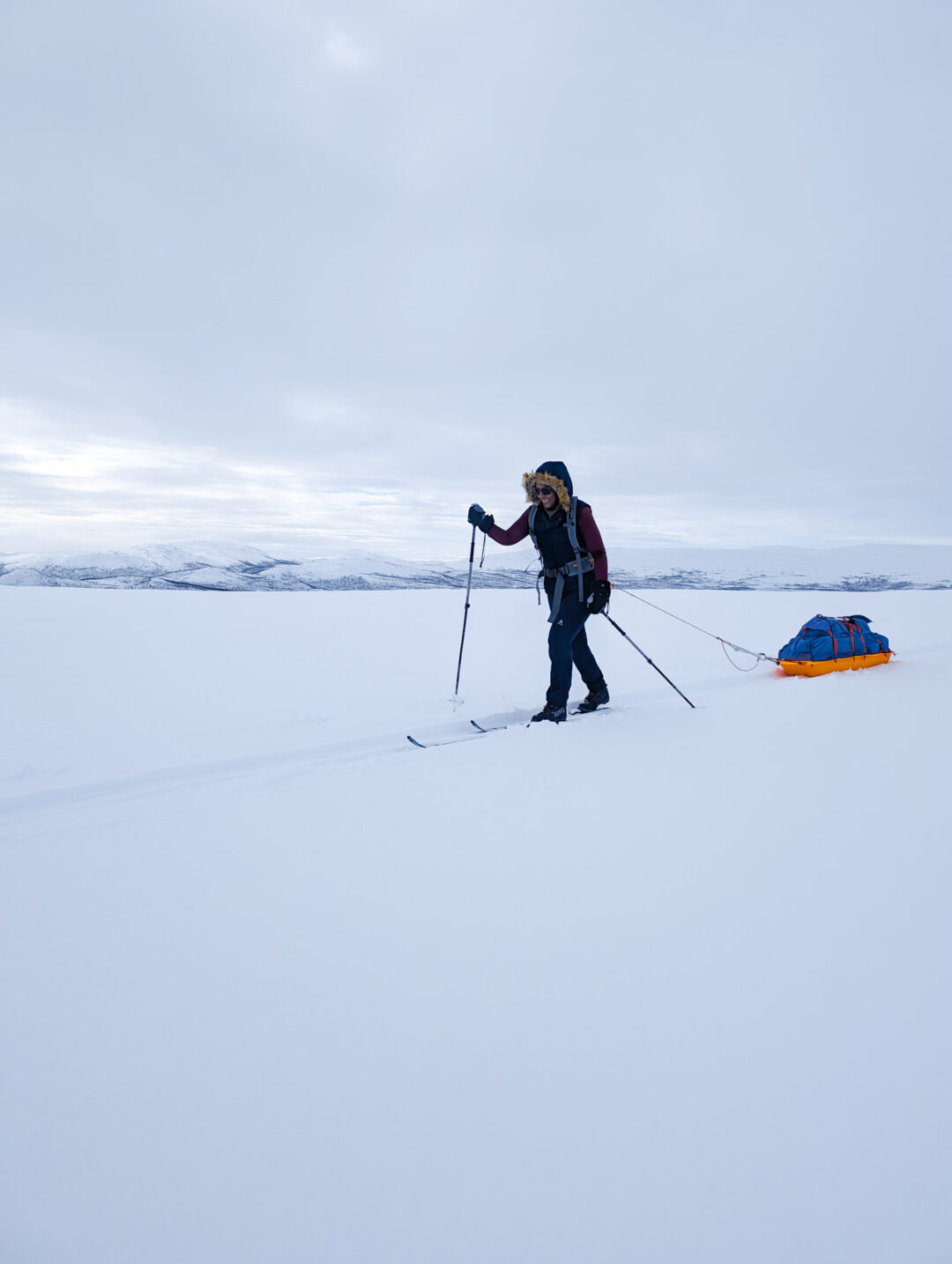
There are five active days in a row, with no rest day in between. Expect five to six hours of moving each day through deep, ungroomed snow, which is harder work than the same distance on a summer trail. On two of those days you’ll haul a loaded pulka with your own kit in it, in and out of camp. Underfoot you’ve got rugged ground buried under snow, snow-covered valleys, glacier crossings and tight crawl sections inside the ice cave.
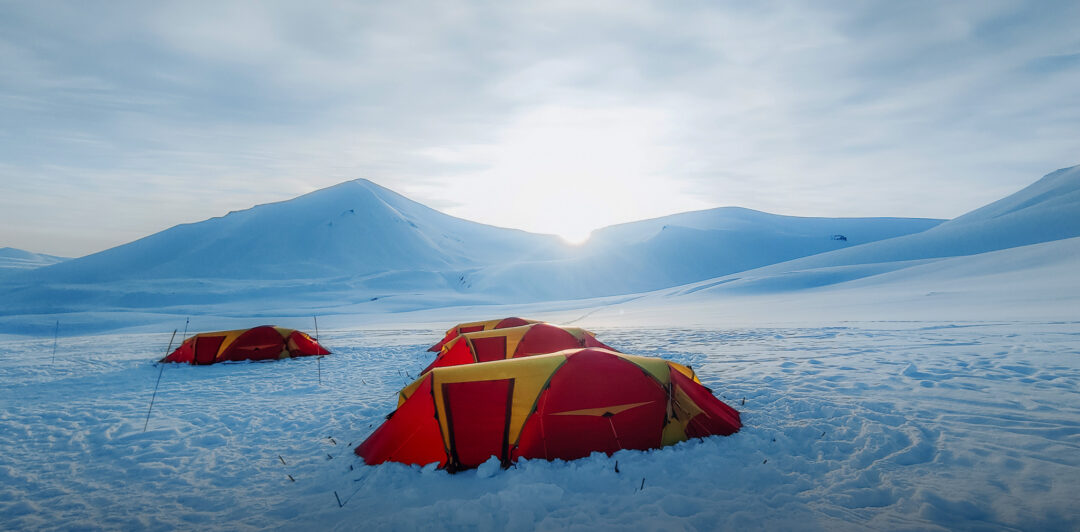
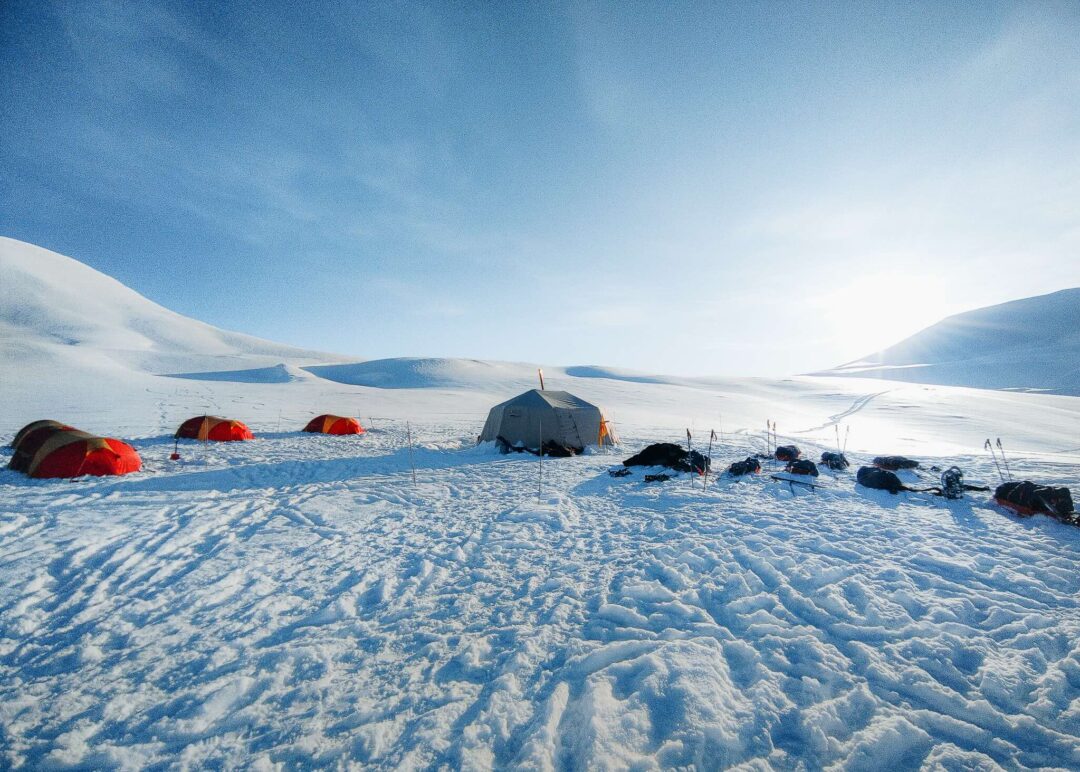
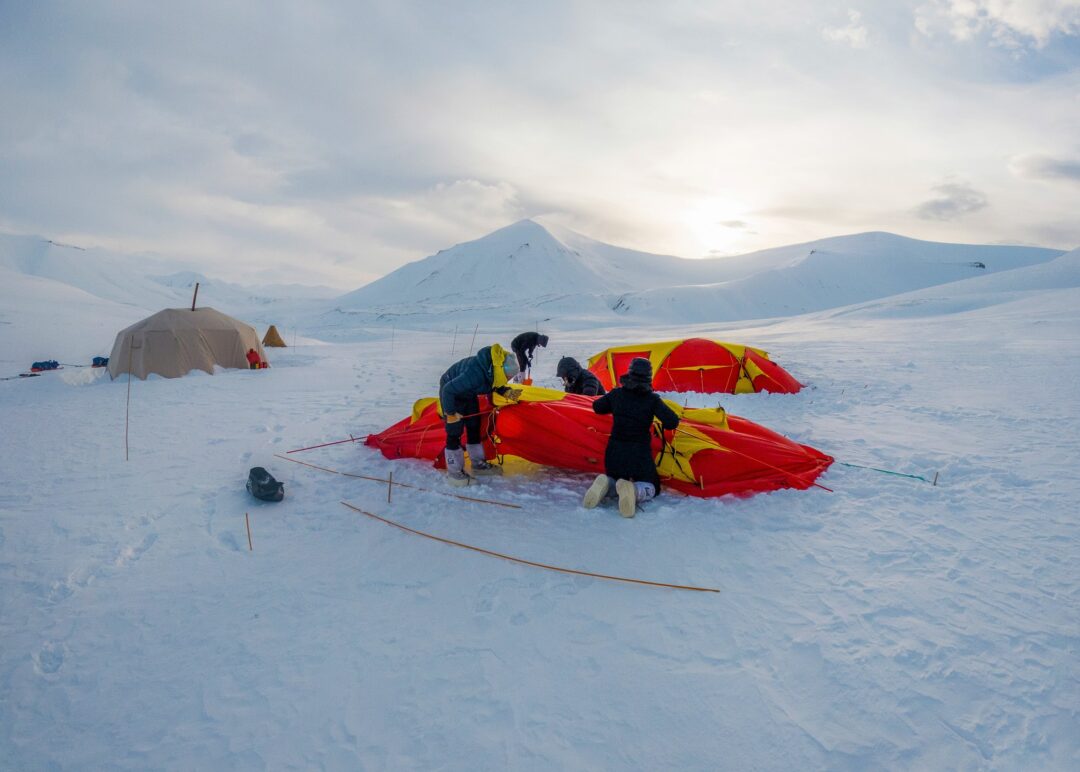
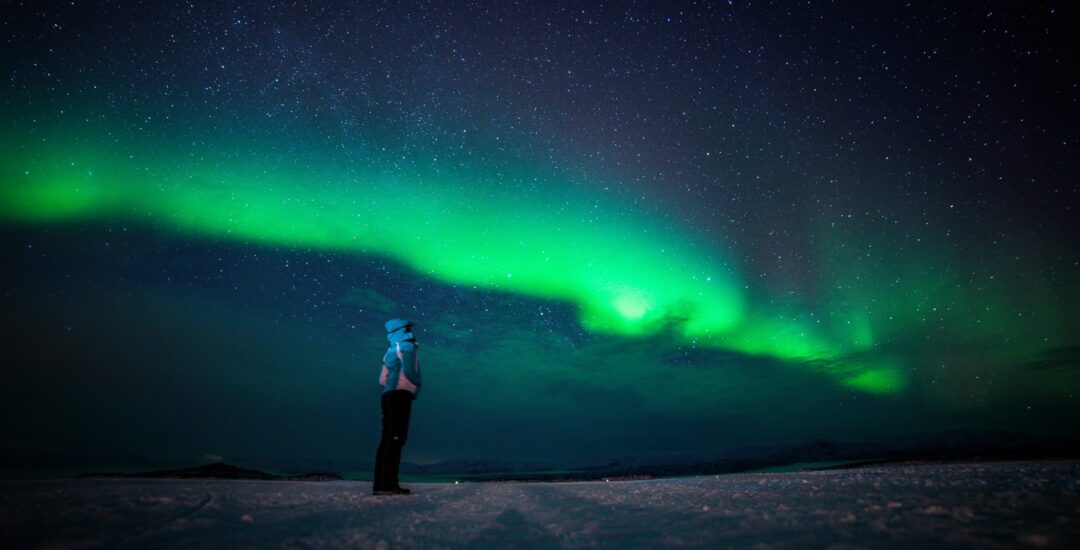
Then there’s the cold. You’re at 78°N and outside all day, in sub-zero temperatures with wind chill on top. Two of the nights are spent in a two-person tent pitched in the snow, with a heated communal tent for meals and a toilet tent, and that’s the lot. No running water, no electricity, no showers. You’ll take a shift on polar bear watch, so sleep at camp will be broken. Everything takes longer in these conditions. Getting dressed, eating, packing your sled, all of it, and you’ll be doing it in mittens with numb fingers.
You’ll also be living at close quarters all week, and camp only works if everyone pitches in. Melting snow for water, cooking, washing up, putting tents up and taking them down, digging out when it drifts. It’s twin rooms at the guesthouse, a shared tent at camp and a toilet tent, so there’s almost no privacy and very little time on your own. If that’s something you’d struggle with for a week, it’s worth thinking about honestly before you book.
Fitness
Be honest with yourself about where you’re starting from, because this is an endurance trip and the training has to happen before you get here.
What you’re building towards is cardio at least three times a week, 45 minutes to an hour a session, a longer hike or run on top of that, and strength work for your legs and core. The strength work is what carries you through the sled days and the deep snow. Getting out in bad weather with a loaded pack is the closest thing you’ll find at home to a day out here.
If you already train regularly and are used to long days on your feet, you don’t need to overhaul anything. Maintain what you’re doing and add some longer days with a loaded pack in the months before you travel.
If you’re active but not consistently, give yourself around three months. You can make real progress in six to eight weeks, but the thing this trip asks of you is back-to-back days and dragging a loaded sled, and that side of it builds slower than general cardio does. Three months also leaves room for the week you lose to a cold or a busy patch at work.
If you’re starting from a low base, plan on longer still and build gradually. Jumping straight into that volume from very little is how people pick up injuries before they’ve even left, and if you’re not sure how to structure it, it’s worth getting advice from a coach or trainer. We’re a travel company, not fitness professionals, and we’d rather point you to someone who knows what they’re doing than guess at it.
Either way, cramming it into the fortnight before you fly won’t work. Fitness gains take time to arrive. If you’re starting from nothing, this isn’t a trip to sign up for and hope, and we’d rather you came to it next year properly ready than have a miserable week.
Skill
No technical skill is needed. Snowshoeing is walking with a bigger footprint, and your guides will get you comfortable with the kit on day one. What this trip asks for instead is fitness and a bit of grit. When you’re cold and tired and there are still a few kilometres of snow between you and camp, your mindset is what gets you there.
If you’ve never done an active adventure holiday before, this probably isn’t the one to start with. Something gentler first will tell you a lot about how you handle long days outdoors, and you’ll enjoy this one far more for having done it.