Trip Guide

Trip Guide: Beginner Horse Riding Holiday in Iceland

Always dreamed of horse riding across volcanic landscapes? This is three days in the saddle on the Troll Peninsula, getting to know one of the world’s most unique and historic breeds in the heartland of Icelandic horse culture, the Skagafjörður region. It’s beginner-friendly, but don’t let that fool you: consecutive active days on horseback in North Iceland’s changeable autumn weather is a proper adventure, and this guide has everything you need to arrive prepared.

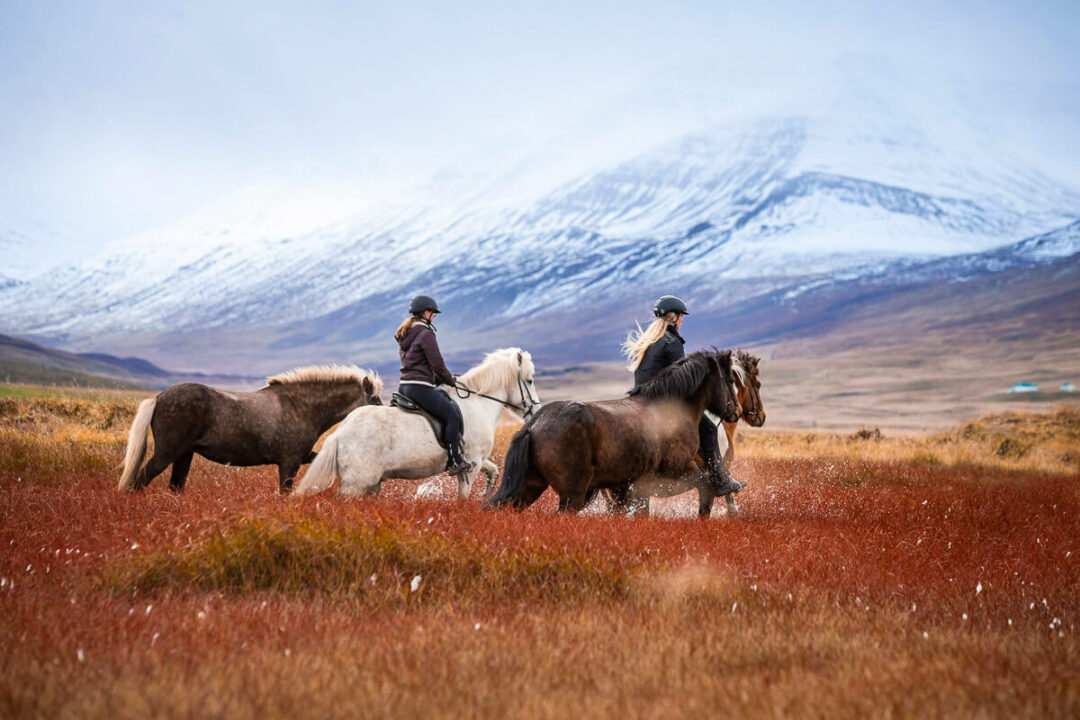
Women horseback riding across a grassy landscape with snowy mountains in the background

Getting There

Fly into Akureyri Airport in North Iceland, where the group transfer will be waiting to take you north to the lodge on the Troll Peninsula, a scenic drive of approximately two hours. Getting here is straightforward, and we’ll connect you with the rest of the group via WhatsApp before you travel so you can look out for each other at the airport.

What airport do I fly into?

You fly into Akureyri Airport (AEY) in North Iceland. You are responsible for booking your own flights, although contact our Bookings Team if you have any questions.

Suggested Flights
  • LGW – AEY – 6:00 – 8:20  | EZY8849
  • AEY – LGW – 17:55 – 22:20 | EZY8850
Group Transfers
  • Arrival day: Pick up at Akureyri Airport at 9:20
  • Departure day: drop off at Akureyri Airport at 15:55

What time is the transfer?

We run one group transfer on arrival day and one on departure day. Your arrival and departure transfer times will be available in your customer portal after booking.

How long is the transfer?

The journey from Akureyri Airport to the lodge takes approximately two hours.

Where do I meet the transfer?

We will pick you up from Akureyri Airport. We’ll connect you with others on the trip via WhatsApp before you travel, so you may be able to arrange to travel together.

What if I arrive on a different day or miss the transfer?

We do not provide individual transfers for anyone arriving at different times. If your flight doesn’t align with the group transfer, you’ll be responsible for making your own way to the accommodation. Private transfers can be arranged at an additional cost of approximately £320 for the car (up to four people) – please contact us in advance to arrange this.

What happens if my flight is delayed?

If your flight is delayed, the transfer may not be able to wait for you and you’ll need to make your own way to the accommodation. We strongly recommend travel insurance that covers delays, cancellations and missed connections.

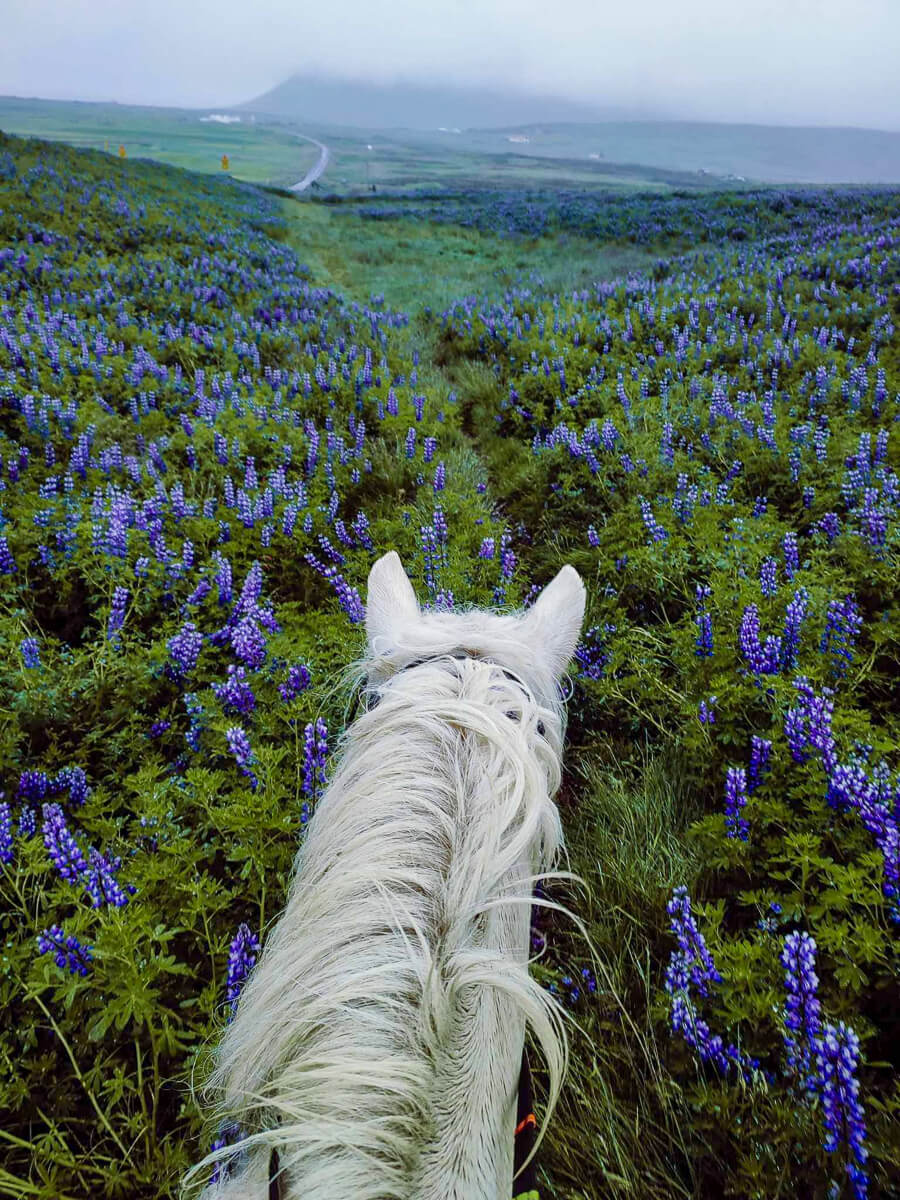
White horse riding through Iceland’s purple lupine flower fields with a winding road in the mist
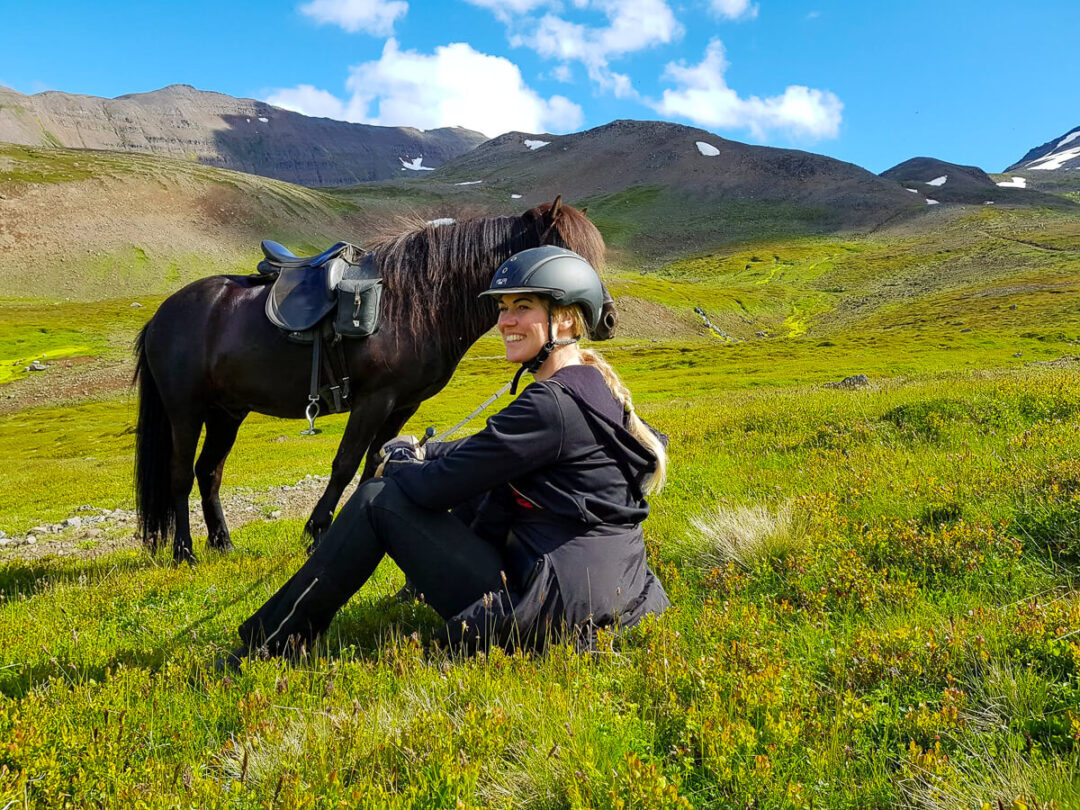
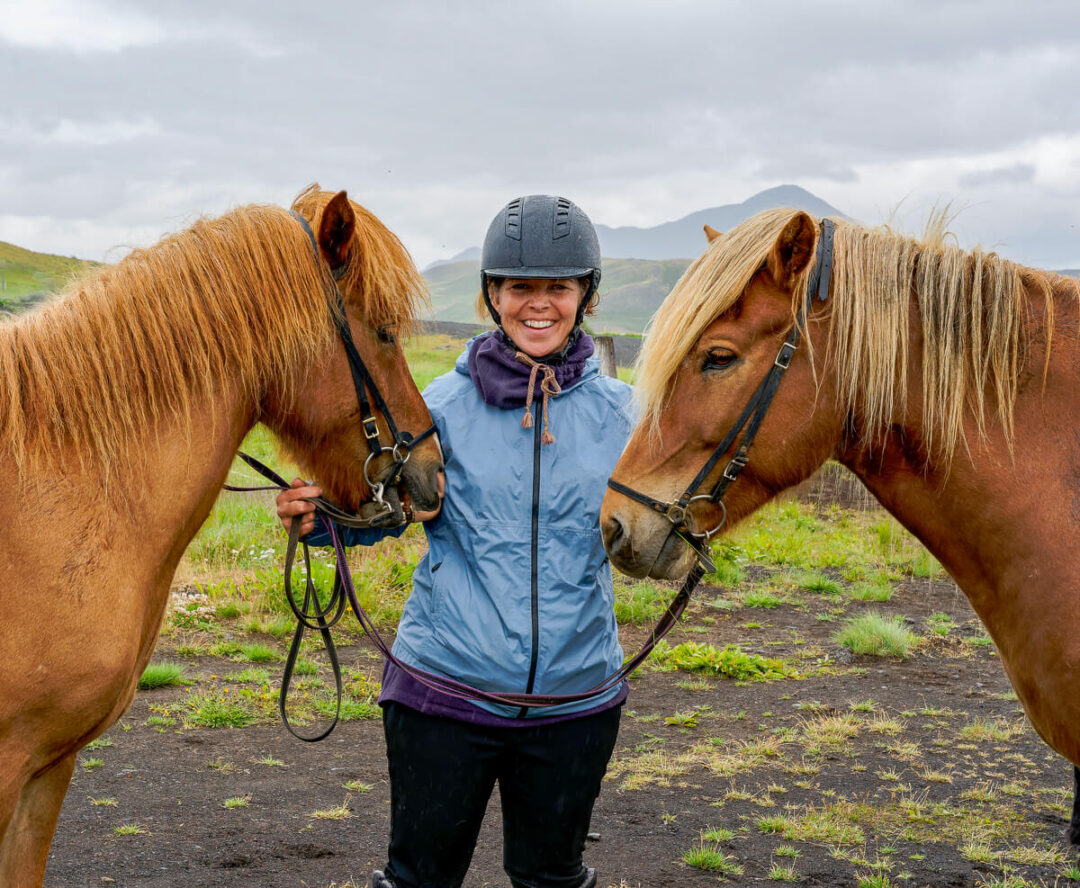
Woman wearing a helmet kneels beside a saddled horse in a grassy mountain valley outdoors

Fitness & Skill Level

This trip is rated moderate and is beginner-friendly, so you don’t need any previous horse riding experience, but will also get a lot out of the trip if you can ride already. More essential is a good base fitness and the readiness to be outside and active for four consecutive days. Horse riding isn’t overly strenuous, but three days in the saddle will work muscles you didn’t know you had, and you may be a bit saddle sore regardless of how comfortable the Icelandic Horse is.

    • Four consecutive active days – a hike on arrival day, followed by three days of horse riding
    • Each riding session lasts approximately 1–2 hours; on full days you’ll spend approximately four hours in the saddle across two sessions
    • Out of the saddle you’ll learn horse care and get hands on looking after your equine buddy.

Fitness Requirements

Cardio: You need to be comfortable being active and outdoors for several hours at a time. Steady cardio such as running, hiking, cycling three times a week is the right kind of preparation. You don’t need to be fast, just able to keep going.
Riding-specific prep: If you’ve never ridden before, don’t worry. If you want to get a head start, consider a taster lesson locally so your first time in the saddle isn’t also your first time in Iceland. Stretching daily in the weeks before the trip will also help – three days on horseback will find muscles you didn’t know you had.
Other considerations: If you have any existing condition that might make falling off a horse more problematic, please get in touch before booking. If you’re over 90kg, also let us know and we’ll liaise with the stables to check if we can accommodate you.

Do I need previous horse riding experience?

Not at all. Our excellent guides will teach you everything you need to know about Icelandic Horses, from mounting to feeling confident in the saddle and on the ground. You just need to be active, fit and ready for the challenge.

I've already done a bit of horse riding - will this trip still be a good fit?

Absolutely. While this trip is ideal for beginners, it’s also a great opportunity for those with prior riding experience to get to know such a special breed and ride in an incredible location. You’ll get to experience the tölt, a pace unique to the Icelandic Horse, and learn more about the country’s equine heritage.

Who is this trip for?

This trip is for anyone who wants to learn more about the incredible Icelandic horse and see the Troll Peninsula from a completely different perspective. It’s not just about the riding, it’s also about getting to know this breed and how it ties into the history and culture of Iceland itself.

Do I have to do every activity?

Please get in touch before booking if you have any concerns about specific activities, particularly around horse riding. Our guides are experienced at working with all abilities, but it’s worth having that conversation ahead of time.

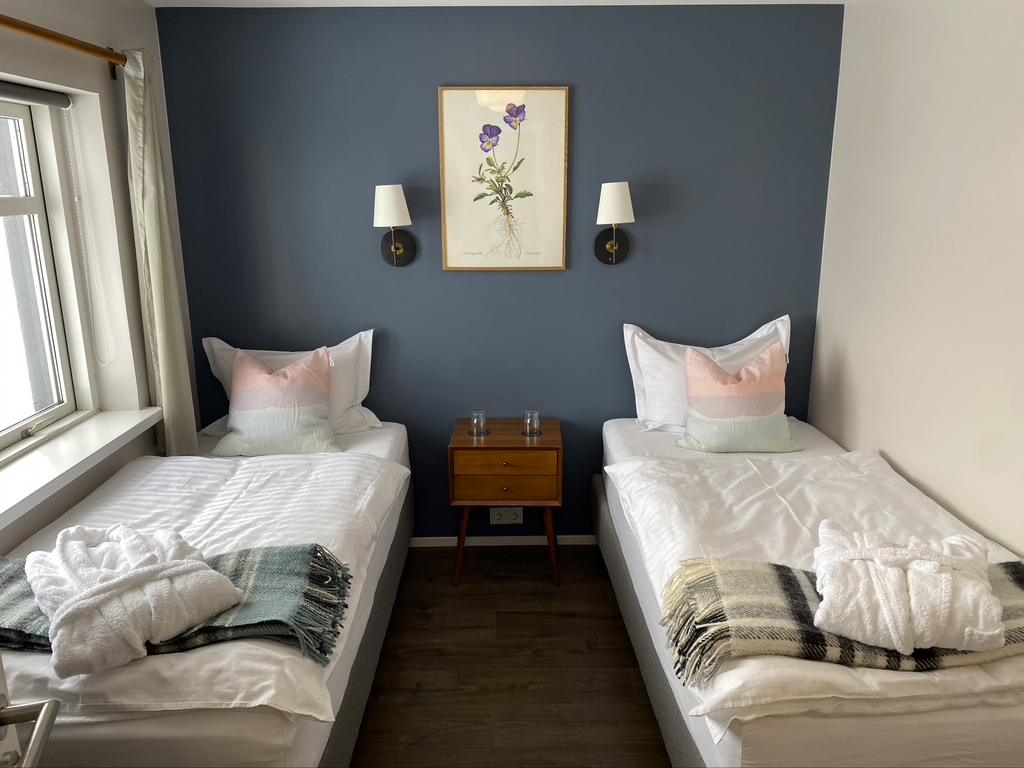
Two neatly made single beds in a bright double bedroom with bedside tables and lamps
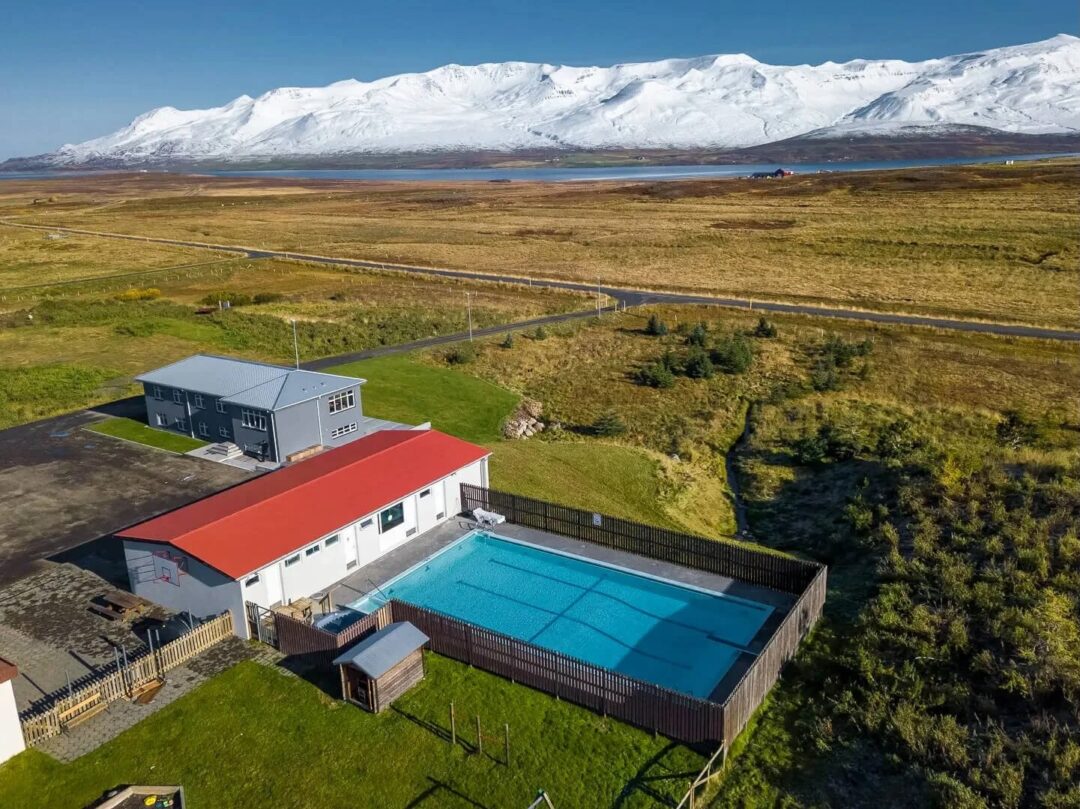
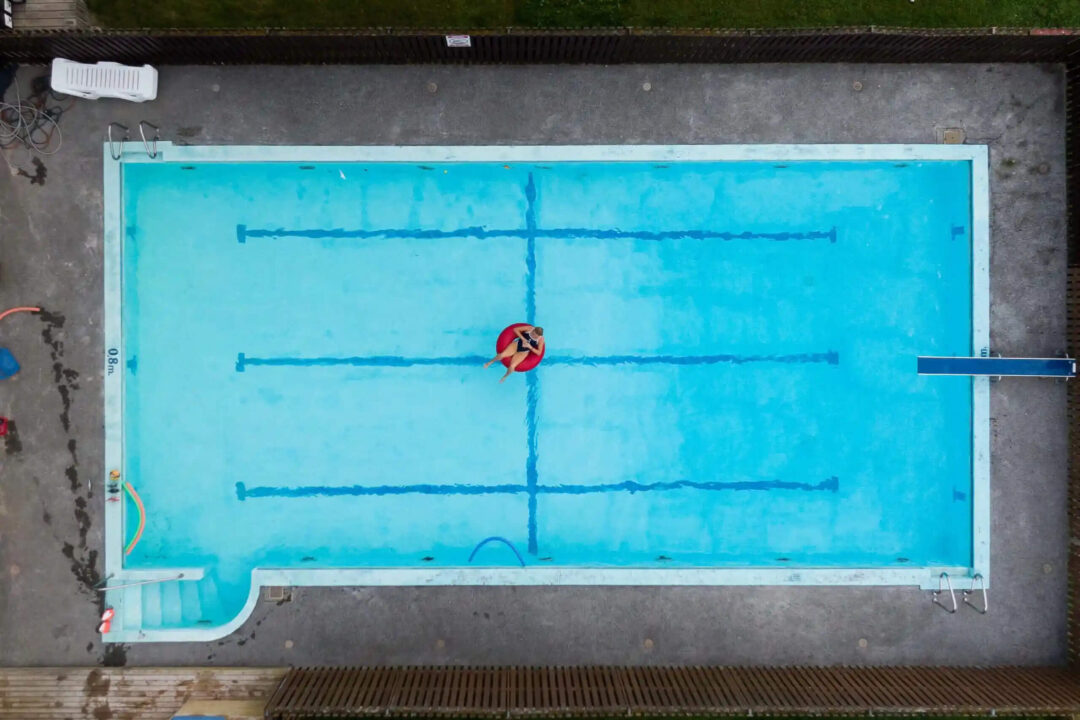
Aerial view of a lodge with outdoor swimming pool in open countryside beneath snow-covered mountains

Sleep & Eat

You’ll spend three nights in a comfortable, stylish lodge on the Troll Peninsula with private and twin rooms, en-suite bathrooms, and views across the valley. There’s a geothermal swimming pool, hot tub and sauna on-site, a lounge for evening downtime, and tea and coffee available 24/7. The lodge has an alcohol licence. On the fourth night you move to a 4-star hotel in Akureyri.

Food is also a genuine highlight. Breakfast is a continental buffet to set you up for the day, lunch is a hearty meal served at the stables, and dinner is a full-service three-course meal built around locally-sourced meat and fish, with the menu dictated by what’s in season. All dietary requirements can be catered for, just let us know in advance, as last-minute changes are difficult to manage in such a remote location.

Do I have to share a room?

The lodge and the hotel both have private and twin ensuite rooms so you can choose to share or have your own space.

Are towels and hairdryers provided?

Yes, both are provided at both locations.

Are toiletries provided?

Shampoo, shower gel, and conditioner are provided. At the pool, you’ll also find samples of Chitocare, an award-winning product from Siglufjörður, to try.

Is there a laundry service?

The lodge can do a small amount of laundry for guests, but also bring hand wash if you just want to freshen a few bits up.

Are drinks included with meals?

Other than water, drinks are not included with meals.

Can you cater for dietary requirements?

Yes, all dietary requirements can be accommodated. Please inform us in advance though as it’s difficult to cater for last-minute changes in such a remote location.

Women leading horses with saddles outdoors in Iceland’s countryside, ready for a beginner horseback riding holiday
Horse riding arena overhead view with blue surface and jump poles for beginners to practise show jumping

Weather

Early autumn in North Iceland is unpredictable – often cold, sometimes wet, and occasionally all four seasons in one afternoon. Temperatures sit between 2°C and 10°C, and you’ll be spending long periods outside at the stables and out on rides, so layers and waterproofs are non-negotiable. Check the weather forecast before you pack and again before each day out.
Our guides will always manage the day with safety as the first priority, so the itinerary may shift depending on conditions. Please be flexible, our partners work hard to balance adventure with safety.


Is the itinerary flexible?

Yes. Our guides are experts at making the most of the weather each day and may adjust things to ensure we get the best out of the conditions.

What happens if the weather impacts the planned activities?

If the weather doesn’t play ball, we’ll adjust the plan accordingly. Safety is always our top priority, and we have indoor and alternative options available just in case.

What's the worst weather scenario?

Cold, wet and windy days can happen in Iceland in autumn. With the right kit you’ll be fine, and the guides will manage the programme around whatever conditions we’re dealt.

Where can I find the weather forecast?

You can check the forecast for the Siglufjörður area here.

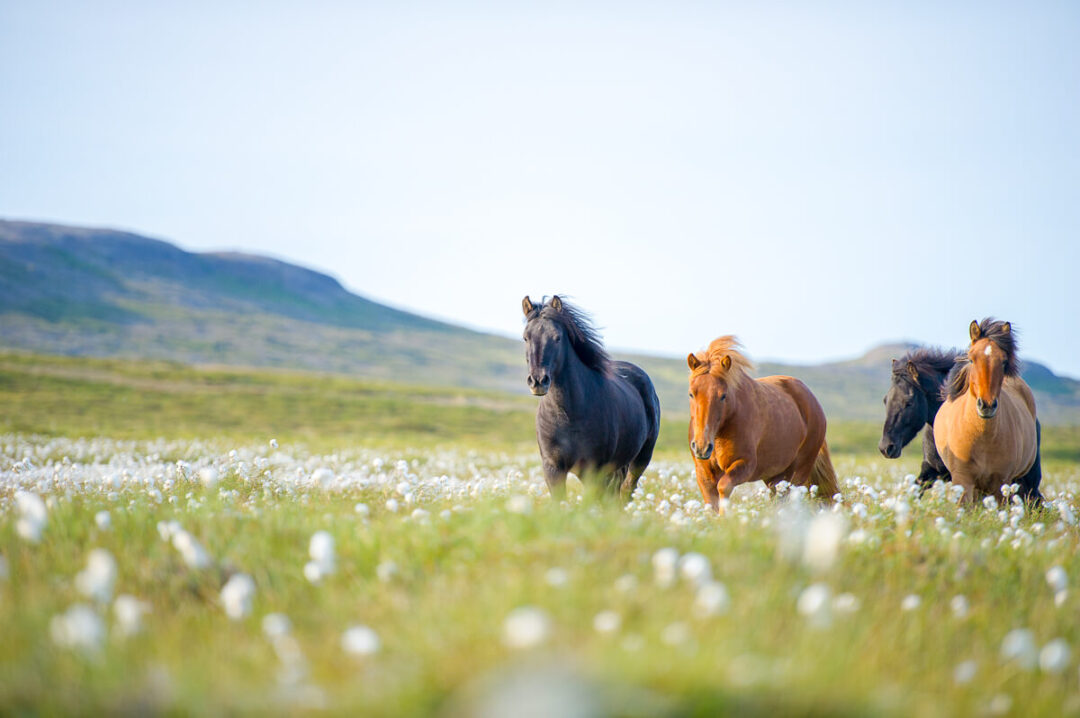
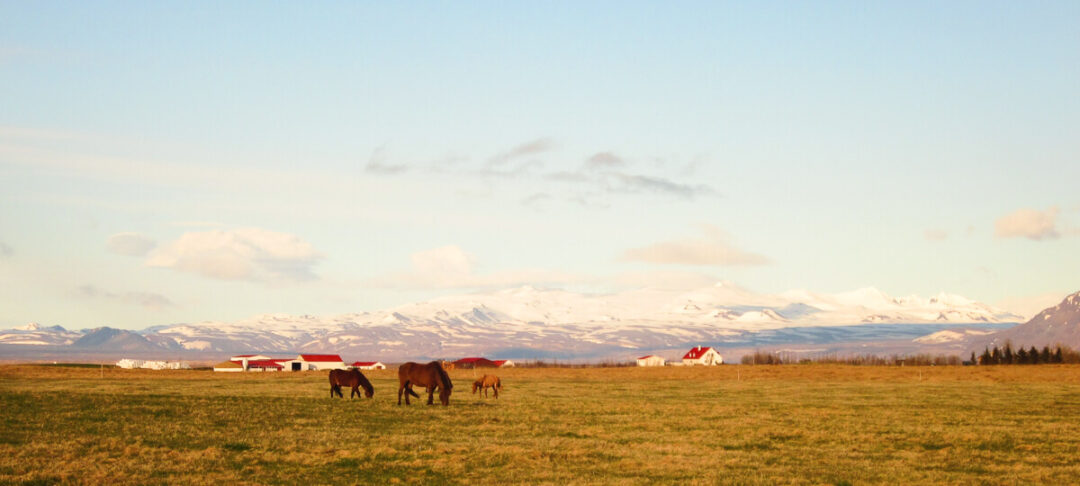
Horses grazing in a grassy field with mountains in the background

Good to Know

Money: Iceland is expensive but most costs are included. Budget £20-30 daily for drinks, snacks, and extras. Cards work everywhere. A coffee costs around £4, beer £7-8.

Supplies: There are no shops near the lodge, but you’ll have access to shops and cafés once you’re in Akureyri.

Tipping: Tipping is not compulsory on our adventures, but if you’ve had a great trip and brilliant service, a tip for your guide or host is always appreciated.

Do I need cash or can I pay on card?

No need for cash in Iceland. Debit and credit cards are accepted everywhere, including both hotels, the spa and shops in Akureyri.

How many guests will be on this trip?

Max 11 guests.

Why is travel insurance mandatory?

You’ll be horse riding in a remote part of North Iceland. All guests must have travel insurance in place that covers horse riding activities, medical emergencies, delays and cancellations before the trip departs.

What happens if someone gets injured?

Your guides are trained to handle incidents on the ground, and your travel insurance should cover medical costs and evacuation if needed. Please ensure your policy is comprehensive before you travel.

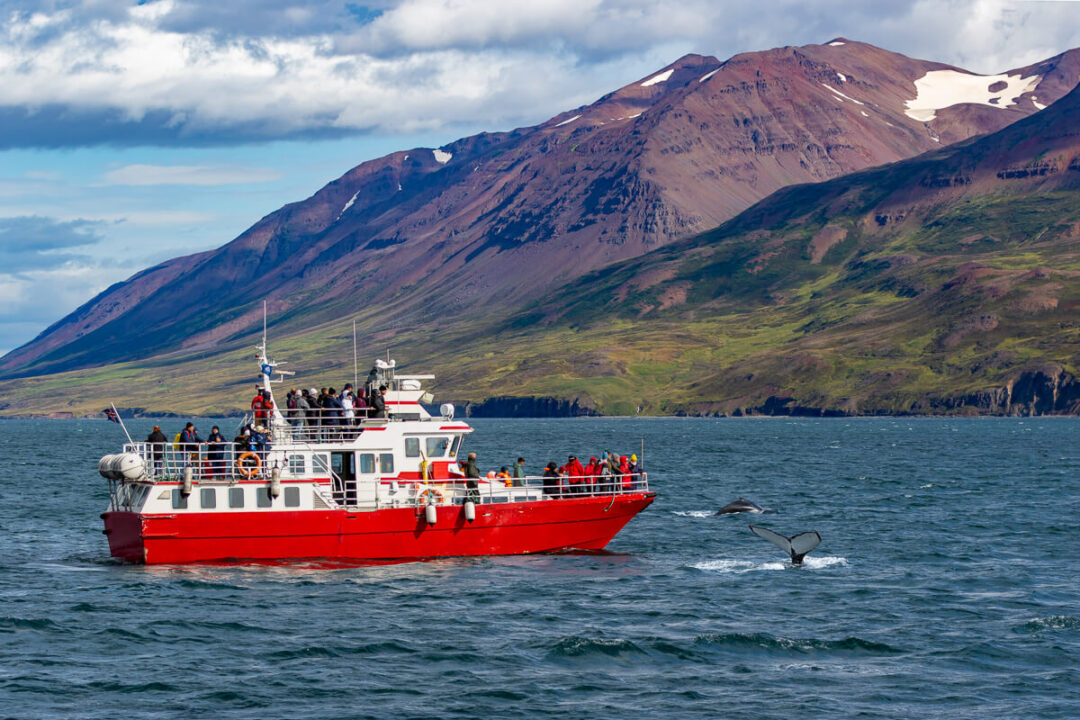
Boat with people on it whale watching in fjord
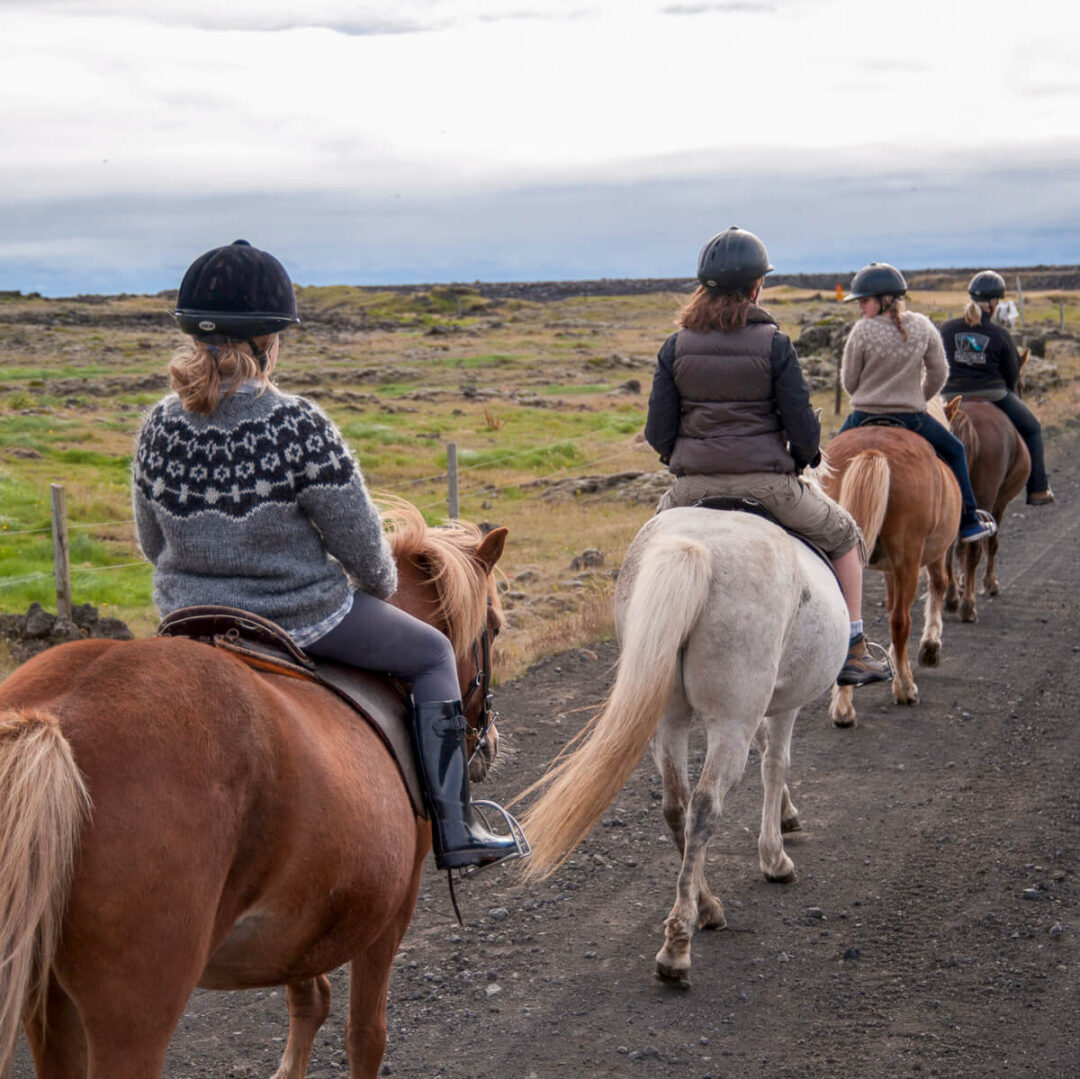
Women horseback riding on an outdoor trail in Iceland, sitting on saddles with horses walking ahead

Packing List

What We Provide

    • Horse riding helmet
    • Over-suit if it gets too cold
    • Riding boots

What You Need to Bring

Essential Clothing:

    • Warm base layers
    • Fleece or jumper
    • Wind and waterproof jacket
    • Warm coat
    • Soft comfortable hiking trousers or leggings
    • T-shirts – lightweight and fast drying
    • Warm socks
    • Hiking shoes or boots
    • Gloves for riding with a grippy palm
    • Warm hat for when at the stables
    • Buff/Scarf
    • Extra warm layers for whale watching
    • Swimming costume
    • Relaxed evening clothes (no horse riding kit)
    • Slippers

Personal Kit:

    • Daypack (approx 20L)
    • Water bottle
    • Toiletries
    • Personal medication
    • Sunscreen
    • Sunglasses
    • Insect repellent
    • Snacks
    • Thermos for hot drinks (optional)
    • Compeed/blisters plasters
    • Zip bags (for storing horse riding kit in your suitcase)

Packing Tips

The single most important thing to know before you pack: do not bring any of your own horse riding clothes, boots or hat. There are no infectious horse diseases in Iceland, which makes the breed highly vulnerable to any foreign germs or bacteria – including anything that’s been near other horses. We provide your riding helmet and an oversuit if it gets too cold.

Layers: North Iceland in October means three layers minimum: a warm base layer, a fleece or jumper, and a wind and waterproof jacket on top. Merino wool base layers are ideal as they manage moisture, dry quickly and don’t smell after sweaty days. Synthetic works too, but cotton does not – it absorbs sweat, stays wet, and you’ll be cold the moment you stop moving.

Riding kit: Comfort in the saddle matters. Wear soft, flexible trousers or leggings with no hard inside seam as that can rub after a few hours. Sturdy hiking shoes or boots work well on your feet. Gloves with a grippy palm are essential for the reins and to protect against possible cold – new riding gloves, cycling gloves or leather gloves all do the job.

Whale watching: The boat is cold and exposed. Pack a dedicated set of extra warm layers for this day specifically, on top of everything else you’d normally wear. There are overalls on the boat that you can also put on for an extra layer.

At the lodge: Outdoor shoes can’t be worn inside so slippers are a great idea. A swimming costume is essential for the thermal pool and hot tub.

Can I bring my own horse riding helmet, boots or clothes?

No. Unless they’ve been professionally cleaned and sterilised, you won’t be allowed to wear any of your own horse riding equipment around the stables. There are no infectious horse diseases in Iceland, which makes the breed very vulnerable to any foreign germs that may come in on clothing that’s been around other horses.
What should I wear for riding?

Soft, flexible trousers or leggings with no hard inside seam, warm socks, hiking shoes or boots, and gloves with a grippy palm. Add a warm base layer, fleece and waterproof jacket on top. Your helmet and oversuit are provided

What size daypack do I need?

A small daypack is enough to carry water, snacks and layers to and from the stables. You won’t be bringing much with you on the actual rides.

What should I prioritise in hand luggage?

Wear your hiking boots and coat – Iceland can be cold and you wouldn’t want your warmest layer to be delayed if you check in a bag.

Women horseback riding across a grassy field with mountains and a red cabin in Iceland at sunset

Trip Code ICESOTHRS – Include this code in any message so we can find your trip straight away.