Trip Guide

Trip Guide: Hut-to-Hut Adventure in the Spanish Pyrenees

This guide covers everything you need to know to show up prepared and ready for four consecutive days of high alpine hiking, two nights in remote mountain refugios, and some seriously big terrain. Read it properly, there’s useful detail in every section.

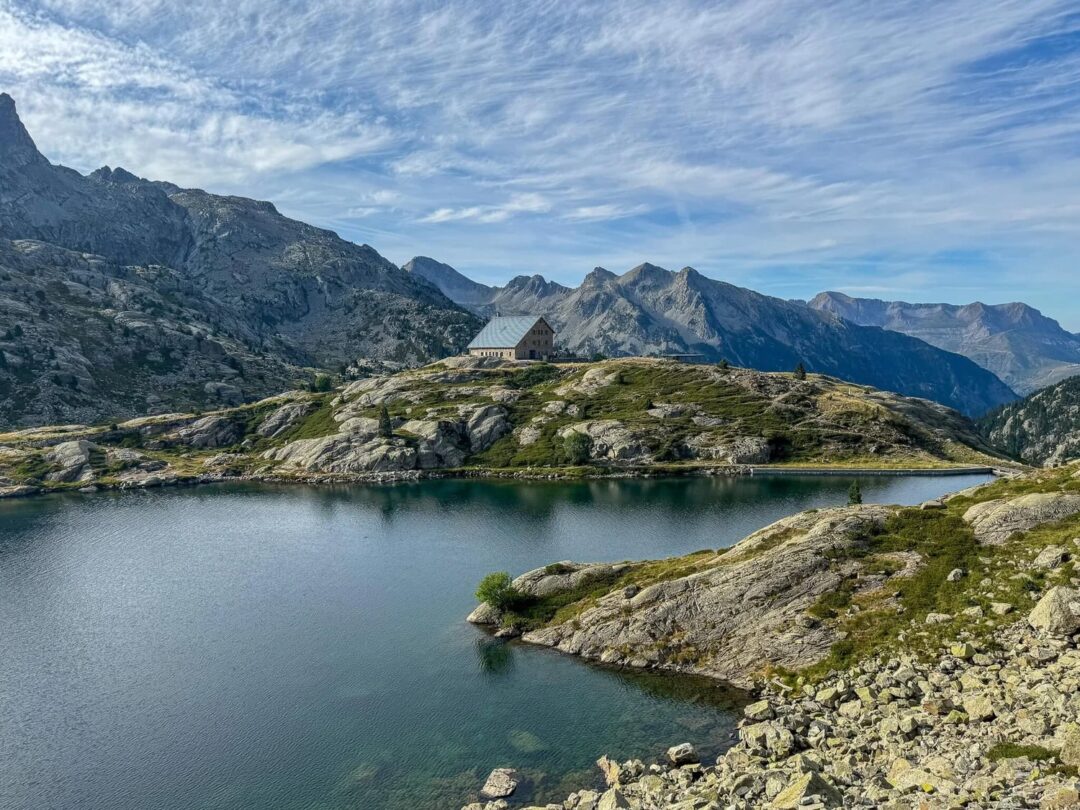
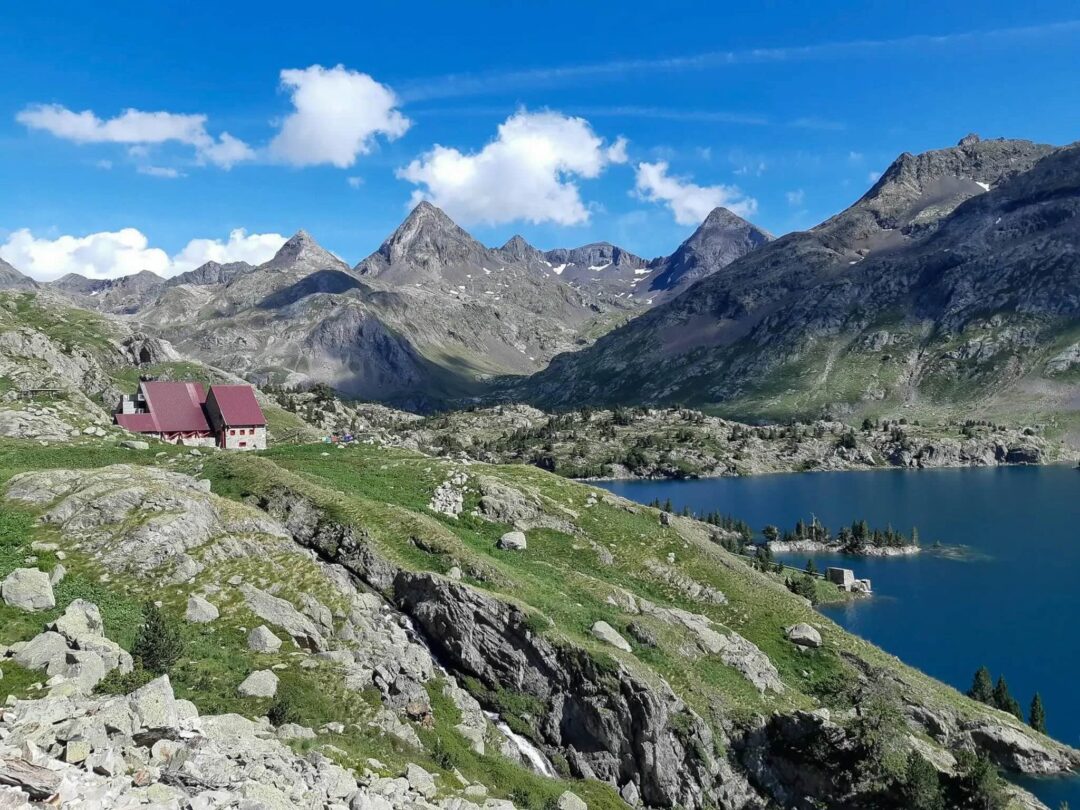
Lakeside hut in the Spanish Pyrenees with mountains and trail landscape for a hut-to-hut adventure hike
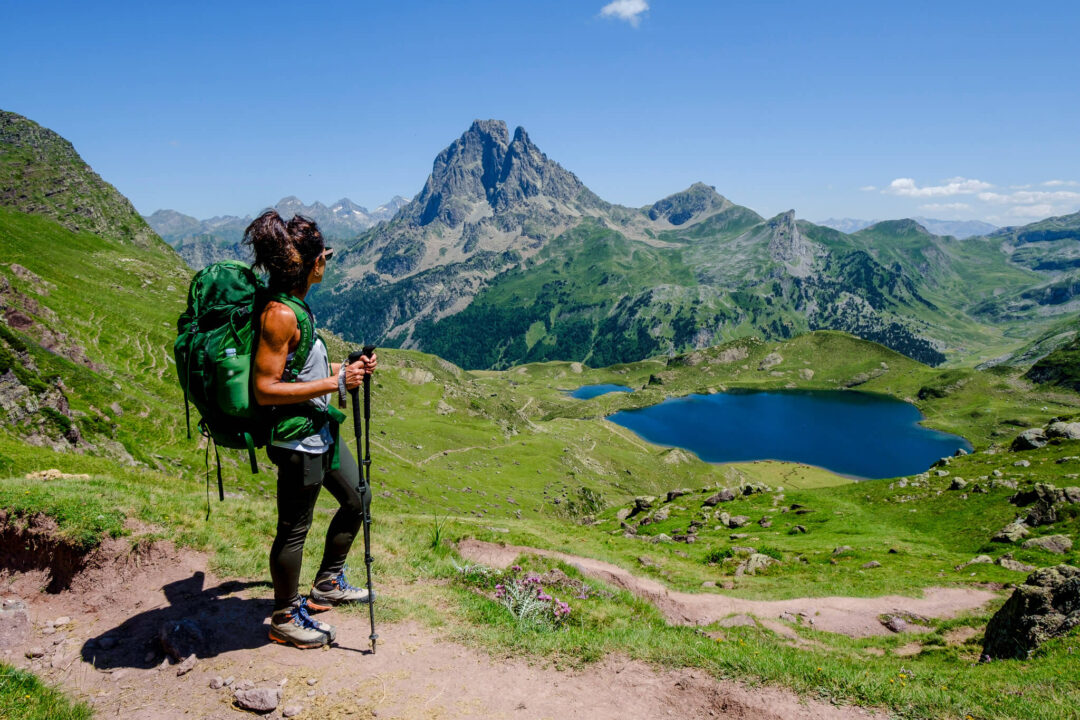
Woman hiking with backpack on a mountain trail overlooking alpine peaks and a small lake

Getting There

Getting to the Pyrenees is fairly straightforward. Most people fly into Zaragoza, then it’s a 1 hour 45 minute transfer to Biescas, our base for the week. We pick you up at fixed times from both Zaragoza airport and Zaragoza Delicias train station. Full details will be available in your customer portal on booking.

Biescas is a stone-built Pyrenean village with local bars, restaurants, a medieval church and everything you need to pick up any last bits before heading into the mountains.

How do I get to the Pyrenees?

Fly into Zaragoza (ZAZ), Spain. Alternatively, fly to Barcelona or Madrid and take the AVE or Iryo fast train to Zaragoza Delicias – approximately 1h 40 min from Barcelona, 1h 20 min from Madrid. We provide group transfers from Zaragoza airport or train station at fixed times.

Suggested Flights
  • Arrival Day: STN 12:00 – ZAZ 15:15 | FR 2565
  • Departure Day: ZAZ 10:10 – STN 11:15| FR 2566
Group Transfer
  • Arrival Day: Pick up at Zaragoza Airport at 15:50
  • Departure Day: Drop off at Zaragoza Airport at 8:30

What if my flight doesn't match the transfer times?

Transfers run like trains, they’re on time and can’t wait. If your flight is delayed or cancelled, you’ll need to arrange your own transport to join the group. The start point is 1h 45 from Zaragoza and private transfers can be expensive, so comprehensive travel insurance covering delays and missed connections is essential. We’ll support you with local information on the day, and your host will be your main contact.

Can I travel by train from the UK?

Yes. You can travel to Zaragoza by train from the UK. We offer a single timed transfer from both Zaragoza airport and Zaragoza Delicias train station on arrival and departure days.


Should I arrange to travel with other guests?

We connect everyone on the trip via WhatsApp before departure, so you can coordinate if you’d like to travel together. Many guests arrange to share travel or meet at airports, especially when connecting through Barcelona or Madrid.

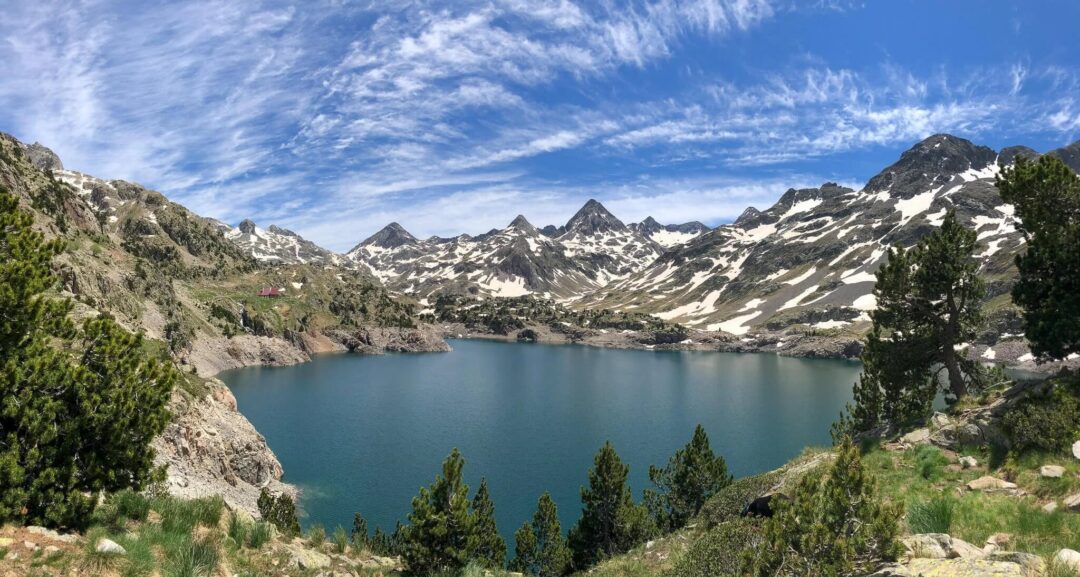
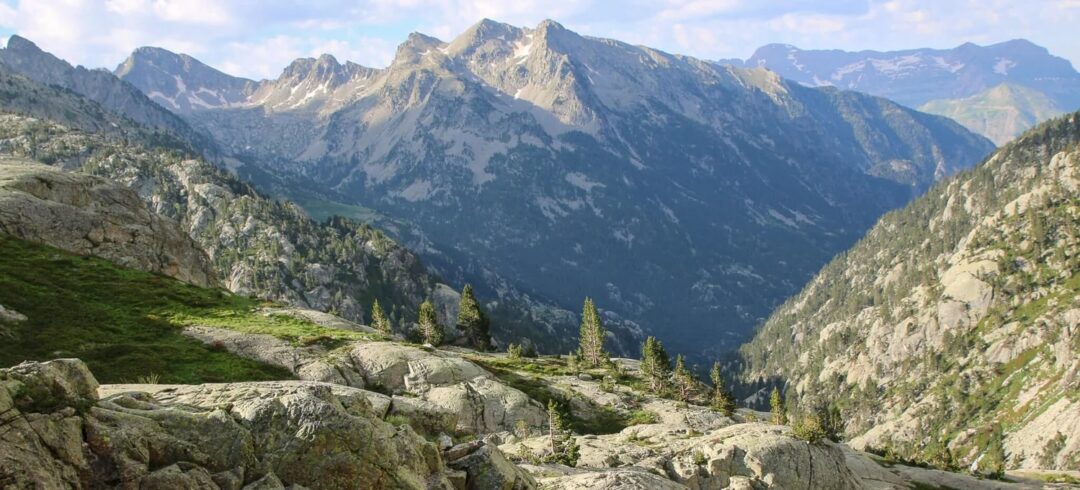
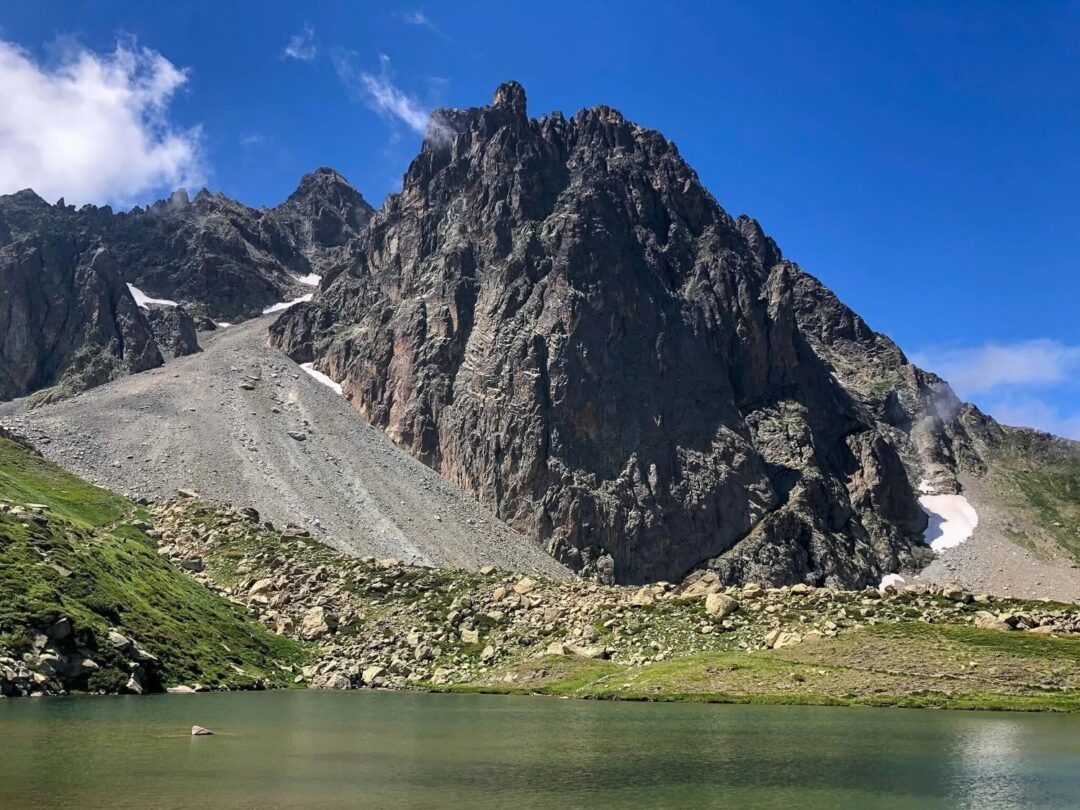
Scenic mountain lake in a rugged Pyrenees valley with snow-capped peaks and alpine trails

Fitness & Skill Level

This trip is rated Intermediate. You don’t need technical mountaineering experience, but you do need a solid fitness base and confidence on rough, high alpine terrain.

What the days actually look like:

    • 5–7 hours on your feet each day
    • 9km–14km per day (the distances aren’t huge, but the terrain makes every kilometre count)
    • Daily ascents of 400m–1,250m
    • Most of the week is spent above 2,000m
    • Four consecutive hiking days with no rest day
    • On the hut-to-hut days, you’ll be carrying your overnight kit in a 40–45 litre pack

A note on heights: Most of the trip is above 2,000m. If heights or exposed ridgelines genuinely affect you, consider that before you book. The main routes (not just optional summits) take you onto exposed terrain. The summit pushes are optional, but the paths in between still involve real height.

Training: You need to be regularly putting in medium to high-intensity cardio approx, three times a week. We recommend running, cycling, HIIT or anything that gets your heart pumping. Weekend walks alone won’t be enough to prepare you for four consecutive days with this kind of ascent. In the run-up to the trip, get out on hilly terrain and practise carrying your backpack. Your legs (and shoulders) will thank you.

How fit do I need to be?

You need to be comfortable with consecutive full days of hiking on hilly, rough terrain. If your current training is the odd weekend walk, give yourself more time to build up before you arrive.

What if I have vertigo?

Think carefully before booking. Some sections involve real exposure and ridgeline walking with steep drops. The summit pushes are optional, but the main routes still take you onto exposed paths above 2,000m. Be honest with yourself before committing.

Can I opt out of any of the activities?

The optional summit pushes during the hikes are just that – optional. Your guide will make the call on conditions, and those who don’t want to climb can wait at the col. The main hiking routes are not optional however, they’re how you get between the huts.

What's the terrain like underfoot?

Varied and mostly rough. Boulderfields, loose rocky paths, pine forest, alpine meadow and exposed ridgelines. The higher you go, the more technical it gets. The final ascent to the Collado de Tebbaray has a fixed chain to assist, and there are a couple of short scramble sections across the week. Good ankle support in your boots is non-negotiable.

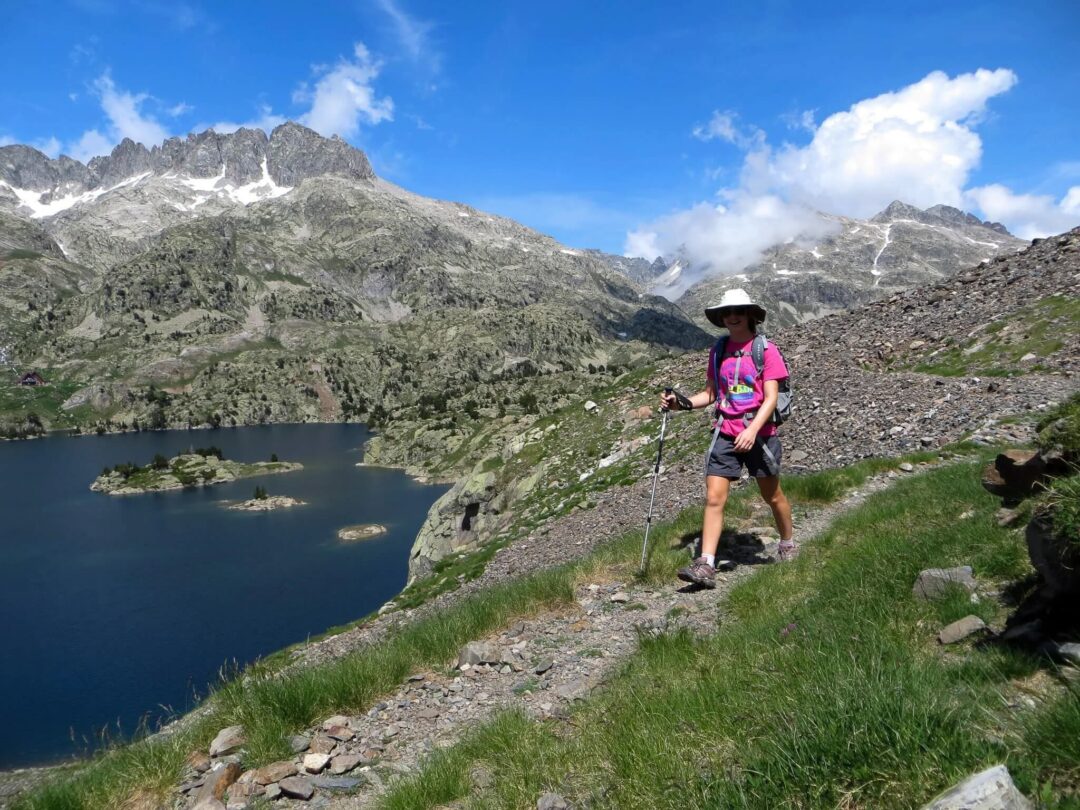
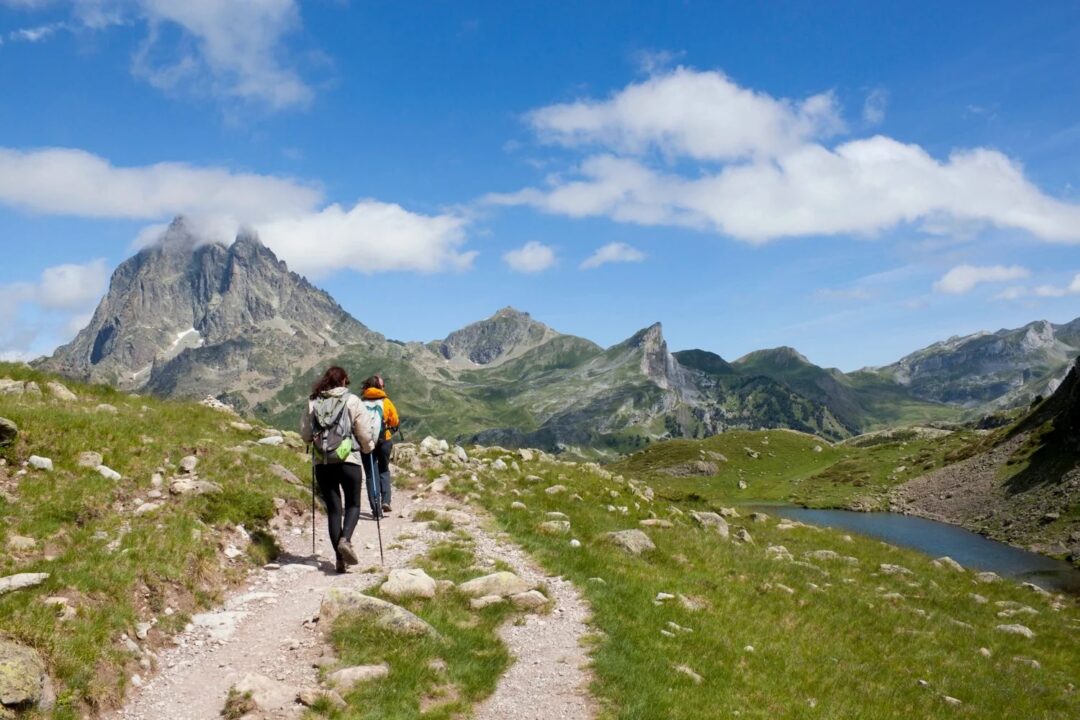
Woman hiking a mountain trail beside a lake under rocky peaks, holding trekking poles
Mountain hut and lake view along a hut-to-hut trek in the Pyrenees, with rugged peaks under blue sky

Sleep & Eat

Accommodation

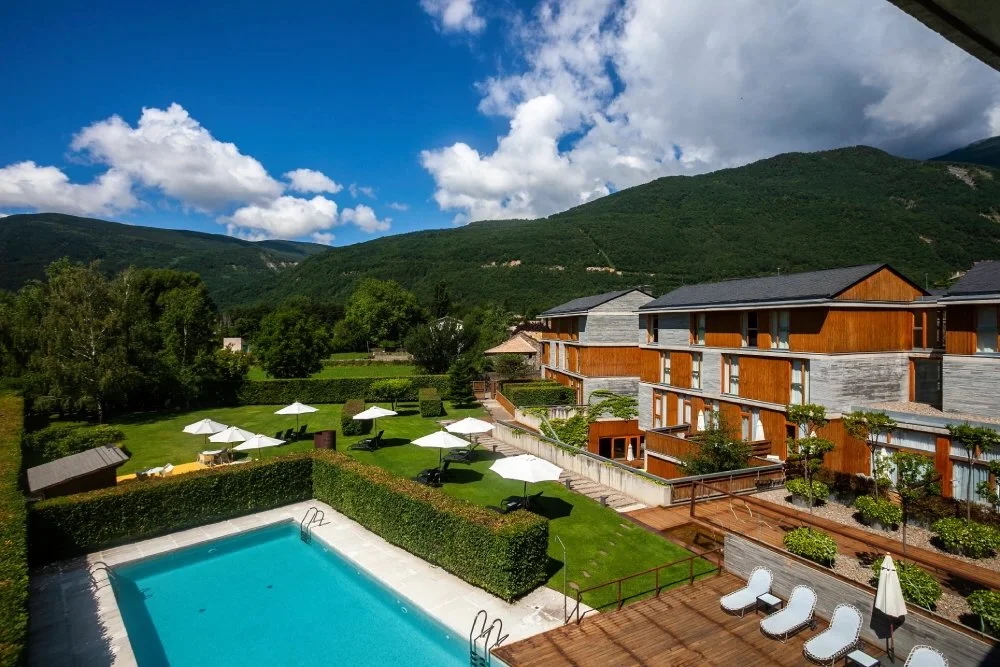
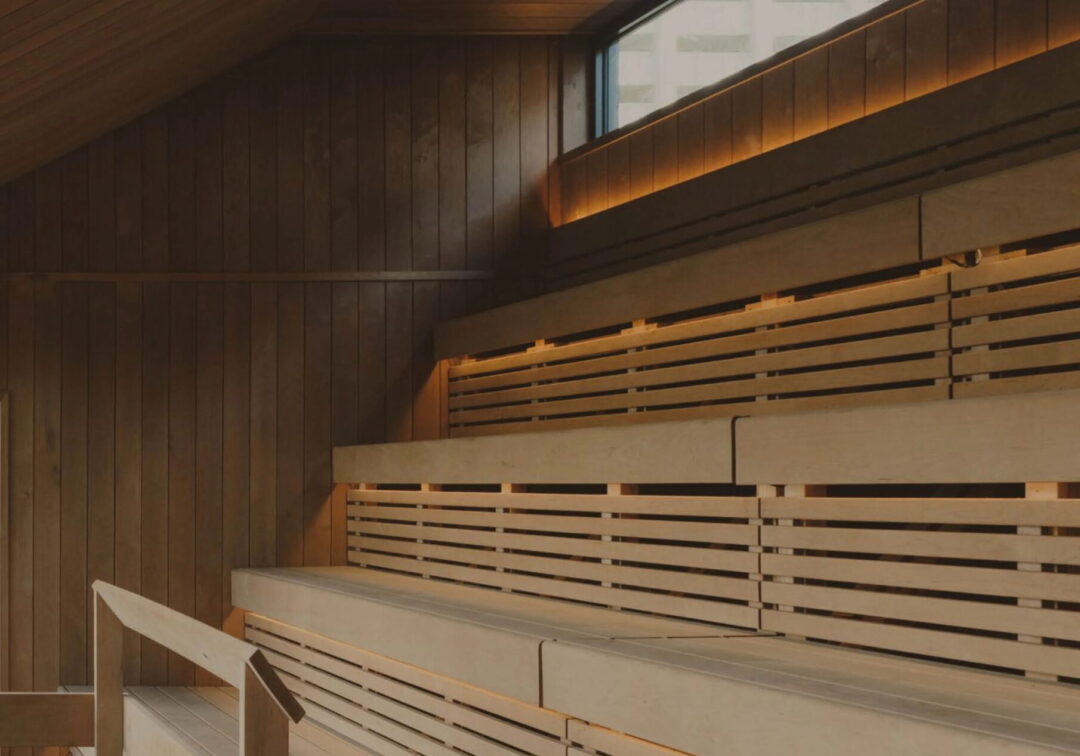
Hotel (3 nights): You’re based at a 4-star hotel in Biescas, a stone-built Pyrenean village with local bars and a medieval church. The hotel has indoor and outdoor pools, a sauna and gardens. Both private and twin ensuite rooms are available.

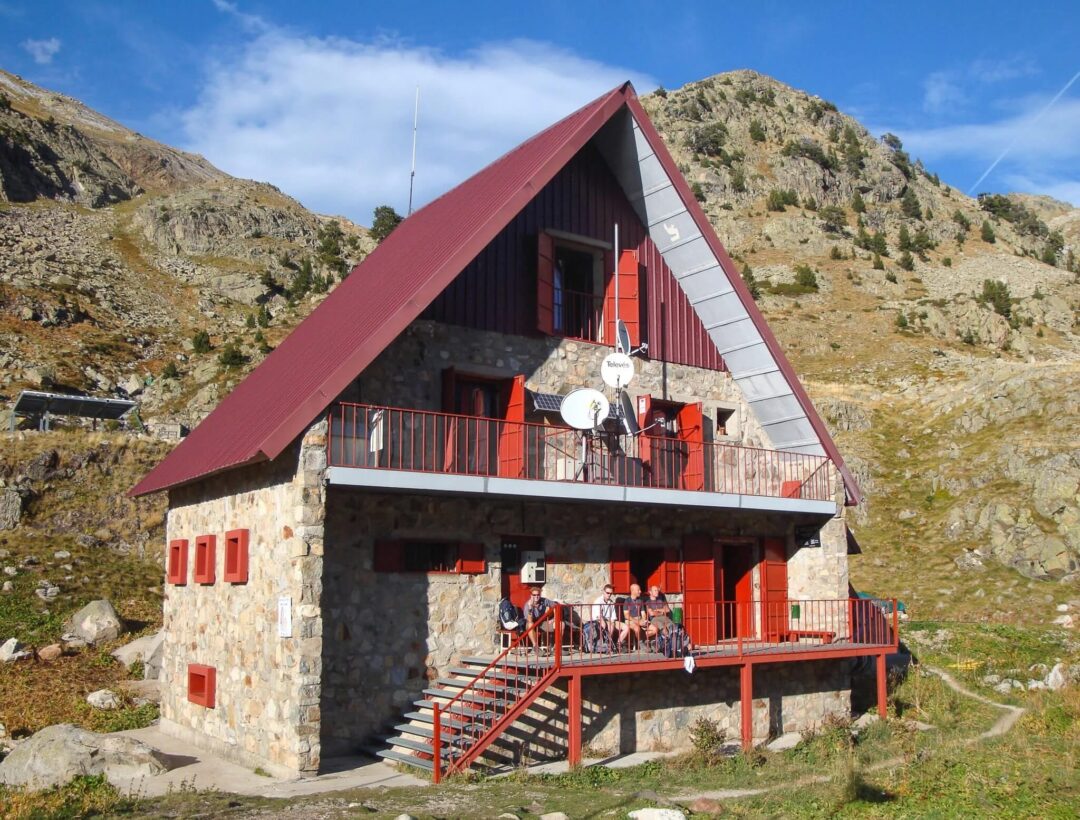
Mountain Refugios (2 nights): These are busy mountain huts. Expect dormitory-style sleeping in mixed-gender rooms (shared with other hikers staying at the hut, not just the Gutsy Girls group). Both huts have hot showers, a bar and evening meals.

The accommodation is basic. The experience isn’t.

What is the hotel like?

A comfortable, friendly four-star hotel in the mountain village of Biescas, with indoor and outdoor pools, a sauna and gardens. A good place to rest up before and after the hut-to-hut section when you’ll be staying in basic but comfortable mountain huts.

What's the WiFi situation?

The hotel has WiFi, the mountain huts do not. If you need to be contactable during the hut-to-hut days, check your phone’s data package or set up an eSIM before you travel.

Are towels and hairdryers provided?

Yes, at the hotel. At the mountain huts, bring your own quick-dry towel. If you want to use a hairdryer in the mountains and are willing to carry it in your pack, bring a small travel one and don’t forget a European plug adaptor.

Are there laundry facilities?

There’s no laundry facilities on this trip. A small amount of travel wash is useful for rinsing layers if needed.

Mountain hut in the Spanish Pyrenees for hut-to-hut trekking adventure, with red balcony and exterior
Mountain lodge with outdoor swimming pool, sun loungers and terrace overlooking green hills and peaks

Food

All meals are included throughout the trip, from dinner on arrival day to breakfast on departure day.

At the hotel, breakfasts are continental buffets, lunches are packed for the trail, and dinners are at local village restaurants. At the refugios, evening meals and breakfasts are hearty and filling. It’s not fancy, but exactly what you need after a big day.

Dietary requirements: Vegetarian meals are available at both refugios if flagged in advance although options may be limited. We can’t cater for vegans on this trip. If you have any requirements, let us know early so we can plan ahead with the huts.

What is the food like?

Fresh mountain dishes throughout. Buffet breakfasts, packed lunches on the trail, and a mix of traditional Pyrenean cuisine and hearty dinners at the hotel and refugios. It’s fuel-focused food that works.

Can you cater for dietary requirements?

Vegetarian meals are available at the refugios if flagged early, but options are limited both at altitude and in Biescas. Unfortunately, we can’t cater for vegans on this trip. Please let us know all dietary requirements in advance of your trip start.

Bowl of meat and vegetable stew with carrots, potatoes, onions and herbs
Mountain hut buffet with grilled skewers, sausages and pastries on serving trays

Weather

The Pyrenees in August and September can be warm at lower altitudes, but conditions change quickly once you’re above 2,000m. It can feel cold even in the height of summer, especially in wind or if cloud comes in. Don’t let blue-sky forecasts for the valley fool you and pack for all conditions.

The sun at altitude is also powerful. Even on a cool day, UV exposure is significant. Sunscreen, sunglasses and a hat are essentials, not afterthoughts.

Mountain weather can change fast. Your guide will make route decisions based on conditions and safety. The itinerary is a plan, not a contract.

What is the weather like in August and September?

Pyrenean summers can be hot, but cool down by late August into September. At valley level you can expect pleasant temperatures, but above 2,000m it can be genuinely cold, particularly on exposed cols and ridgelines. Check the forecast before you go and adjust your kit accordingly.

Is the itinerary flexible?

Mountain weather moves quickly and higher routes are exposed. Your guide will make calls on route and conditions as the week unfolds. Safety comes first, and there are always alternative route options. Nothing is set in stone.

Can the summits be affected by weather?

The optional summit pushes are the most exposed sections of the trip. If conditions aren’t safe, your guide won’t go. The main hiking routes may also be adjusted based on conditions. Your guide has serious local knowledge of this range so trust their judgement.

What should I check before I travel?

Check a mountain-specific forecast for the Pyrenees before you travel and again each day. Your guide will also brief the group daily. Pack for rain, wind and cold regardless of the forecast.

Hiking trail across rocky peaks and valleys in the Spanish Pyrenees mountain range

Good to Know

Money: Cards are generally accepted at most places, but card payment at the mountain huts can be unreliable as signal isn’t always there when you need it. Bring backup cash. For extras across the week, budget for drinks with meals, coffees, any optional snacks and personal purchases in the village.

Tipping: Tipping is not compulsory on our adventures, but if you’ve had a great trip and brilliant service, a tip for your guide or host is always appreciated. We recommend giving €20-€30, or whatever you can or feel is the right amount.

Communication: The hotel in Biescas has WiFi, but the mountain huts don’t. During the hut-to-hut section, phone signal is also limited. If you need to be contactable, sort your data roaming or set up an eSIM before you travel. You can charge your phone at the huts.

Do I need cash?

Yes. Cards work fine in the village and at the hotel, but card payments at the mountain huts can be unreliable. Bring backup cash for the hut days and for drinks and extras across the week.

Why aren't all guides female?

We work with the best guides available. While we champion women in the outdoor industry, there are fewer female qualified mountain leaders, so we prioritise expertise and experience above all else.

What happens if there's a medical issue on the trail?

Your guide is a qualified mountain leader and will handle any medical situation on the trail. Make sure your travel insurance covers mountain rescue and medical evacuation – it’s not a nice thought, but at this altitude it’s the practical one.

How many guests will be on this trip?

Max 6 guests.

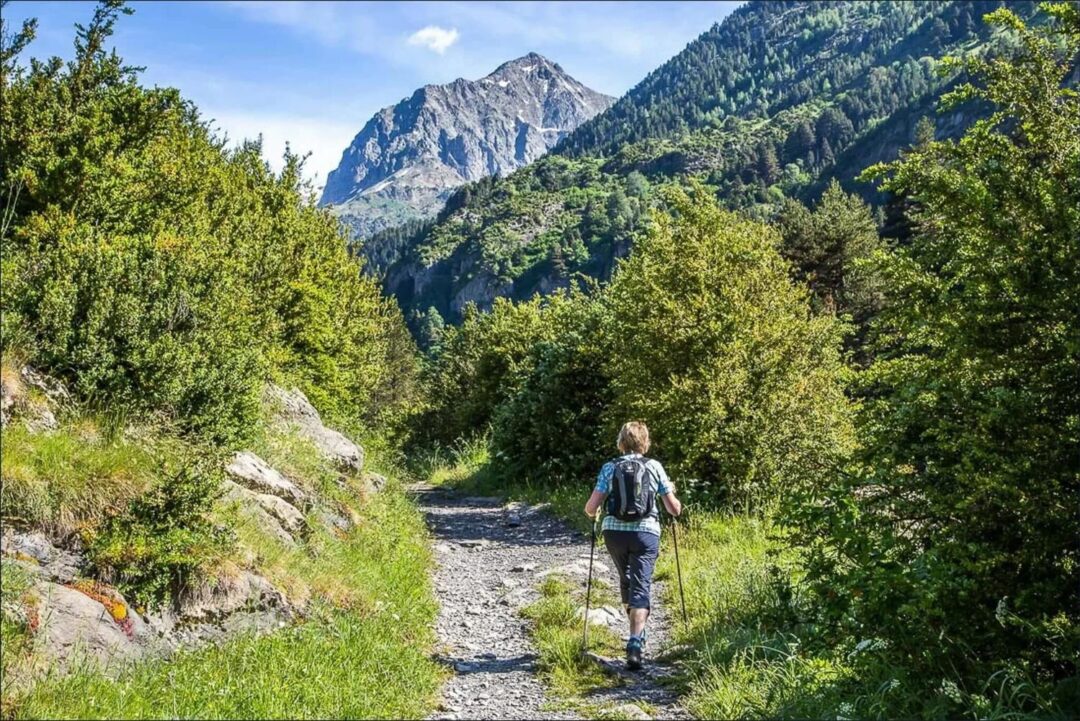
Woman hiking a mountain trail in the Spanish Pyrenees, surrounded by forest and peaks.
Mountain trail and alpine lake in the Spanish Pyrenees, with rugged peaks under a blue sky

Packing List

Packing Tips

This is a hut-to-hut trip, which changes how you pack. For three days you’ll carry everything between refugios, so you don’t want excess stuff. A 40–45 litre pack is the right size: big enough for overnight kit and layers, small enough that you don’t dread the 1,250m ascents.

Layering: You’ll spend most of the week above 2,000m where conditions shift fast. Start with a merino wool base layer – it regulates temperature, dries quickly and doesn’t smell after consecutive sweaty days. Add a thin fleece mid-layer and waterproof shell on top. Pack your down jacket too, even in August, high cols and summit pushes can be genuinely cold.

Sun protection: At altitude with little shade, the sun is brutal. High-factor sunscreen, lip salve and a sun hat or baseball cap are non-negotiable. Long-sleeve t-shirts give coverage on exposed ridge walks too.

Boots and blisters: Well-worn-in hiking boots with ankle support are mandatory. Also do not arrive in boots you haven’t broken in and pack Compeed/blister plasters as backup.

Trekking poles: These are optional but recommended. To save space in your luggage you can borrow a pair from us if you don’t mind not bringing your own.

Water: Carry at least two litres at all times. There is no water on the route between huts.

Refugio nights: A sleeping bag liner is required, as is a quick-dry towel too – towels aren’t supplied at the huts. Ear plugs and an eye mask are worth packing for mixed dorms. You can charge your phone at both huts, so bring your charger and a European plug adaptor.

What We Provide

    • Trekking poles available to borrow on request (let us know in advance)

What You Need to Bring

Essential Clothing

    • Hiking boots with ankle support (mandatory)
    • Merino wool thermal base layer
    • Quick-dry t-shirts
    • Long-sleeve lightweight t-shirts (sun protection)
    • Lightweight fleece or mid-layer
    • Breathable, waterproof and windproof shell jacket
    • Light packable insulated or down jacket
    • Summer hiking trousers or leggings
    • Hiking shorts
    • Hiking socks
    • Sunglasses
    • Sun hat or cap
    • Warm hat and gloves
    • Buff
    • Waterproof trousers (optional)
    • Casual evening clothes
    • Nightwear
    • Swimsuit
    • Flip flops or sandals
    • Slippers or shoes/sandals for the hotel and mountain hut

Personal Kit

    • 40–45 litre backpack with waterproof cover or waterproof liner
    • Water bottles or hydration pack (at least 2 litres)
    • Sleeping bag liner
    • Quick-dry towel
    • Sunscreen (high factor) and lip salve
    • Dry bags for inside your pack
    • Headtorch
    • Compeed or moleskin for blisters
    • Snacks
    • Electrolytes
    • Personal medication
    • Tick removal device
    • Insect repellent
    • Ear plugs and eye mask (optional, for dorm nights)
    • Waterproof phone case (optional)
    • Camera
    • Cash for drinks and snacks at huts
    • European plug adaptor and phone charger


Are hiking boots mandatory?

Yes, and they must be broken in before you arrive – new boots on this trip is a bad idea. Pack Compeed just in case.

What size pack do I need?

40–45 litres. It needs to fit overnight kit, layers, at least two litres of water and personal items. Pack as light as you can; you’ll feel every extra kilogram on ascents up to 1,250m. A waterproof cover or liner is also essential.

Do I need to bring trekking poles?

No. We can arrange a set if you’d like them, just let us know in advance. They’re useful on steep descents and longer ascents.
What should I prioritise in hand luggage?

Your boots. Arriving without broken-in hiking boots the day before a long hiking trip would be a real problem. Prescription medication and your headtorch should travel with you too.

Do I need a sleeping bag?

A sleeping bag liner is sufficient. The refugios provide blankets/duvets, so you don’t need to bring a full sleeping bag.
Women hike along a mountain path in the Spanish Pyrenees with a lake and rugged peaks in view
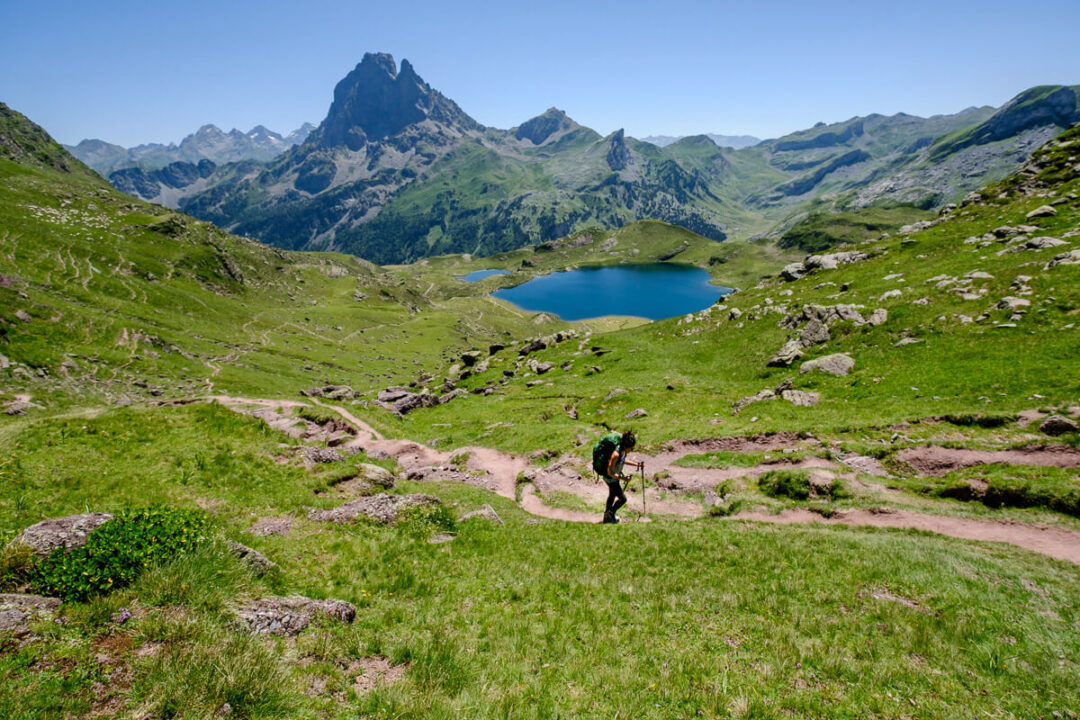
Women hiking a mountain trail in the Spanish Pyrenees above a blue lake and alpine peaks

Trip Code PYRHPYH2H – Include this code in any message so we can find your trip straight away.