Trip Guide

Trip Guide: Finland Snowshoe, Cross Country Ski and Fat Bike Adventure

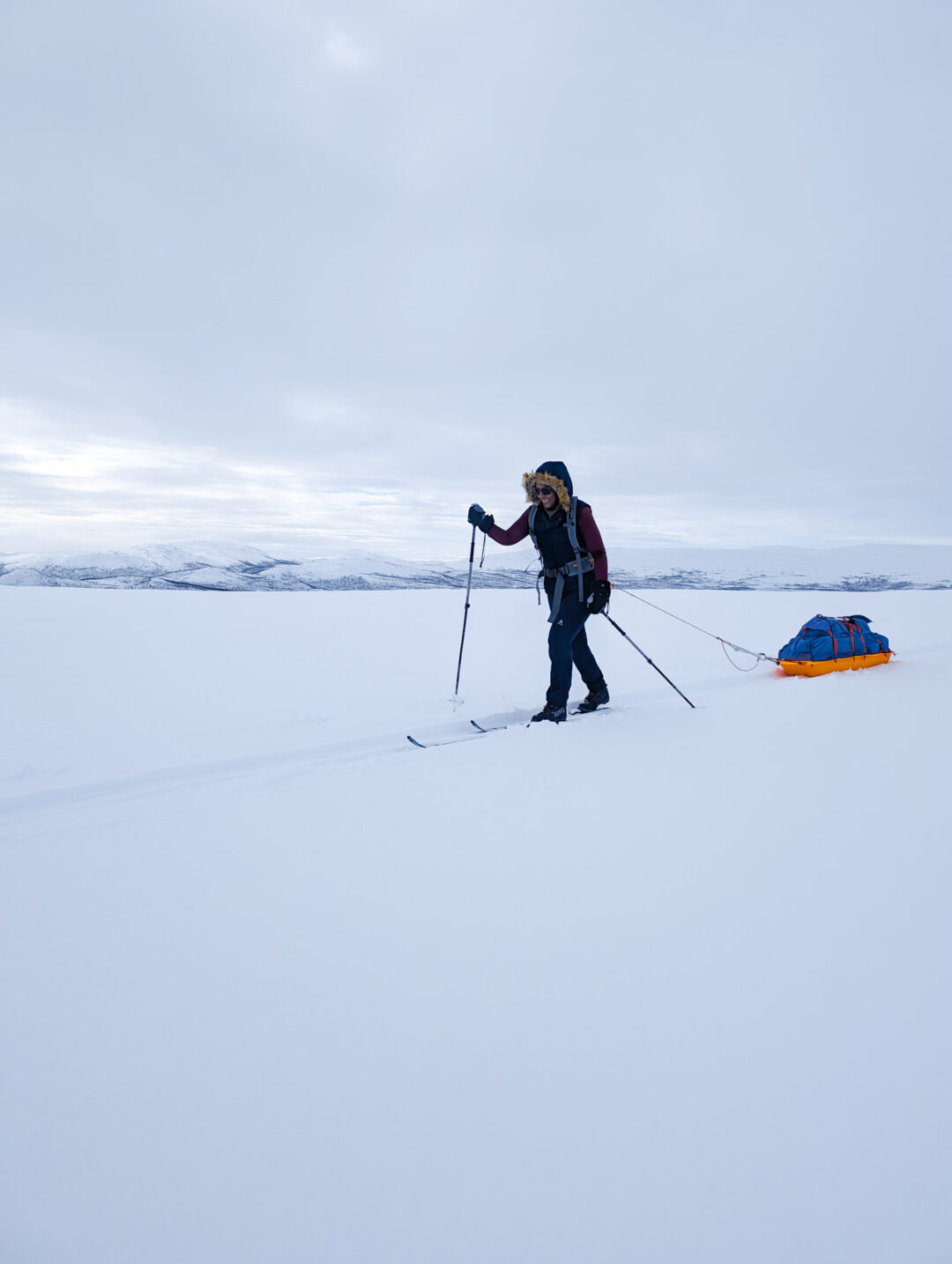
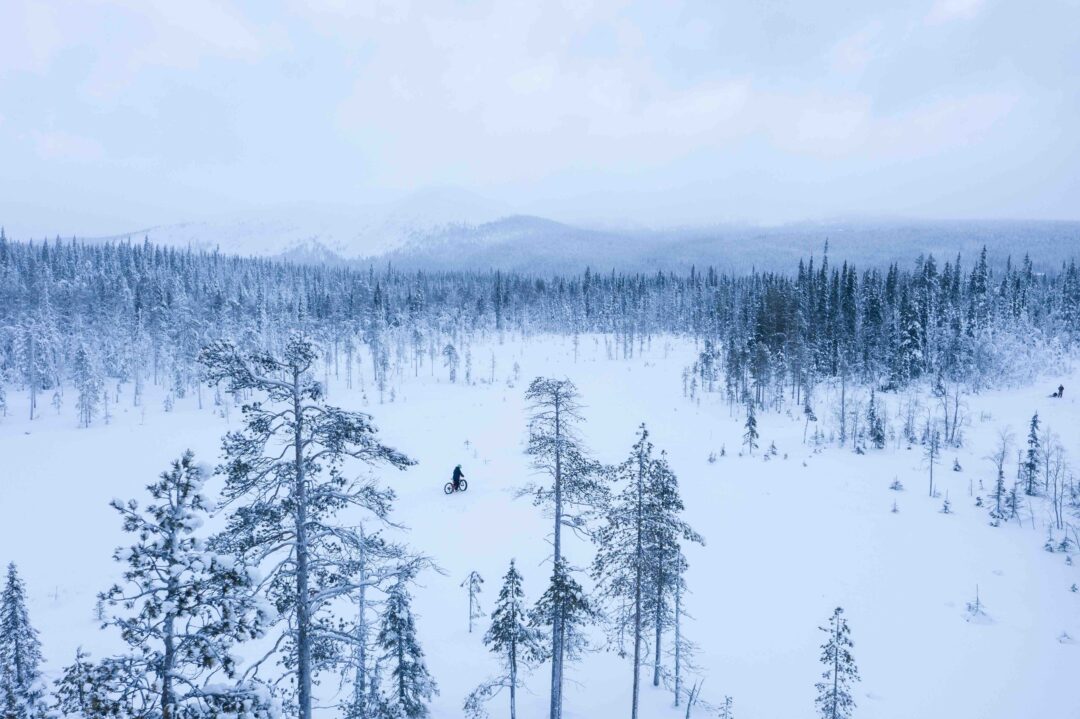
A week in Finnish Lapland trying three winter sports you’ve probably never done before: snowshoeing through deep snow, learning the basics of cross-country skiing (you will fall over, everyone does), and fat biking along forest trails.

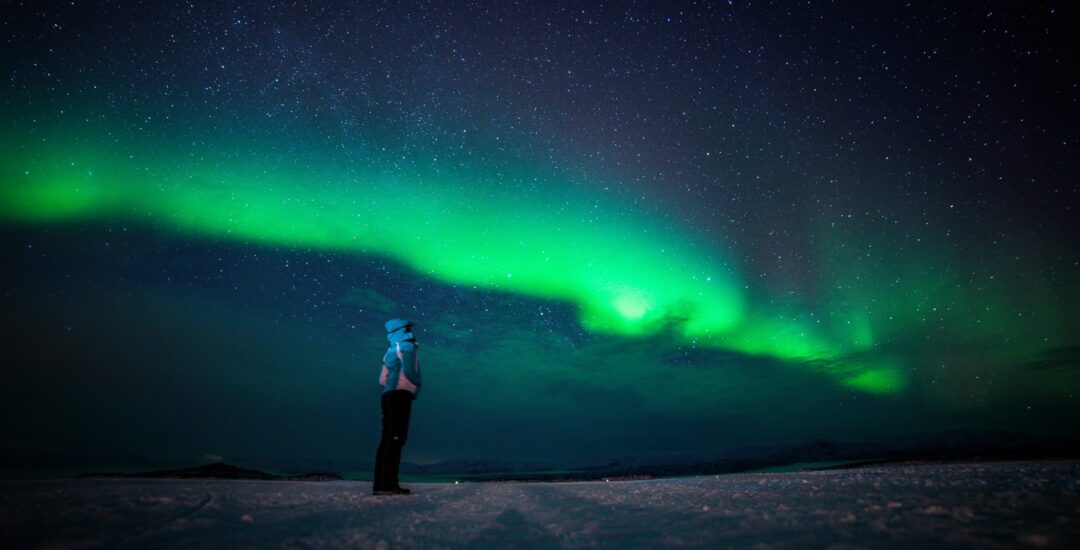
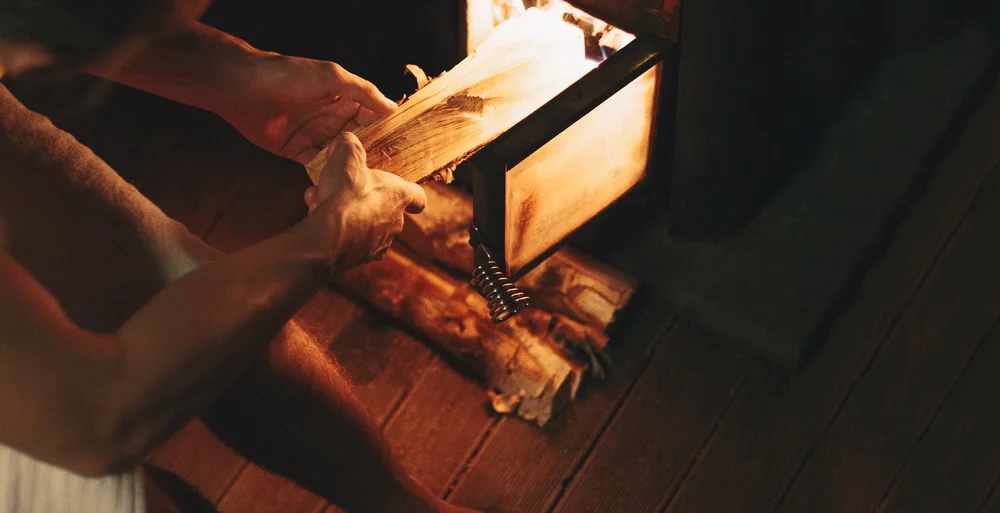
Alongside the activities you’ll feed reindeer at a local farm, warm up in a tipi by an open fire, and scan the sky for northern lights each evening. No guarantees, but a week of dark northern skies gives you decent odds. One night is spent in an off-grid cabin with no electricity, just a wood stove, candlelight and a traditional sauna, followed by a dip in the frozen lake if you fancy it.

You don’t need any previous experience with the activities. What you do need is enough fitness for back-to-back active days and a willingness to be cold. Genuinely cold.

This guide covers the rest: what the days involve, where you’ll sleep, what to pack and how to handle the temperatures.
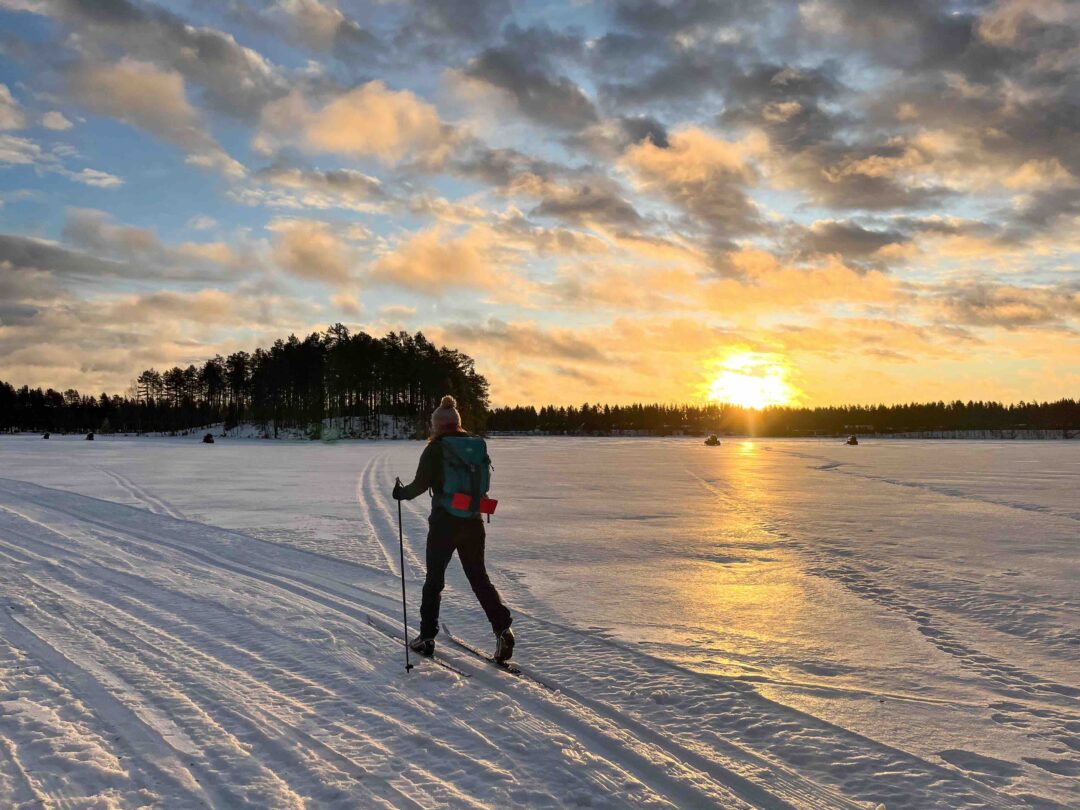
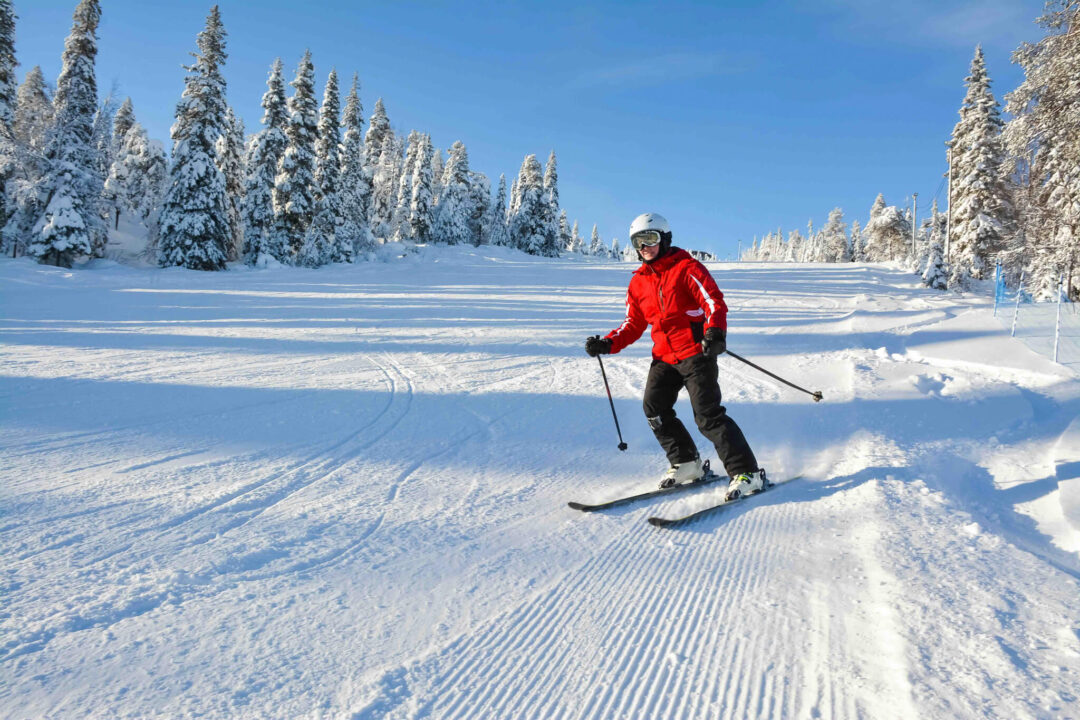
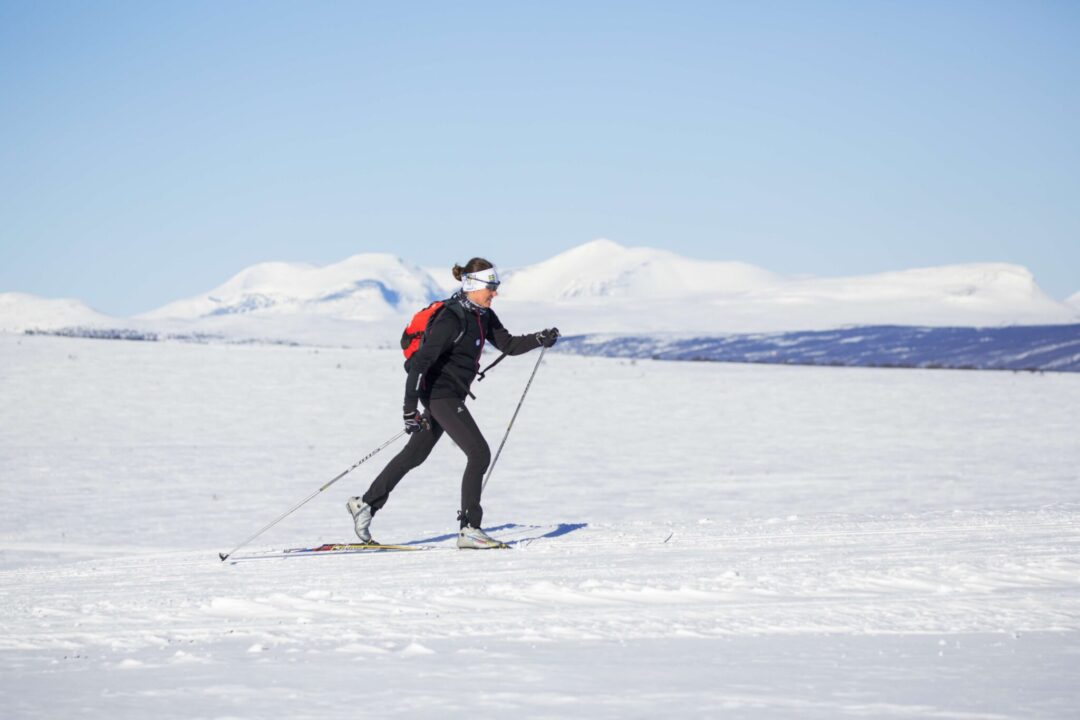
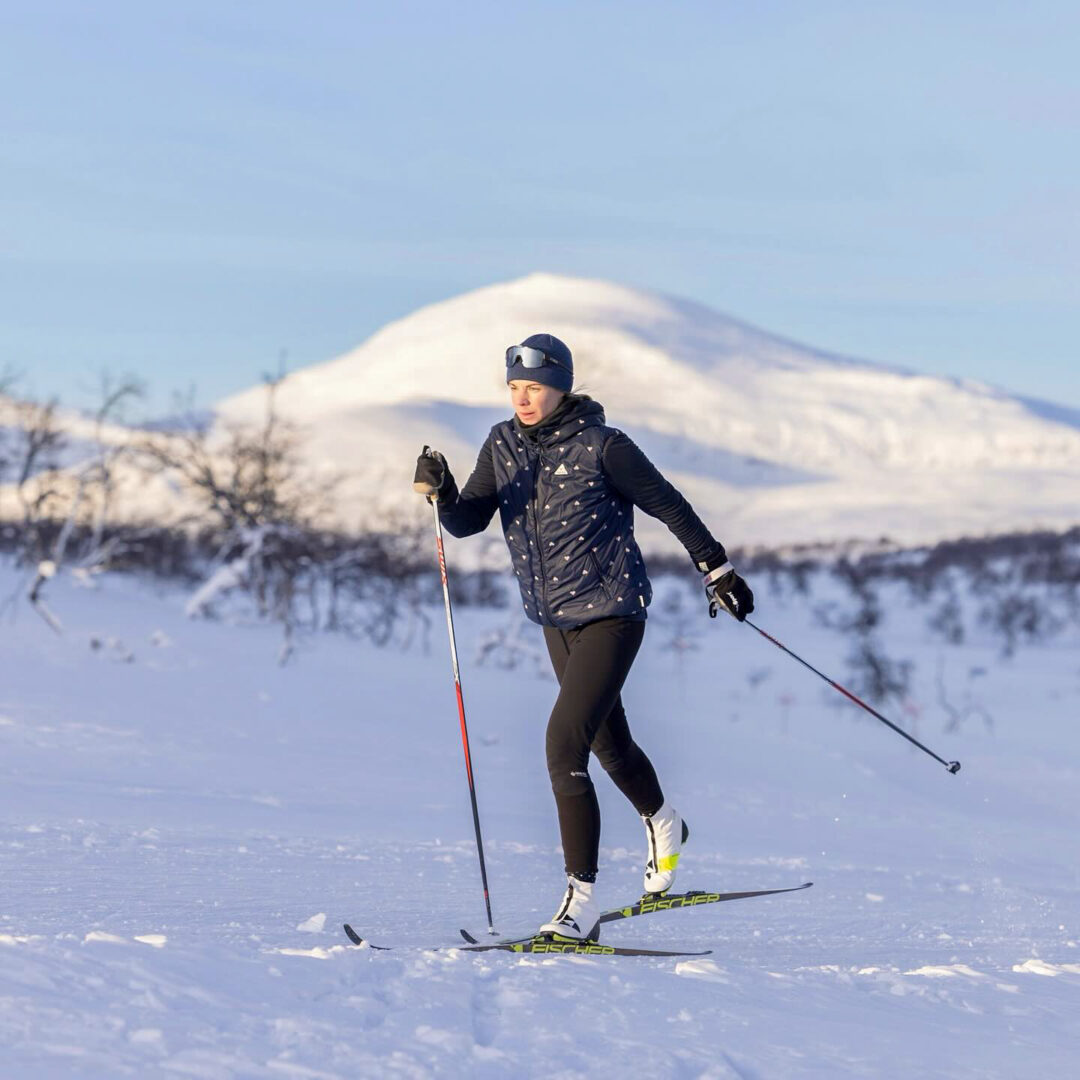
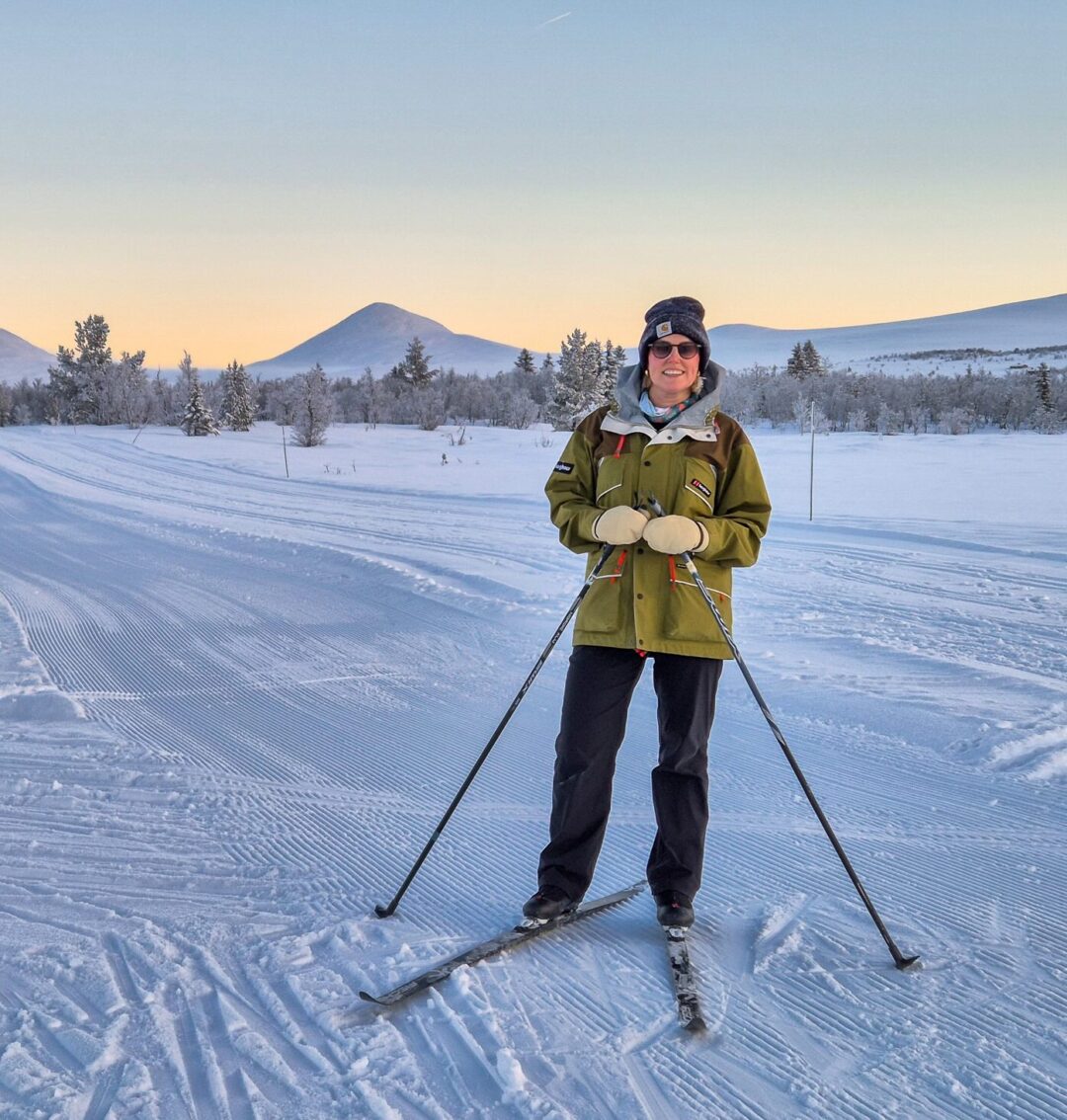
Woman cross-country skiing on a snowy track on a frozen lake at sunset
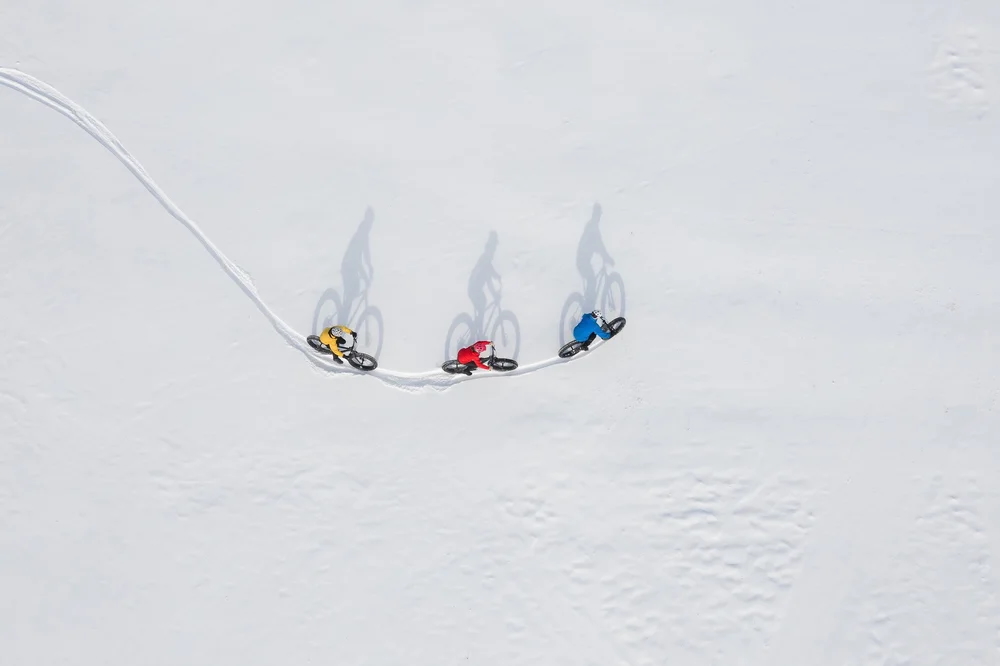
Fat bike rider in a snowy conifer forest across a frozen landscape

Getting There

You’ll fly into Kuusamo (KAO) and meet the included group transfer, which is about an hour drive to base camp for the week.

The good news is that Kuusamo takes direct flights from the UK in winter, which is unusual for somewhere this remote. Ours go from Gatwick with airBaltic, and the group transfer is timed to meet them.

What flights should I book?

You can fly from anywhere you like. The flights below are the ones we recommend, because the group transfer is timed to meet them.

There’s one transfer each way and it’s tied to the Gatwick flight, so if that one is delayed, the transfer waits for it. Any other arrival is very welcome, but the transfer leaves at its listed time whether or not you’ve landed. If you’re booking something else, check your travel insurance covers missed connections and onward transport.

London to Kuusamo, airBaltic

  • Arrival Day: LGW 9:25 – KAO 14:50 | BT1447
  • Departure: KAO 15:40 – LGW 17:20 | BT1446

What time is the group transfer?

We include one shared transfer on both the arrival and departure days of your trip.

  • Arrival Day: Pick up at Kuusamo Airport at 15:50
  • Departure: Drop off at Kuusamo Airport at 13:40

As above, the transfer is tied to the Gatwick flight. If that flight is delayed the transfer waits. Any other arrival needs to make the listed time.

Can I fly from somewhere else?

Of course. TUI run direct winter flights to Kuusamo from a couple of other UK airports, and you can route via Helsinki from most of them and pick up the domestic hop north. Either works, as long as you land in time for the transfer.

Just be clear on what you’re taking on. The transfer is tied to the Gatwick arrival, not yours, so if your flight is delayed it will go without you. Have a look at the transfer times above before you book and give yourself a decent margin. If you’re connecting, book both legs together with the same airline where you can, so your connection is protected if the first flight runs late. Separate bookings leave the onward flight at your own risk.

Can I get there via Helsinki?

Yes. Finnair connects Helsinki to Kuusamo, and Norwegian and Ryanair fly from London to Helsinki if you fancy a night in the capital either side. Check the connection times carefully though, because the Kuusamo leg doesn’t run all day and you may need an overnight stop.
Can I wait at the airport if I get in much earlier?

Waiting for the scheduled transfer is fine, the airport is open around the flights. It’s a different story if you’re arriving hours ahead or the day before, because small airports like Kuusamo often shut down completely between flights and you may find yourself outside in the cold with nowhere to go.
If you’re coming in the day before, it’s usually better to stay over in Helsinki and take your connection the following morning than to sit around somewhere this remote.

What about alternative transport?

You can get a bus to Kuusamo from Oulu (3 hours, from €28), or train from Helsinki to Oulu, then get the bus. This route means you’ll see more of Finland out of the window, but adds complexity. Most people stick with our recommended flights for good reason.

What if I miss the transfer?

You’d need to sort your own way out to base camp, about an hour and a half by road. Taxis from Kuusamo are limited and expensive over that distance, which is one of the reasons travel insurance matters out here. Your host will help coordinate from the Finland end, but be prepared for the cost. If you know your flight is delayed, message us as soon as you can and we’ll work out what’s possible.

What does a private transfer cost?

If your flights don’t match the group transfer times, we can arrange a private transfer between Kuusamo Airport and Hossa. It needs to be booked in advance, and the cost is per vehicle, not per person:

  • 1 to 4 passengers: €210
  • 5 to 8 passengers: €275

The drive takes around an hour. If there are others on your trip in the same position, you’re welcome to share a vehicle and split the cost between you. Contact our Bookings Team to arrange it.

The group transfer is included in your trip price, and there is no reduction if you book a private transfer instead.

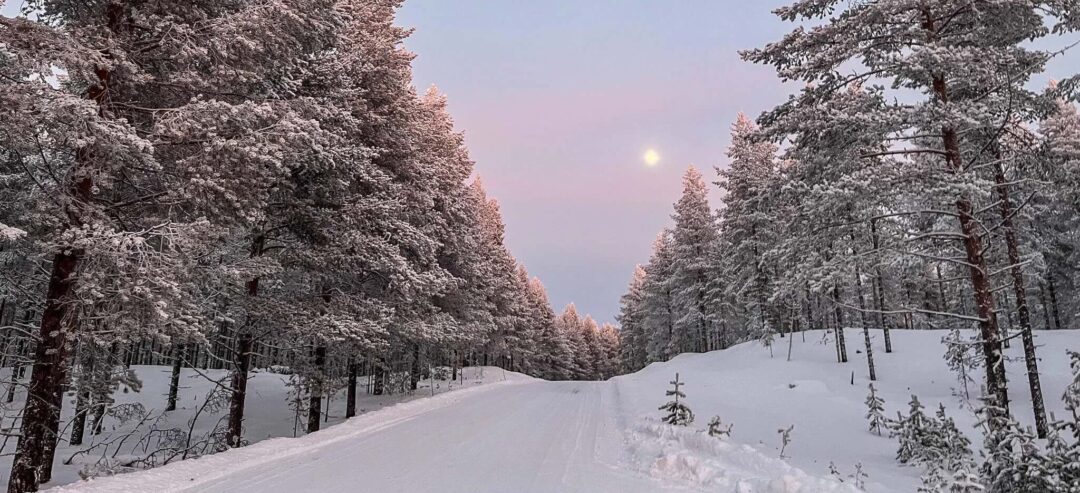
Snow-covered forest path in winter at dusk, with snow-laden pine trees on both sides

Fitness & Skill Level

This trip is rated moderate when it comes to difficulty. You’ll be out 5 to 6 hours each day and although it’s not a competition, you’ll still need to have a good level of fitness to face consecutive days of activity over a week.

The routes take you through forests, along ridges and over frozen lakes. What makes it hard work is the snow rather than the gradient, with 60 to 70cm underfoot turning every kilometre into more than it looks on paper. Distances and effort differ depending on the activity, so turn up ready to be active. No experience is needed for any of the three sports, which is what makes this a good one for beginners, although you do need to be able to ride a bike before you arrive.

What fitness level do I need for this trip?

If you do physical activity that gets your heart rate up a minimum three times a week for at least 45 minutes, you’ll have a great time.

What about cold weather preparation?

Unless you already live somewhere really cold, there’s no way to prepare yourself for the type of conditions you’ll experience on this trip. Therefore make sure you follow our packing guide and bring suitable clothes. Exercise will make you hot, but you’ll soon cool down when you stop.

What prior experience is helpful?

We recommend prior hiking experience and comfort with covering similar distances. You also really need to be able to ride a bike.

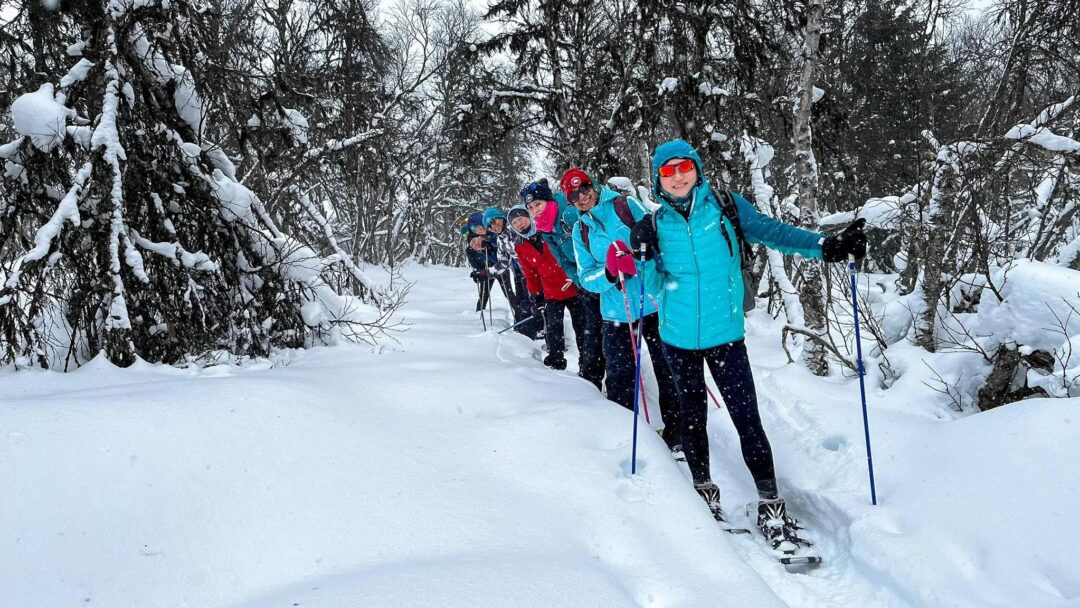
Women walking on a snowy forest trail, snowshoeing in winter woods

Sleep & Eat

For the majority of the trip you’ll be staying in small, cosy cabins with two guests per cabin, sharing a twin bedroom and shared bathrooms. There’s a communal lounge, and meals are eaten at the local visitors centre. A large shared sauna is a very short walk from the cabins.

Private rooms are not available on this trip.

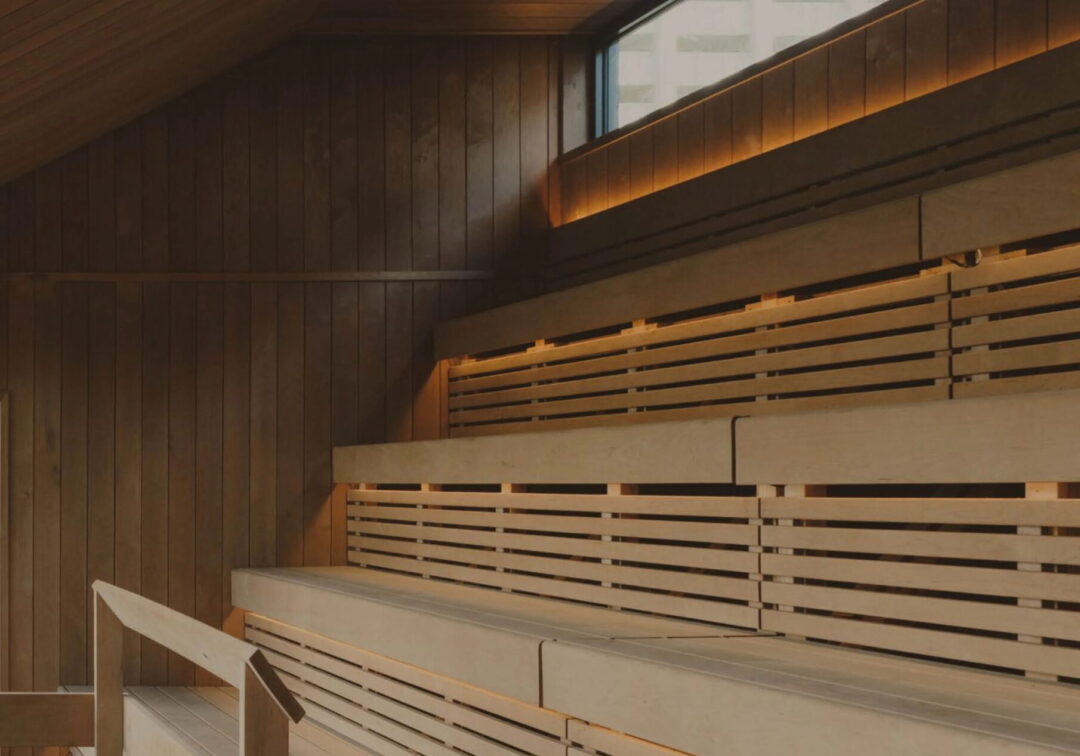
For one night you’ll stay in a rustic, off-grid cabin. When we say rustic, we mean it – there’s no electricity or running water. The place is heated by a wood-burning stove and your toilets are in a separate building. You’ll stay in bunk rooms that sleep up to 4 others, and be able to have a quick wash using snow melted by the sauna, because despite being in the wilderness, there’s always a sauna.

All your meals are included, from delicious breakfasts and lunches prepared over an open fire, to a hearty buffet of typical Finnish dishes for dinner. Please be aware that in winter all fruit is imported, so it might not be served often.

What do you provide for accommodation?

In both cabins we provide bed linen and bath towels, whilst in the wilderness cabin we also include sleeping bags and mummy liners. For the rest of your stay in the small cabins there’s also shared hairdryers (because no one wants to tackle sub-zero temperatures with wet hair).

What does the overnight wilderness experience involve?

For 1 night, you’ll stay in basic wilderness cabins without running water or electricity, relying on log-burning stoves for warmth. These cabins have dormitory bunk beds, no showers or electricity, and outhouse toilets, but they do have saunas and wood stove heating.

Can you handle dietary requirements?

We can cater for most dietary requirements, but you must let us know in advance. It’s probably best to bring your own snacks too.

Can I do laundry?

You can bring hand-wash to clean base layers if needed, but most people just bring enough for the week. There are no formal laundry facilities available.

Do I need to carry my luggage to the wilderness cabin?

No! Your luggage is transported to the wilderness cabin for you. As space is limited you’ll need to leave unneeded items at basecamp. You can either bring a smaller bag to carry your items, or share one bag with another Gutsy Girl on your trip.

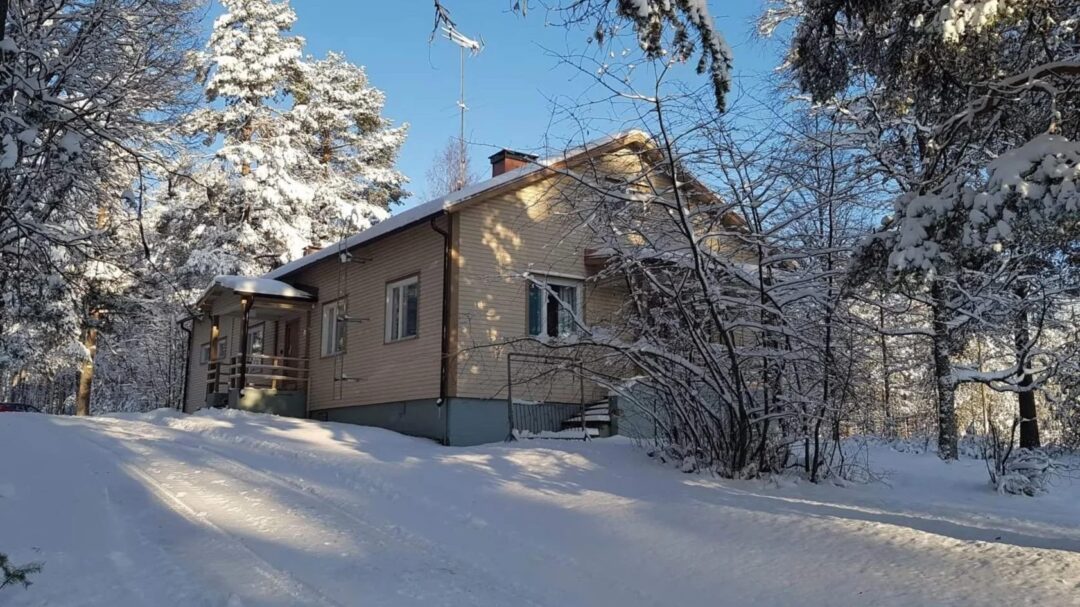
Snow-covered wooden cabin in a Finnish winter forest, with trees dusted in snow and blue sky
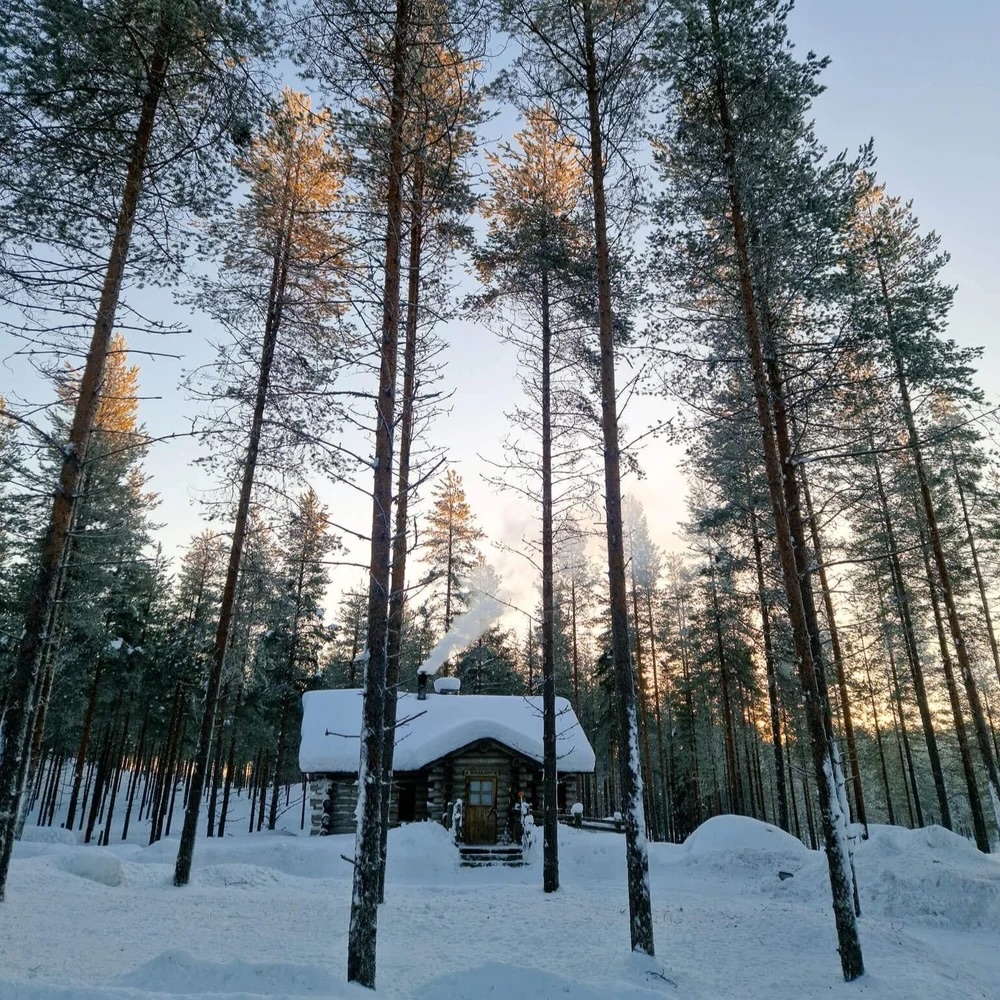
Snow-covered forest with a small wooden cabin at sunrise, surrounded by tall pine trees in winter

Weather

Winter temperatures in Finland normally vary between -5 and -20°C, but can get as low as -35°C. This “dry” cold feels less cold than “damp” conditions at the same temperature, but will still freeze your fingers and nose if you don’t wrap up well enough. The weather also varies and can be cloudy or sunny with wind and snowfalls.

How should I dress for the cold?

The best way to protect against the cold is a number of thin layers rather than a few thick ones. Your outer garment should be wind and waterproof, with base layers and thermals underneath to keep the heat in. Take care to protect your feet, fingers and face too.

Will I see the Northern Lights?

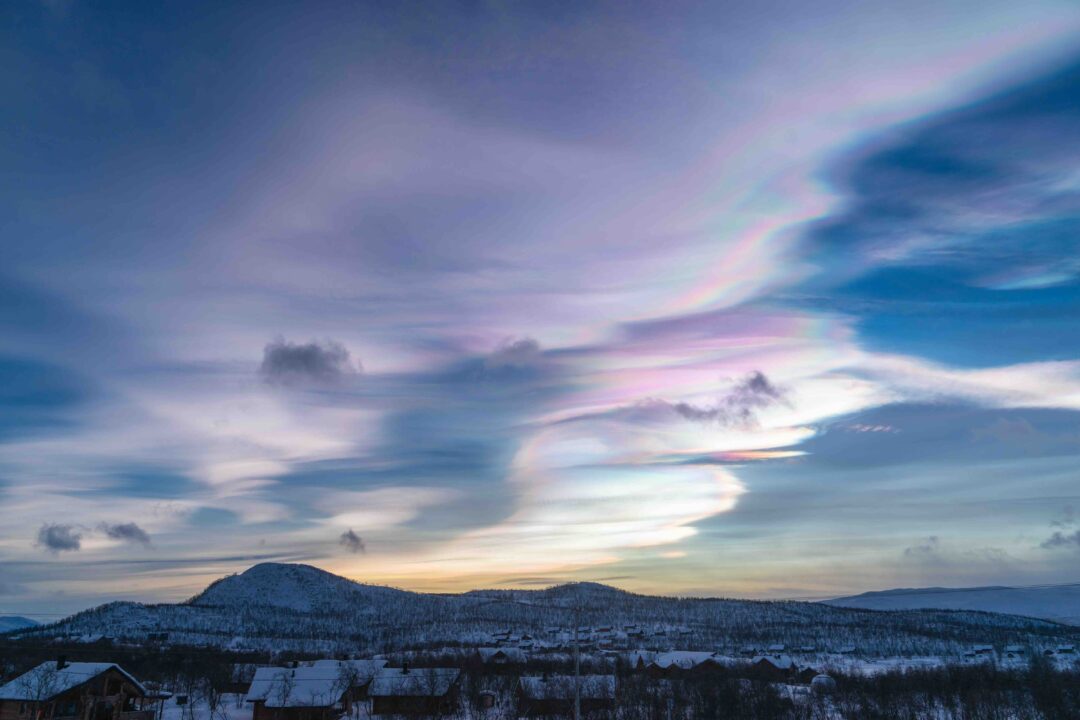
In theory you’re in prime Northern Lights watching territory – there’s no light pollution and plenty of wide open sky. However, like everything else in nature, it’s impossible to predict if the lights will show up or not. We’ve got everything crossed for you though.

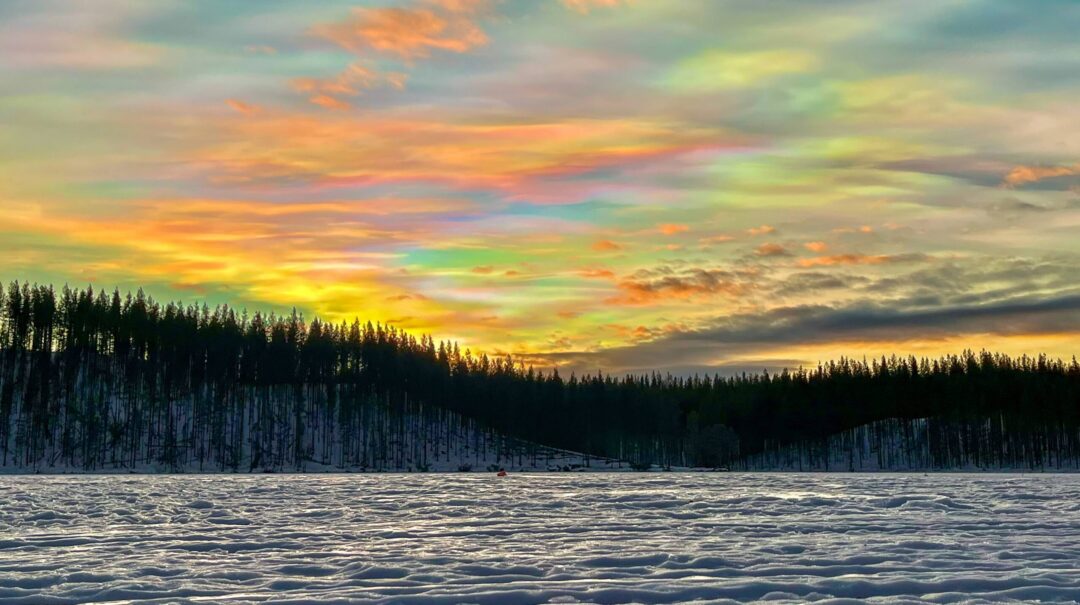
Snowy winter landscape with a pine forest at sunset, clear sky over a frozen track

Good to Know

Money: No ATMs during the tour, so bring cash for drinks and snacks. There’s a small souvenir shop at the visitor centre that also takes card, but shopping options are limited beyond that.

Communication: WiFi is limited at the main cabin, and there’s none at the wilderness cabin, no electricity out there means no WiFi either.

Tipping: Tipping is not compulsory on our adventures, but if you’ve had a great trip and brilliant service, a tip for your guide or host is always appreciated. We recommend giving €20-€30, or whatever you can or feel is the right amount.

Why aren't all guides and instructors female?

We work with the best guides available, male or female. There are fewer women in outdoor guiding roles, so we prioritise expertise and guest experience. We vet every guide carefully and monitor feedback closely to ensure all guides align with our ethos and standards. We also hope more trips like ours encourage more women to find new activities and become guides themselves.

Should I exchange cash before I fly, or can I do it there?

Bring euros with you , there are no ATMs during the tour, so this isn’t something you can sort once you land.

How many guests will be on this trip?

Max 11 guests on this trip.

Will I be able to charge my phone or camera?

Charge everything up at the main cabin before the wilderness night as there’s no electricity at the wilderness huts.

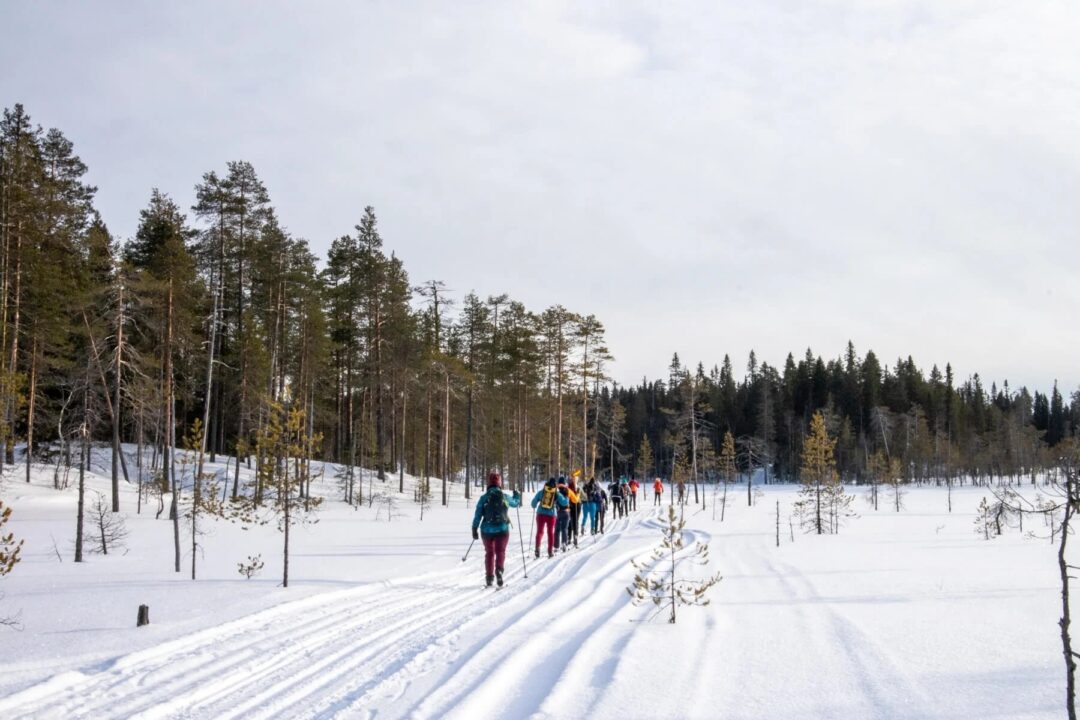
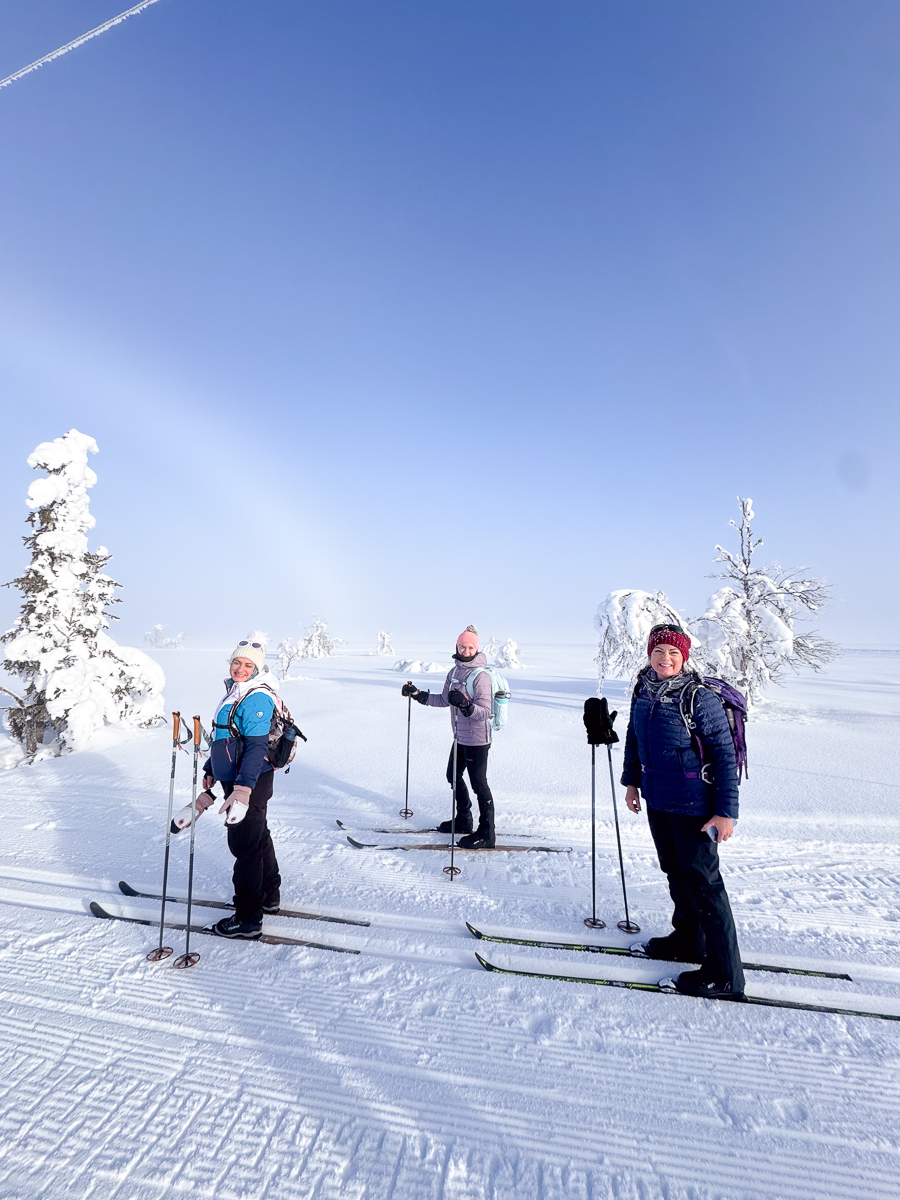
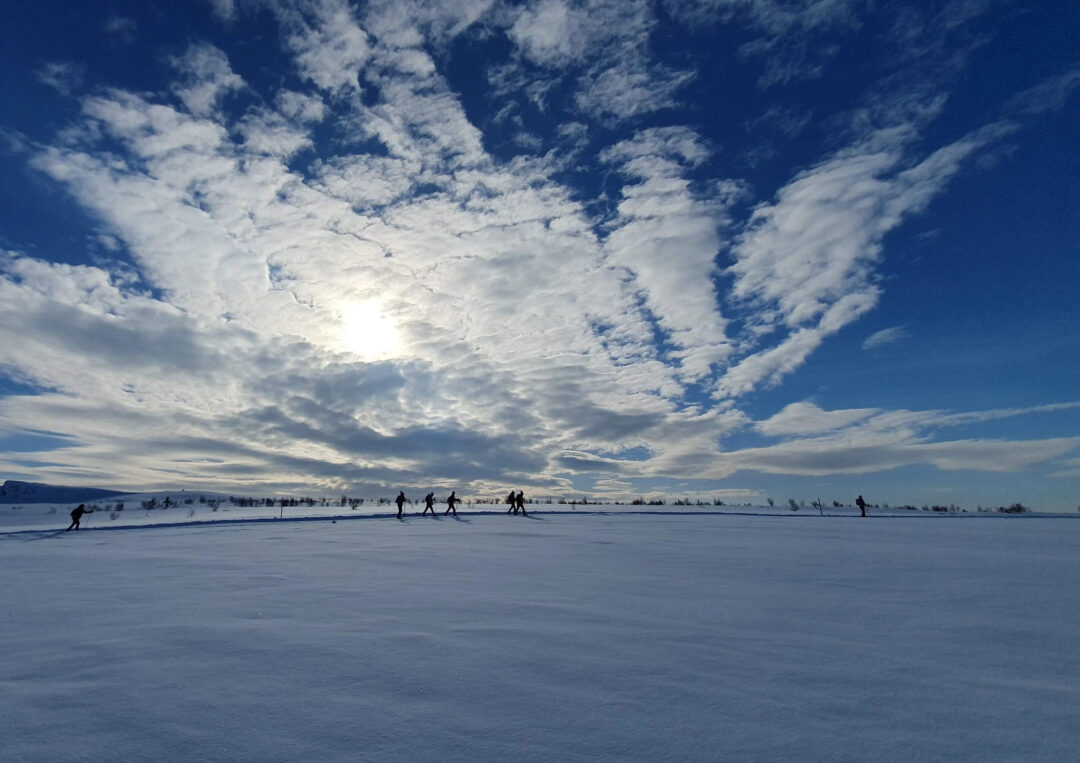
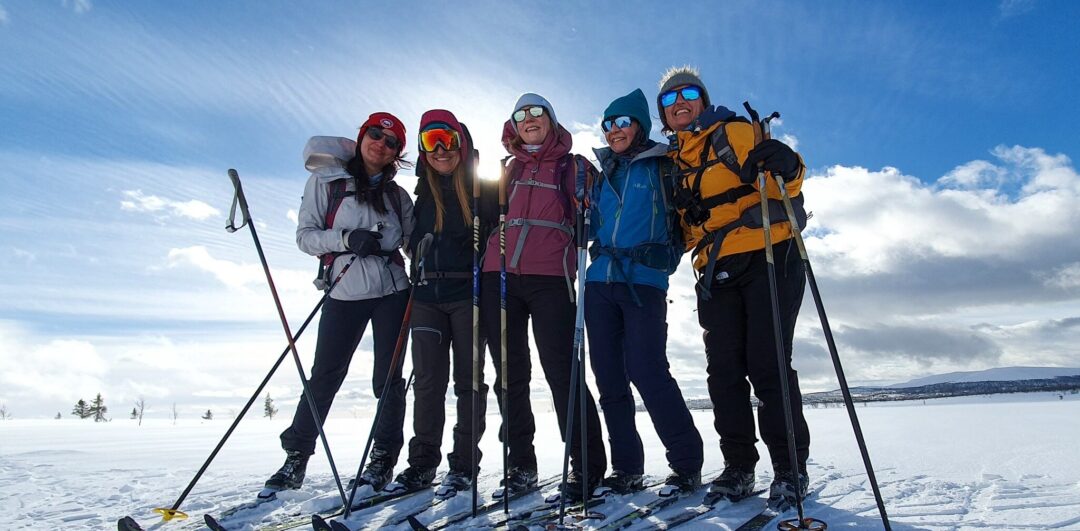
Cross-country skiers glide on fresh snow, with three skiers spaced out on a winter slope

Packing List

What We Provide

  • Snowshoes and poles
  • Cross country ski equipment (boots, skis, poles)
  • Snow boots and mittens (free rental if needed)
  • Fat bikes and helmets
  • Sleeping bag and mummy liner (for wilderness night)
  • Bath towels

What You Need to Bring

Active Kit

  • 20–30L daypack
  • Base layer thermal tops (synthetic, wool, or silk), bring several
  • Thermal leggings or long johns (synthetic, wool, or silk)
  • Fleece or wool mid-layer
  • Breathable, windproof, water-resistant shell jacket
  • Softshell trousers, windproof and breathable, with room for thermals underneath
  • Waterproof trousers (optional but useful)
  • Warm packable insulated or down jacket (for stops and evenings)
  • Warm socks in different thicknesses, wool is best, bring several pairs
  • Ski gloves, two pairs in case one gets wet
  • Warm mittens (or rent these free)
  • Glove liners and/or hand warmers
  • Warm hat
  • Buff, two if you can (one for your neck, one as a headband)
  • Sunglasses
  • Gaiters (optional, useful in deeper snow)
  • Padded cycling shorts, worth having for the fat bike day
  • Headtorch and spare batteries

Wilderness Cabin Night

  • Small overnight bag (or use the one provided)
  • Earplugs and eye mask (shared dorm rooms)
  • Sleeping bag liner (optional, one is provided)

Off the Snow

  • Casual warm evening clothes
  • Nightwear
  • Slippers or indoor shoes with hard soles
  • Swimwear for the sauna and ice bathing (optional, Finns often go nude)
  • Neoprene gloves and booties for ice bathing (optional)
  • Travel towel (bath towels provided)
  • Toiletries

Personal Kit

  • Insulated water bottle, not a Camelbak-style bladder, it will freeze
  • Thermos flask for hot drinks on the trails
  • Tupperware for packed lunches
  • Snacks, bring a variety
  • High-SPF sunscreen and SPF lip balm
  • Prescription medication and painkillers (paracetamol and ibuprofen are more expensive in Finland)
  • Compeed or Moleskin blister plasters
  • Dry bags for inside your pack
  • Waterproof phone case (optional)

Packing Tips

You’re packing for three activities across the week: snowshoeing, cross-country skiing and fat biking. The good news is the kit overlaps almost entirely, all of it warm, layered, windproof and active. The only cycling-specific addition is a pair of padded cycling shorts, worth bringing for the fat bike day.
Layering covers everything on this trip: a thermal base, a fleece mid-layer and a windproof, waterproof shell. Snow depth in Hossa reaches 60 to 70cm, which makes every activity harder work than it looks. You’ll warm up fast on the move and cool down just as fast when you stop, so the insulated jacket is for lunch breaks and the evening at the wilderness cabin, not for when you’re active.
Snow boots and mittens are free to rent: request them when you book. If you’d rather bring your own boots, they need to be warm, waterproof and have solid grip. Gaiters are optional but earn their place in the deeper snow.
The wilderness cabin night is off-grid: no electricity, no running water, outhouse toilet. Pack a headtorch somewhere you can get to it easily. Luggage is transferred between locations so you’re not carrying everything, and a small separate bag for the overnight stay is all you need.

What specific clothing do I need?

Always get merino wool or synthetic base layer, but never cotton. Whilst wool draws sweat away from the body and keeps you warm, if cotton gets wet it stays that way and you’ll get really cold. For your mid layer you need something insulating and warm, but not too thick, like a fleece or light wool jumper, as well as thin trousers or leggings. Then on the top you’ll need a wind and preferably waterproof outer gear to keep out the worst of it. Add to that a hat, buff, thick gloves and wool socks and voilà!

Can I rent any kit?

The hire of thick mittens and proper snow boots is included in the cost of your trip.

Women snowshoeing on a snowy forest trail with trekking poles, winter adventure outdoors

Trip Code FINUPIMLT – Include this code in any message so we can find your trip straight away.