Fitness & Skill Level
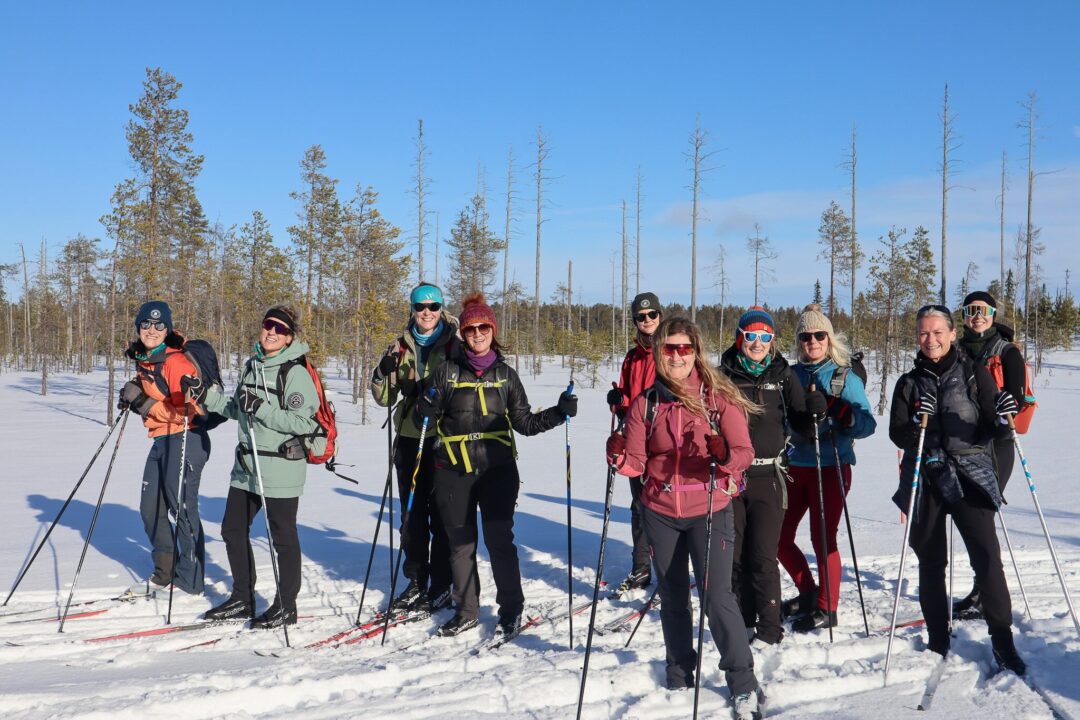
You need to be able to cross-country ski before you come. There’s no tuition on this trip and no time built in to learn. On the fitness side, you need to be active already and ready for six long days in a row.
The Conditions
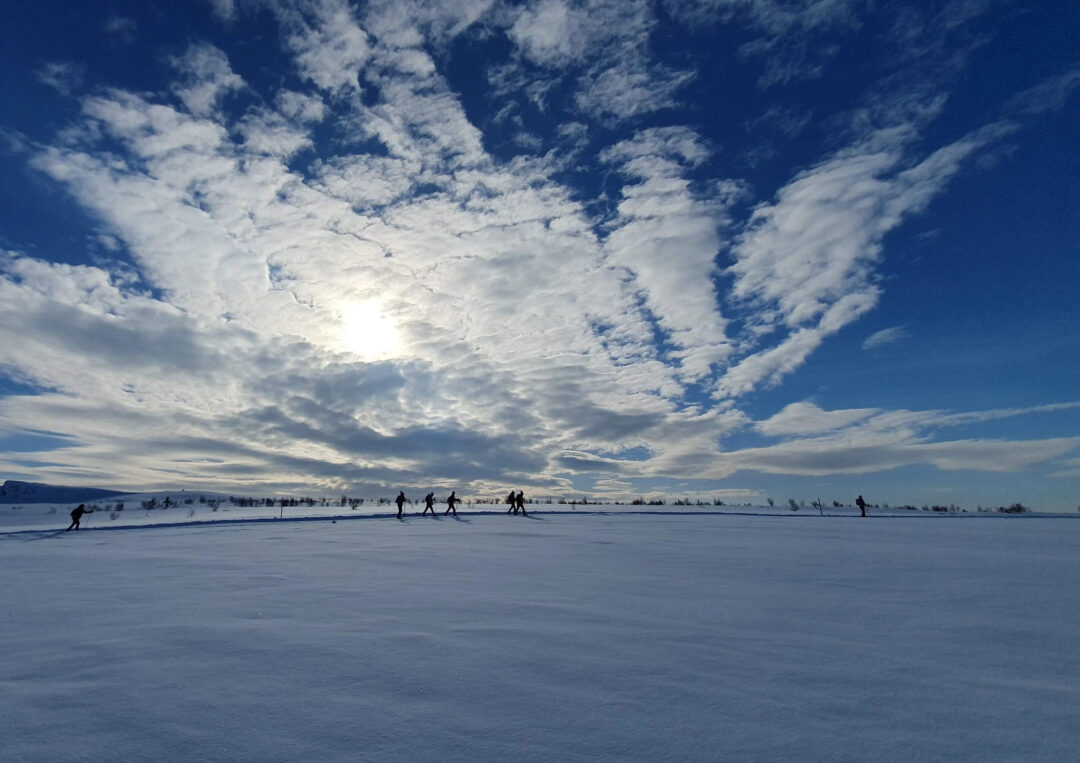
Six days of skiing, back to back, covering 17 to 23km a day. None of those distances is enormous on its own. What makes this trip challenging is doing them one after another, in the cold, with no rest day in the middle.
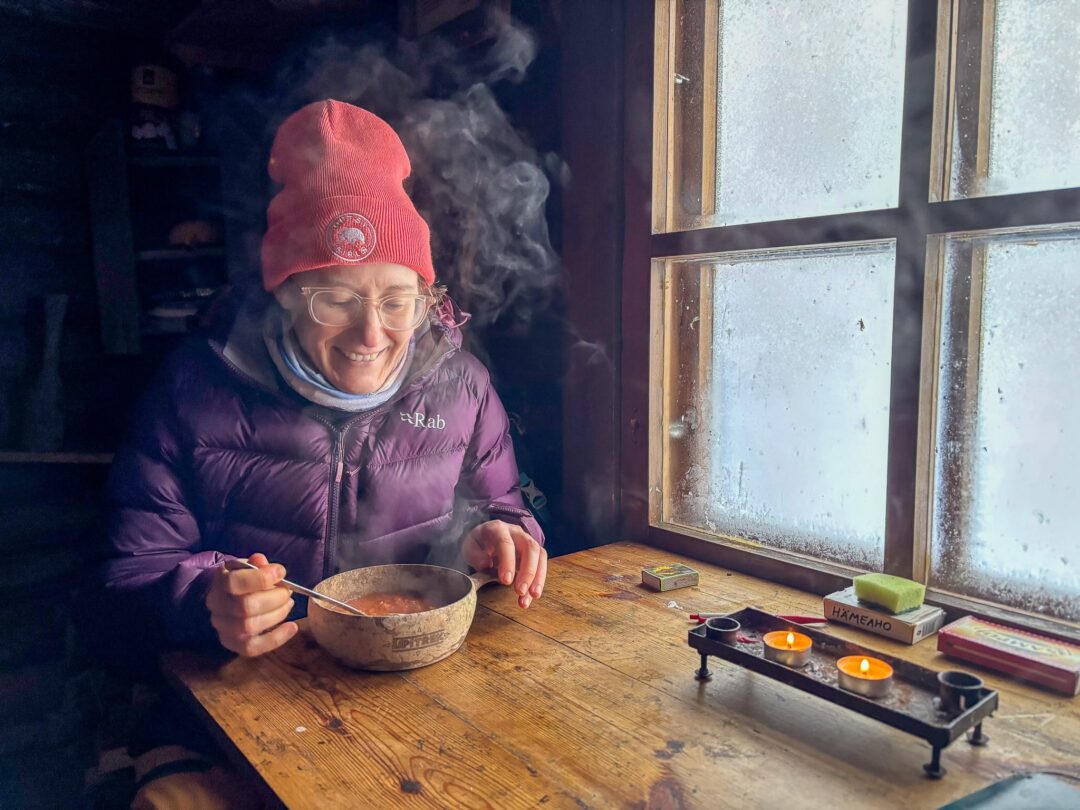
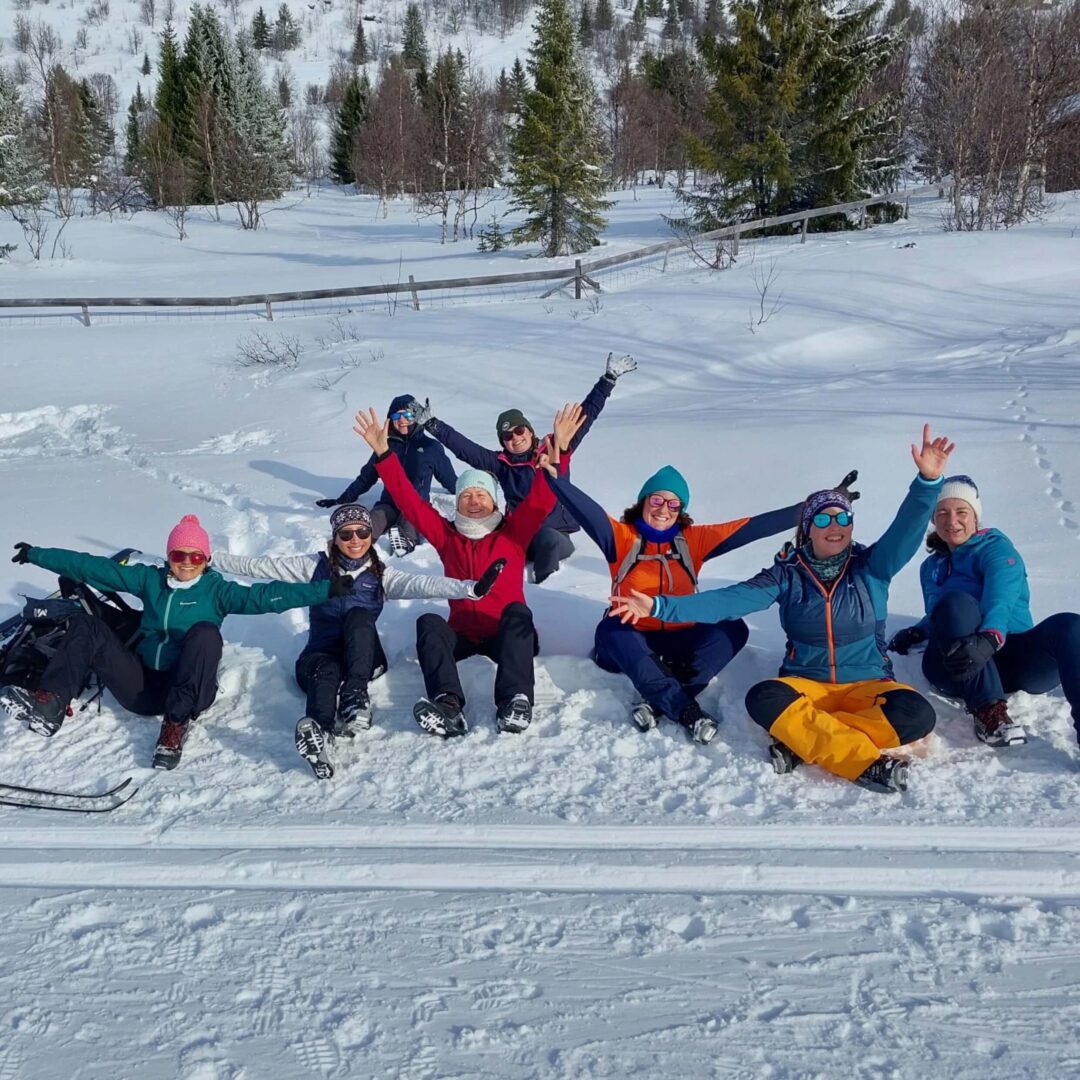
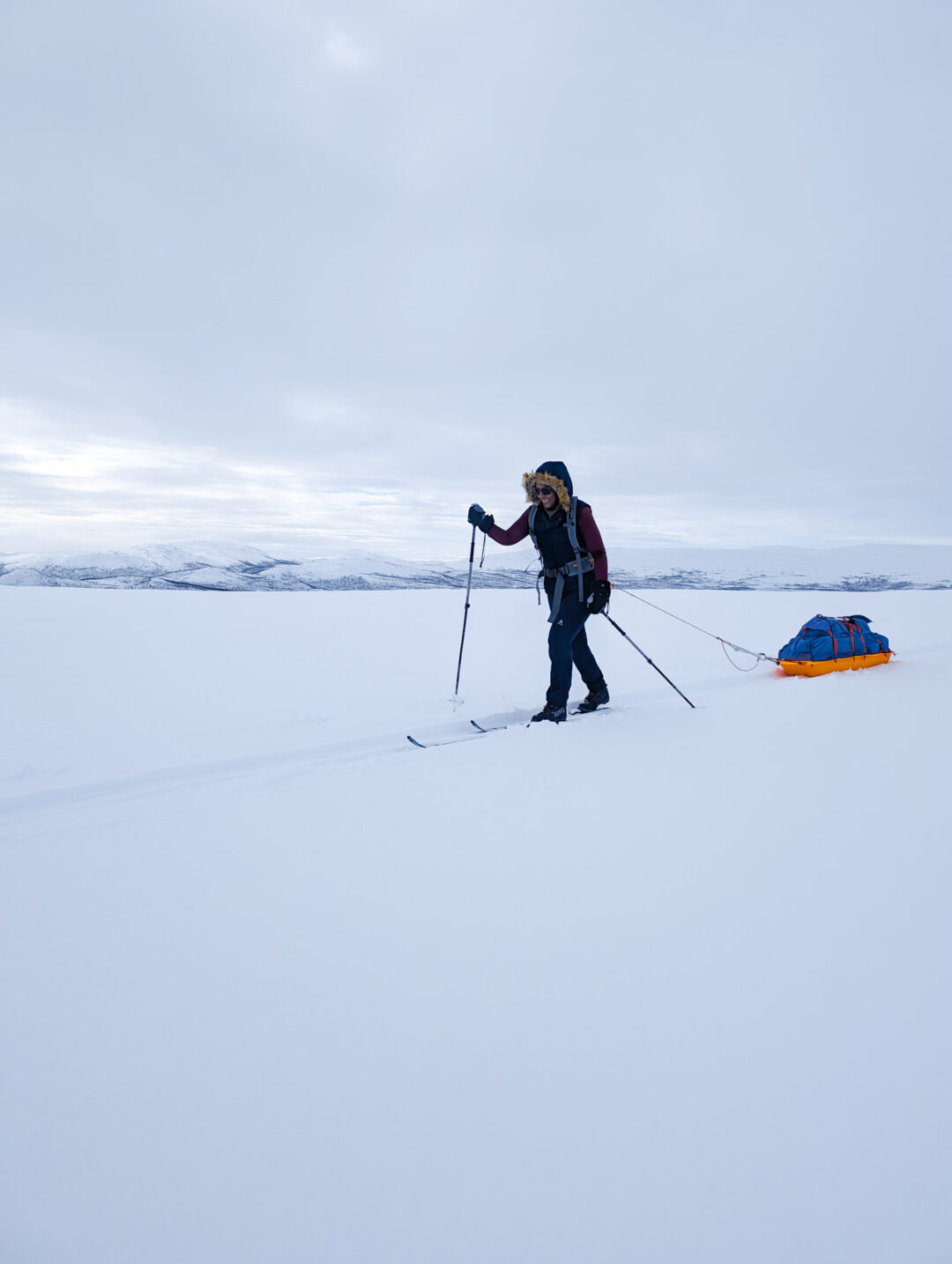
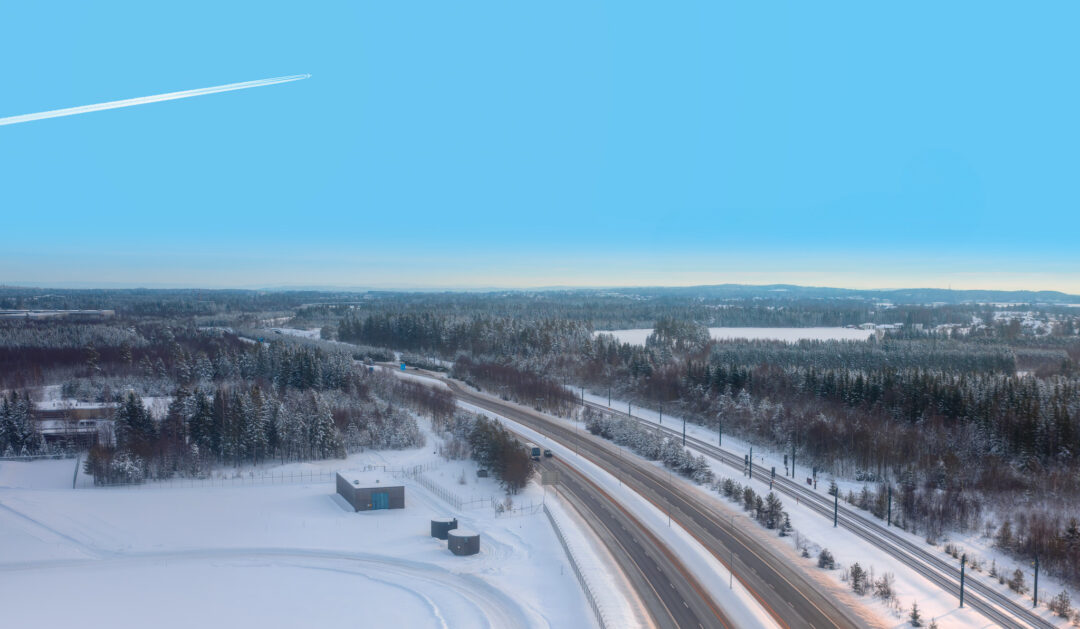
The ground rolls rather than lies flat, so there are climbs and there are descents, and you’ll meet both most days. Temperatures usually sit between -5 and -20°C and can drop to -30. Everything takes longer when it’s that cold: getting dressed, eating lunch, doing up a boot with mittens on. That gets added to the ski day, and the days start to feel long.
Your bags travel by road between guesthouses, so you carry a day pack with layers, water and snacks and nothing else.
Nights are in shared rooms of two to four, with shared bathrooms at most of the guesthouses, so you won’t get much time on your own across the week.
On two of the days you ski from one guesthouse to the next. There’s no stopping short on those, you finish where the beds are.
Fitness
If you already train regularly and you’re used to long days outside, you don’t need to overhaul anything. Keep doing what you’re doing and add some longer sessions, so your body knows what a full day out feels like rather than an hour.
If you’re active but not consistently, give yourself a few months to build for the trip. Cardio three or four times a week, 45 minutes to an hour, plus one longer session at the weekend. You need six to eight weeks to see improvements in your endurance, so cramming it into a week or two before the trip won’t help
If you’re starting from a low base, allow longer than that and build gradually. Going straight into this kind of volume from very little is how people pick up an injury before they’ve even left, so it’s worth working with a coach or a trainer for the structure.
Whatever your starting point, leg and core strength is what carries the back-to-back days, so build some in.
One honest gauge: if you’ve cross country skied with us before and the longest day of that trip felt like a stretch, these days are longer.
Skill
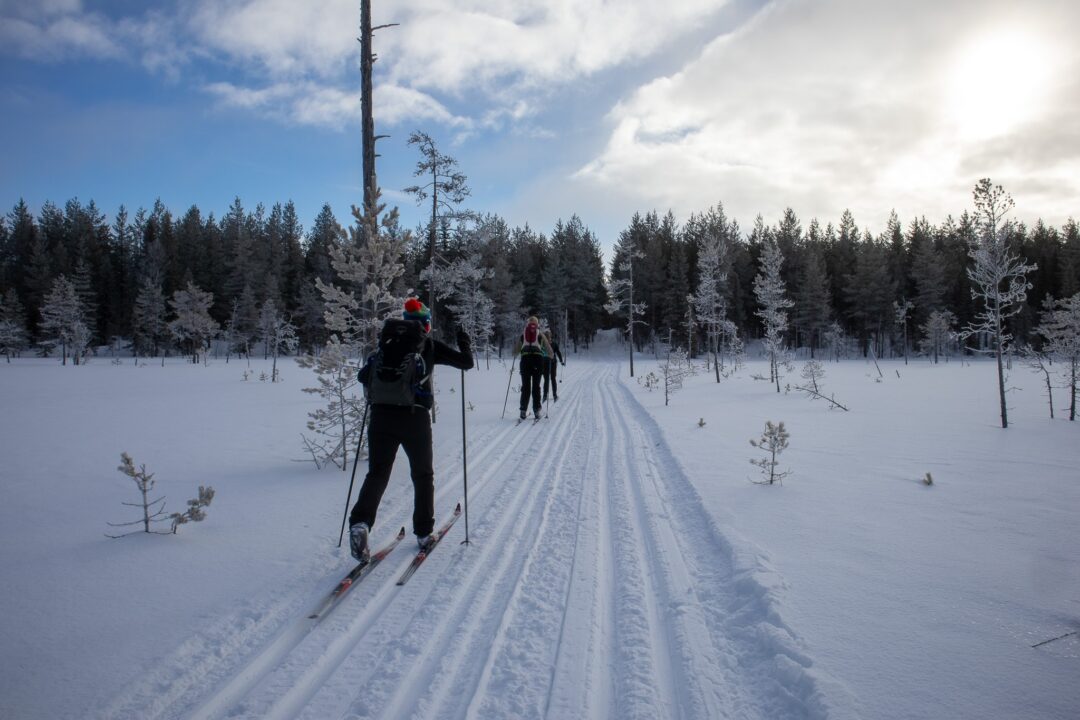
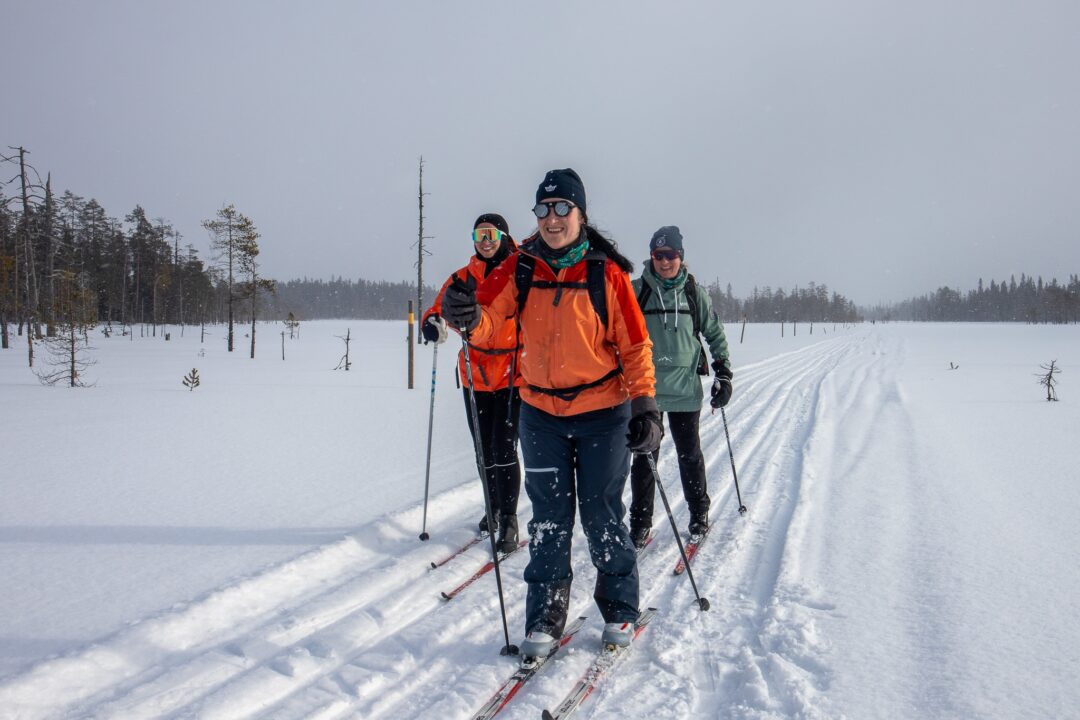
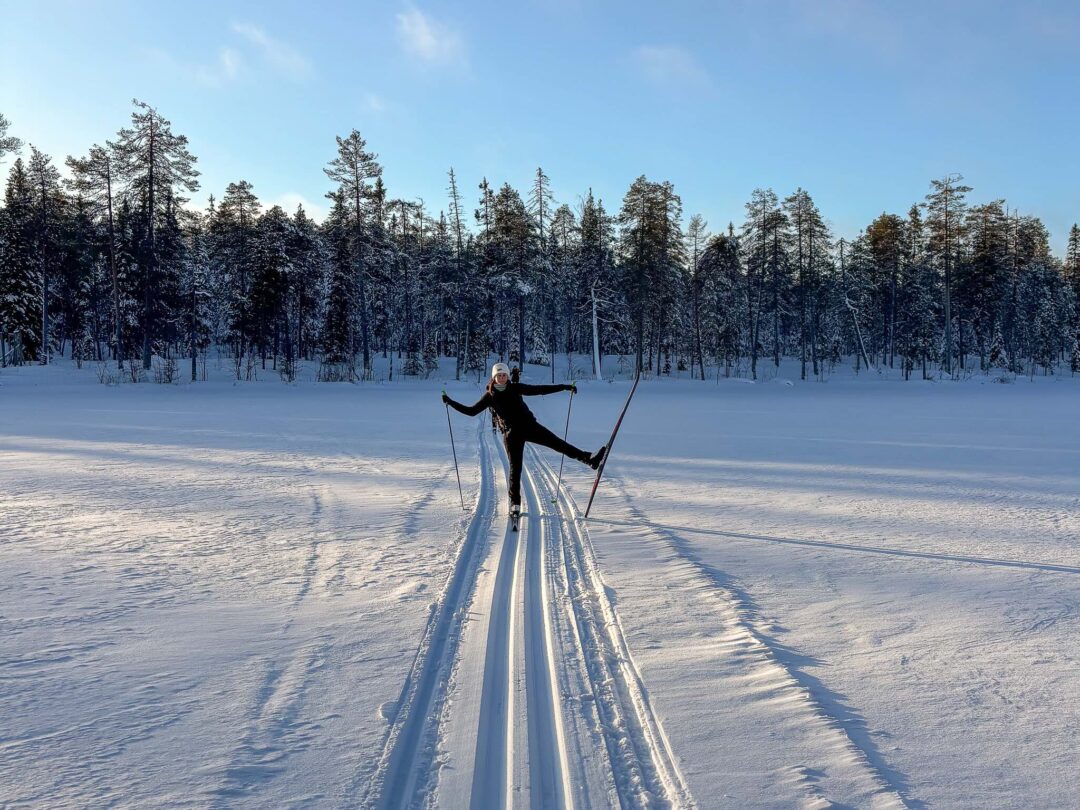
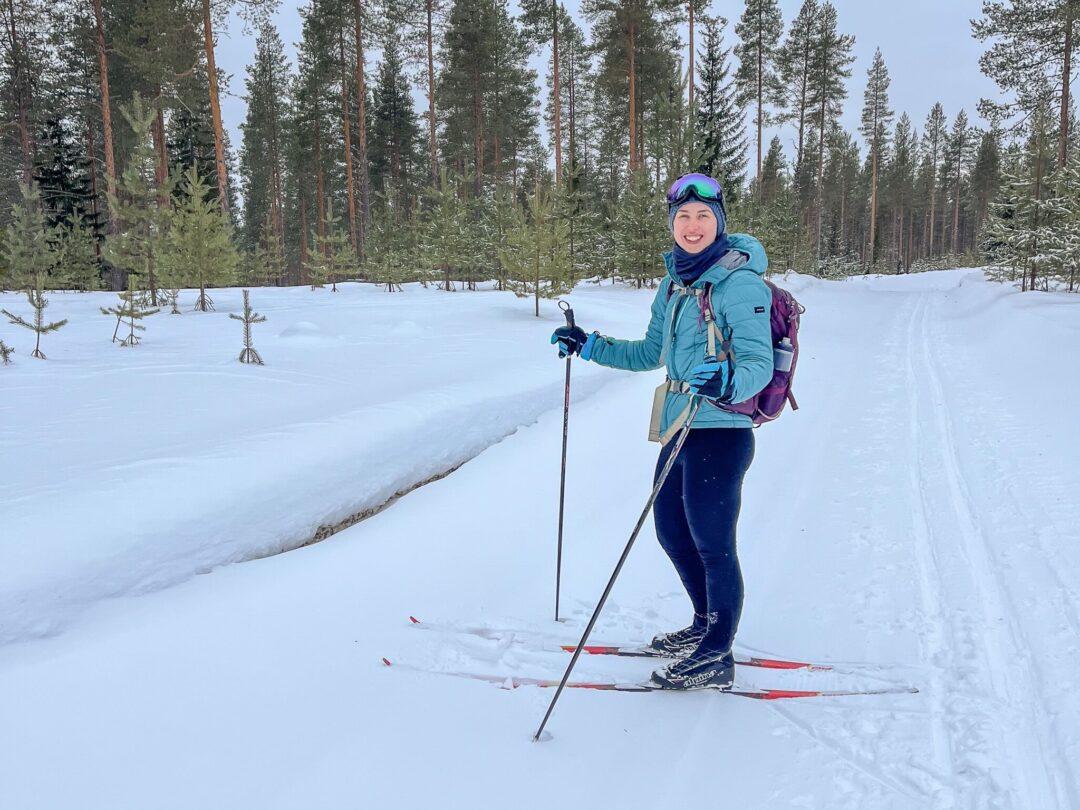
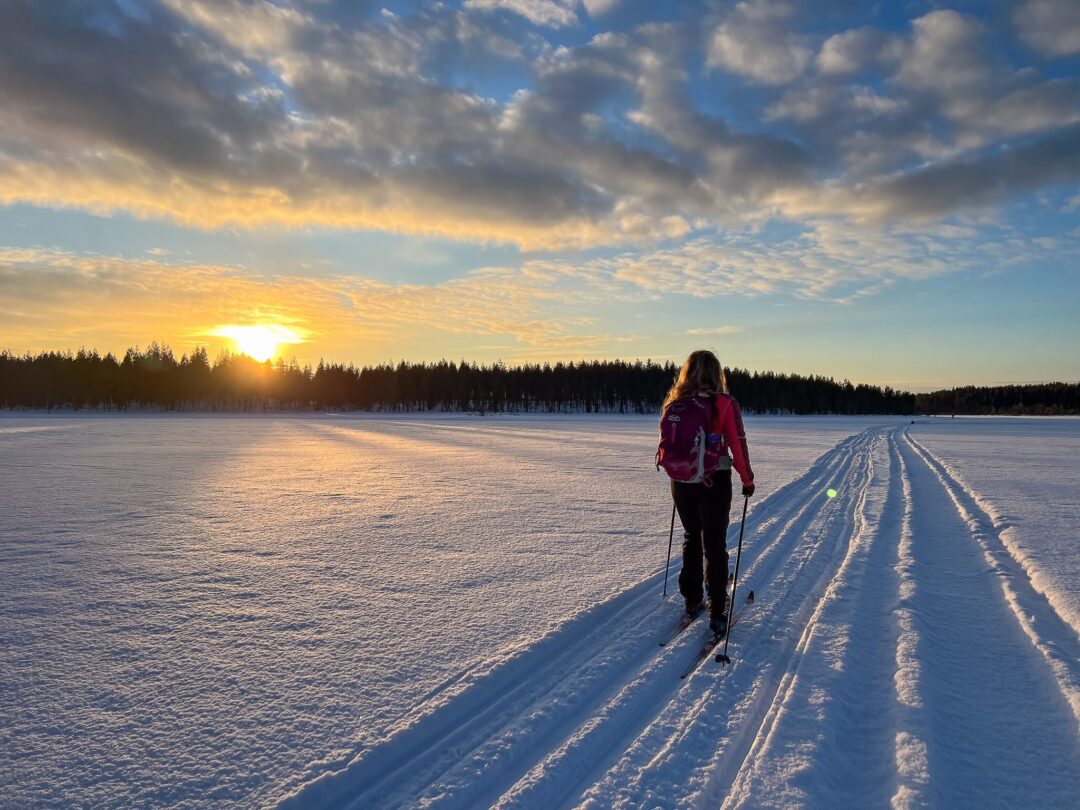
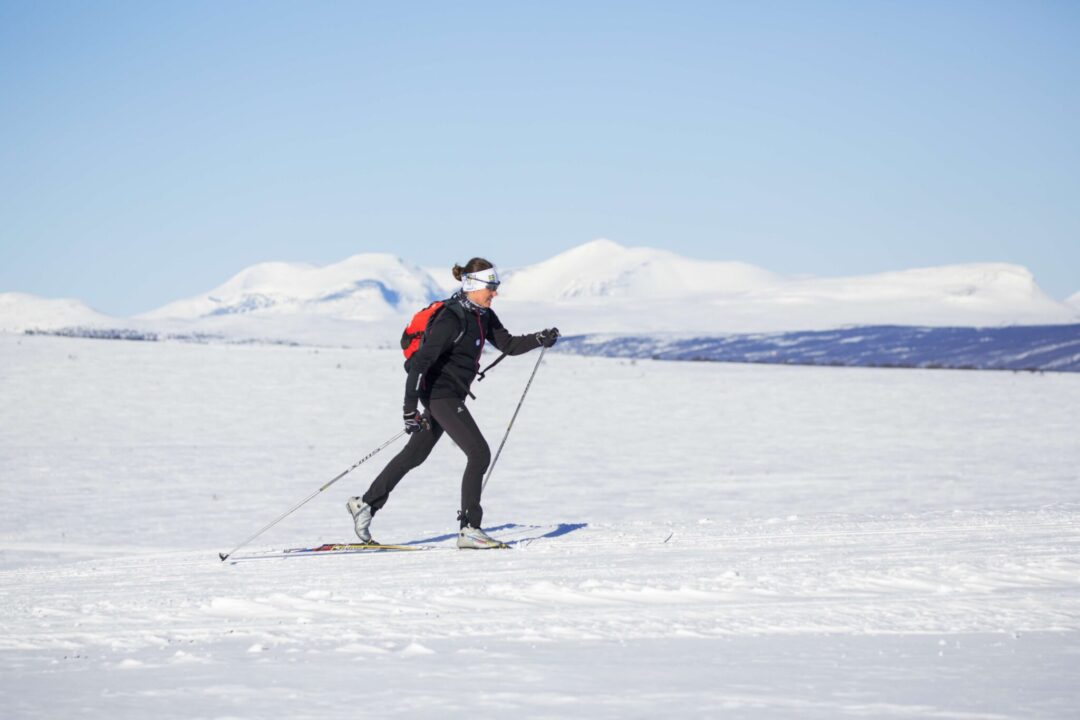
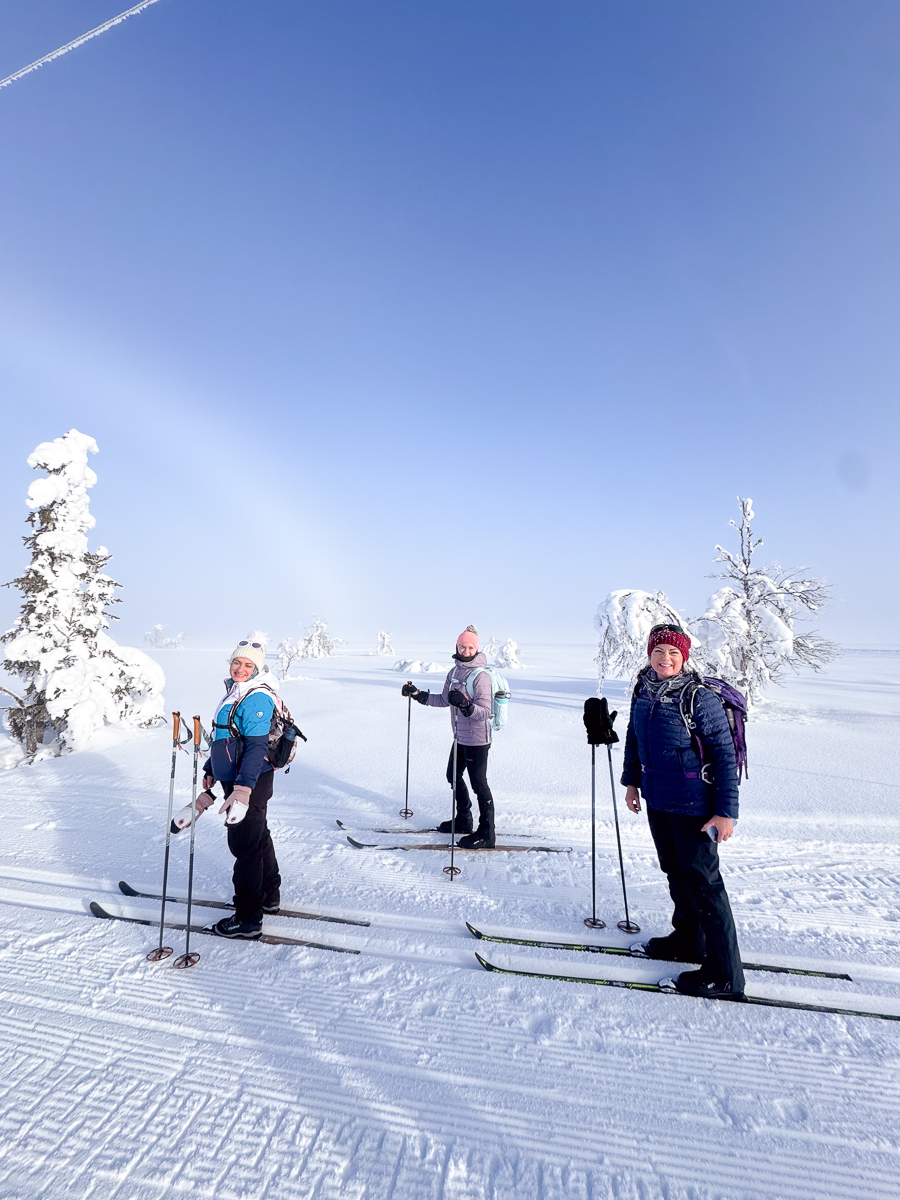
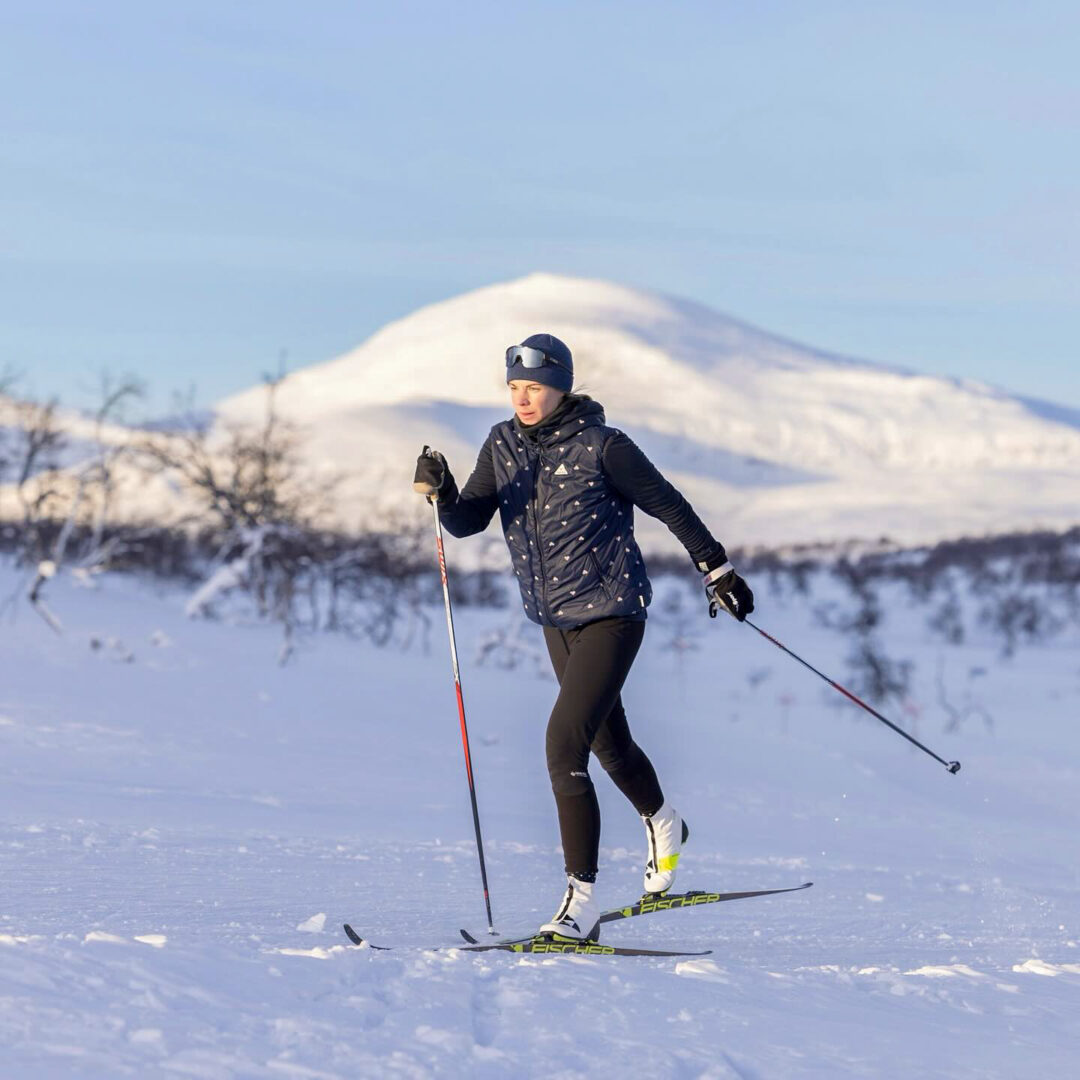
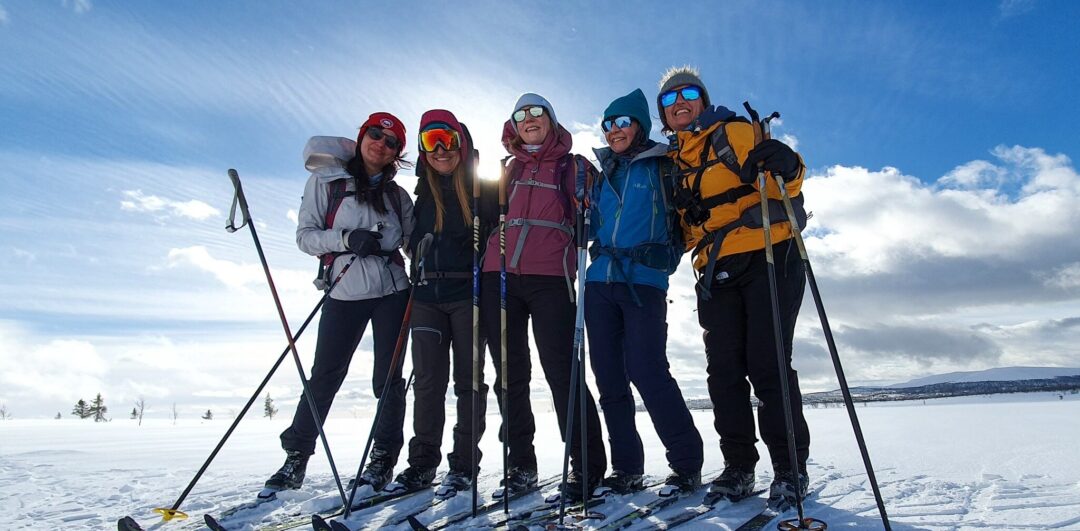
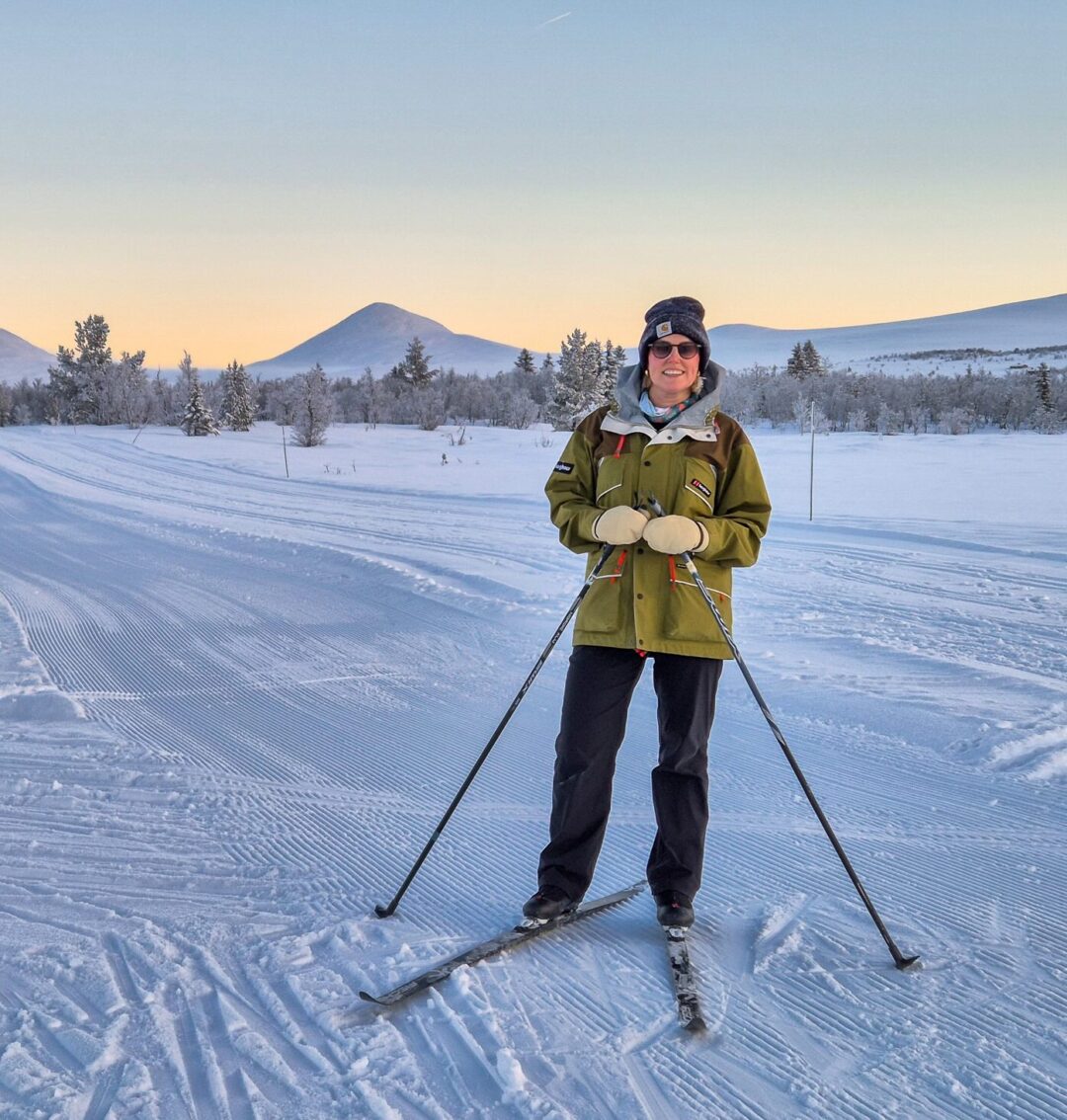
This is track skiing. You follow tracks cut and set by a snowmobile guide for the first part of the week, and Hossa’s own marked trails for the last two days. You need to arrive knowing how to cross-country ski: how to move efficiently in the tracks, how to get in and out of them, and how to control your speed and stop on a descent.
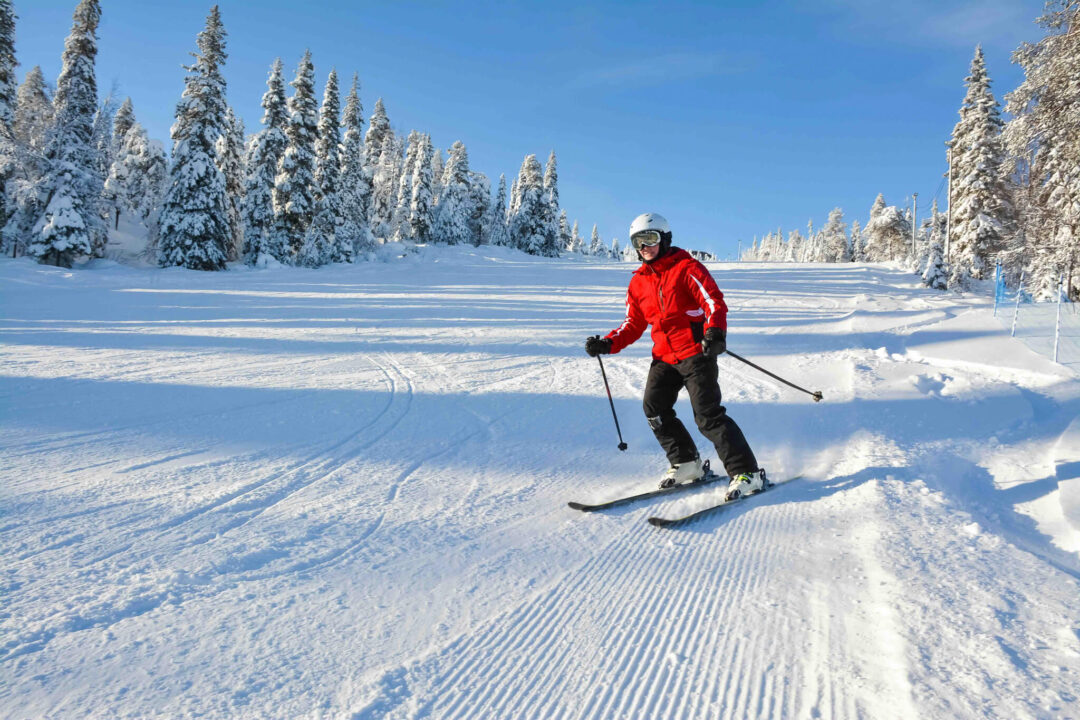
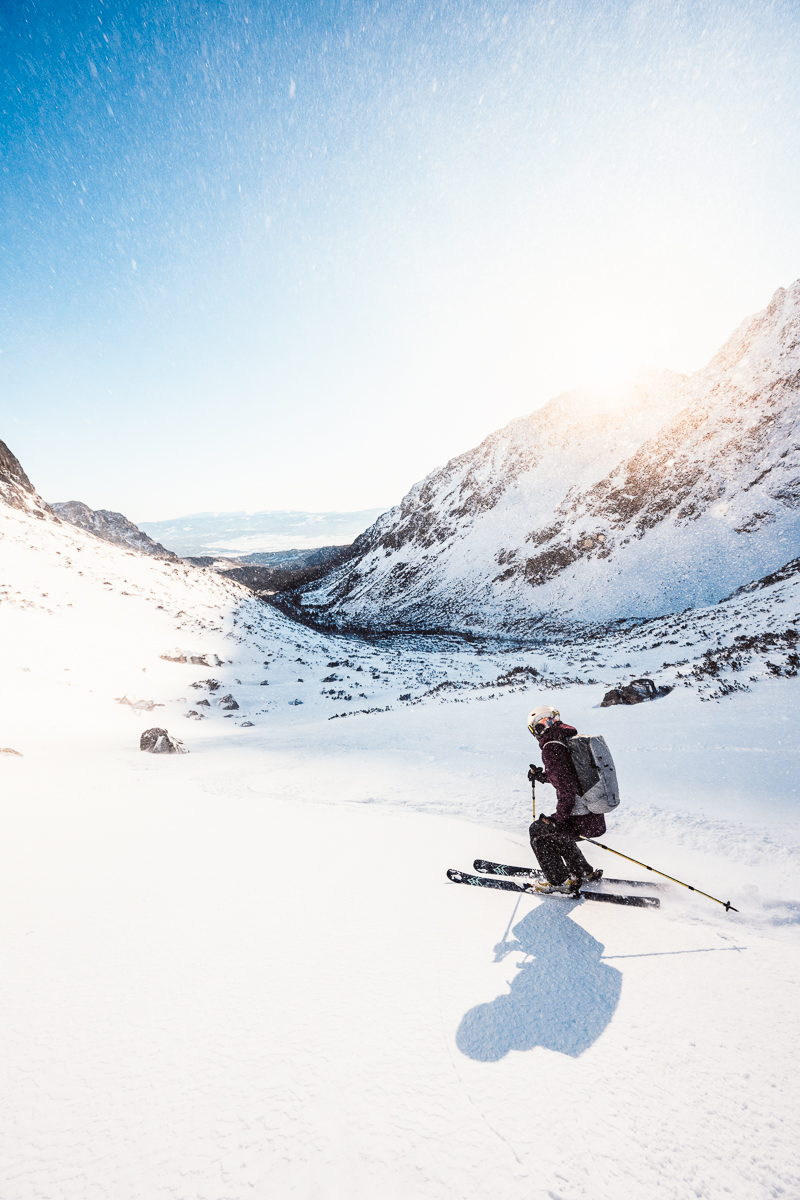
If your experience is backcountry skiing, that isn’t the same thing. Track skis are narrower and less stable underfoot, and following a set track feels different to breaking your own line. Downhill skiing doesn’t transfer at all. If you’ve been on a backcountry trip with us and this is the direction you want to go, we’d recommend one of our cross country ski trips in Norway or Sweden.
You don’t need to be fast or elegant. You do need the technique already there, because there’s a guide but there’s no teaching.
The rest is mindset. Day five, cold, 8km still to go, and the only way to the guesthouse is to ski it. That catches more people out than the skiing does.