Trip Guide

Trip Guide: Beginner Cross Country Ski and Yoga Weekend in Norway

Ready to learn cross-country skiing in Norway? This guide covers everything you need to show up confident and prepared for four nights of gliding through snowy wilderness and relaxing with evening yoga. You’ll be based in Venabygdsfjellet on the edge of Rondane National Park with over 140km of marked and prepared trails.

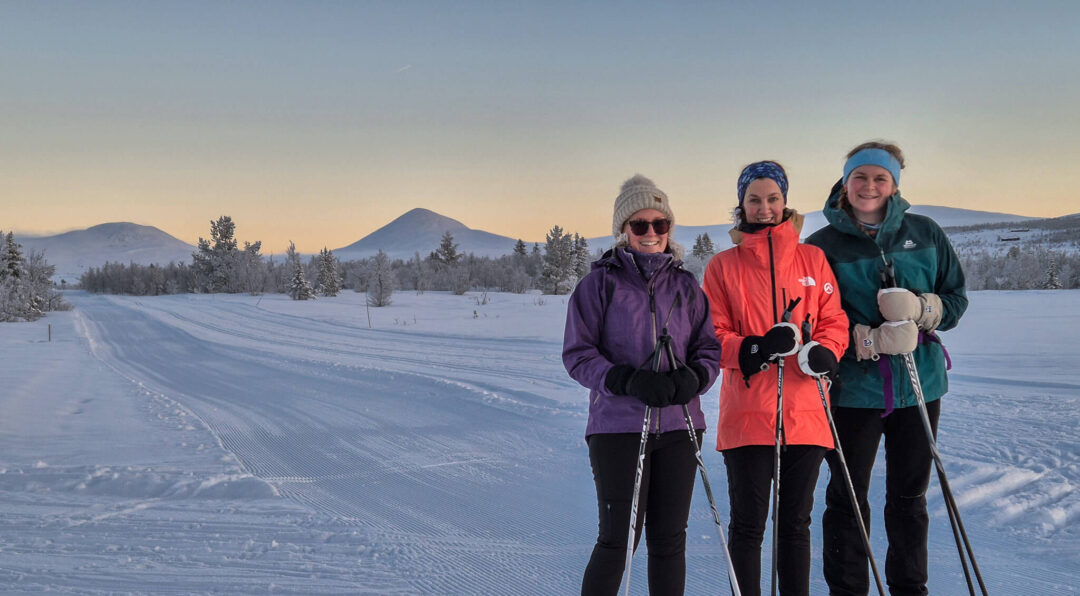
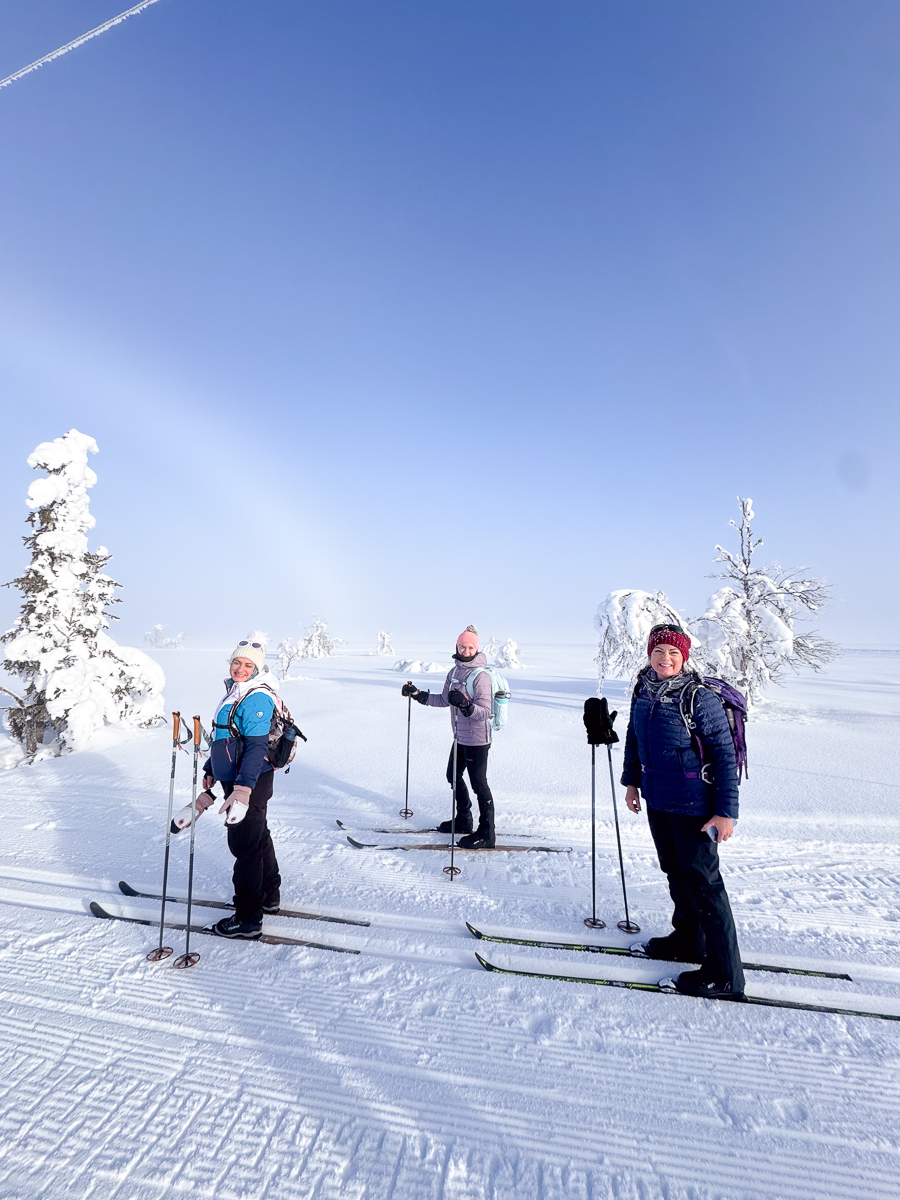
Women cross-country skiing on a snowy forest track, with skis and poles in winter daylight.
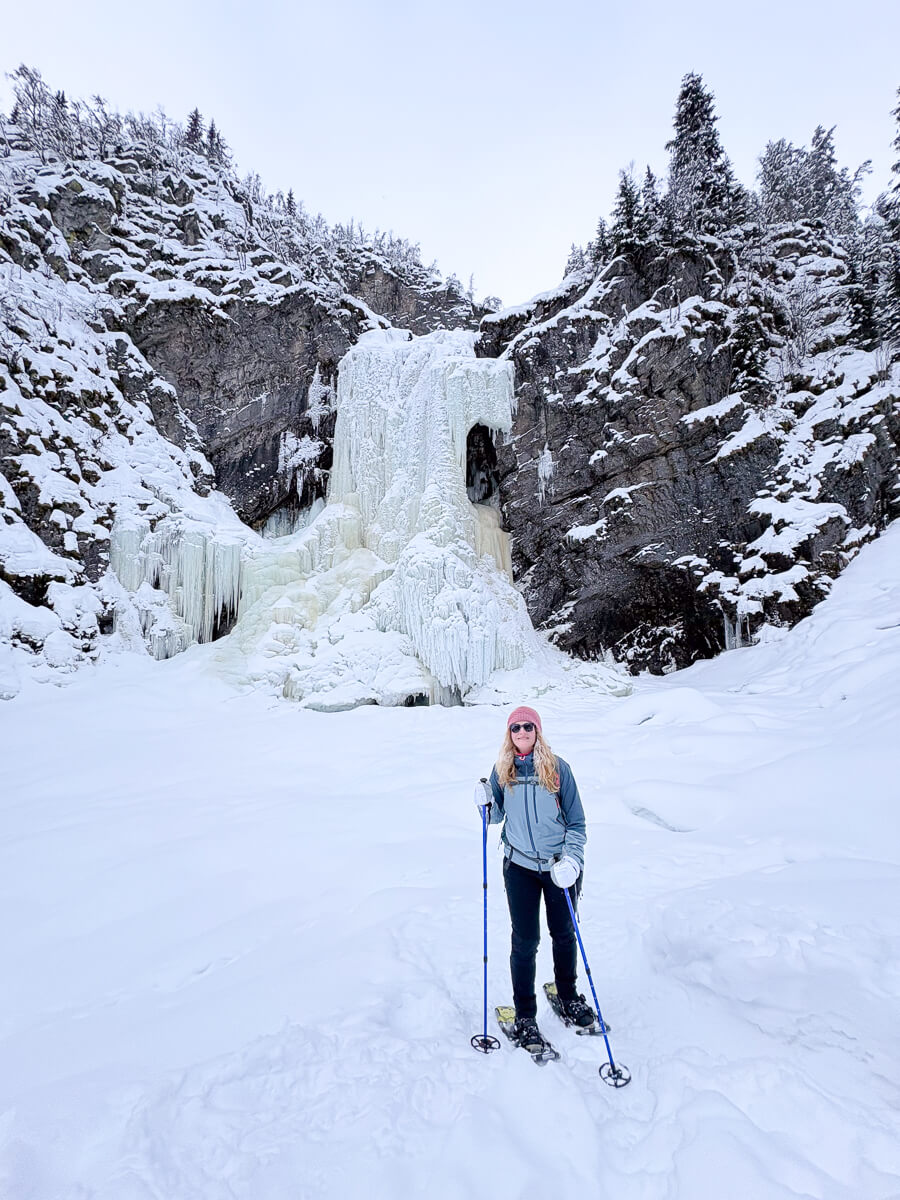
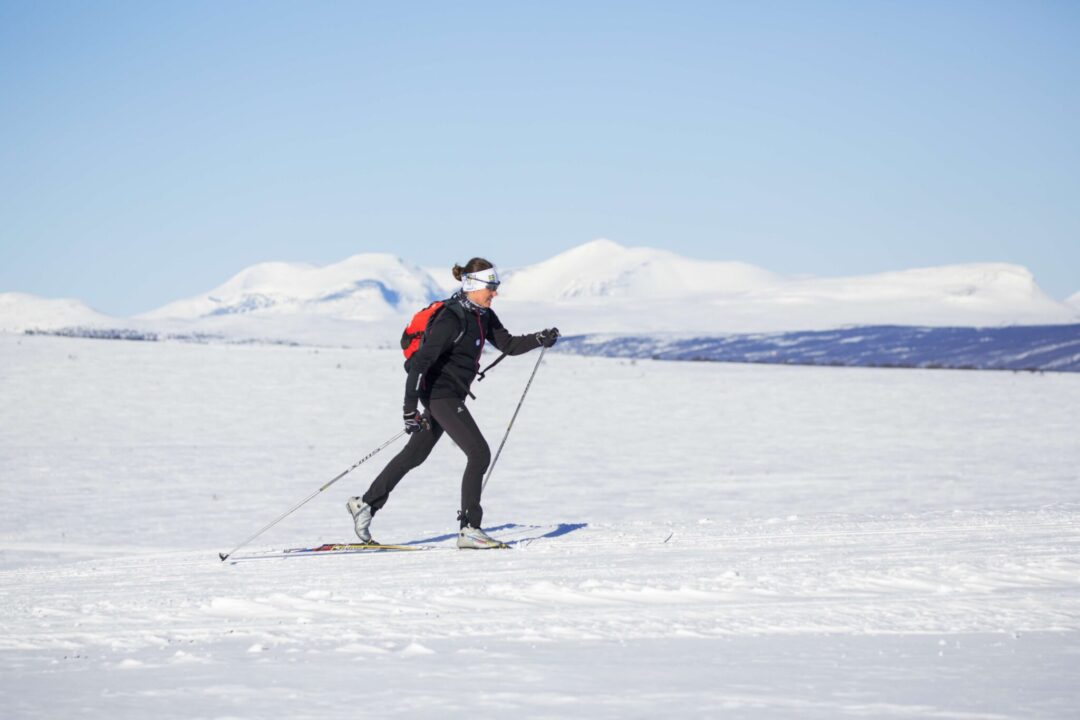
Woman cross-country skiing on a snowy mountain trail beside a frozen waterfall and fir trees

Getting There

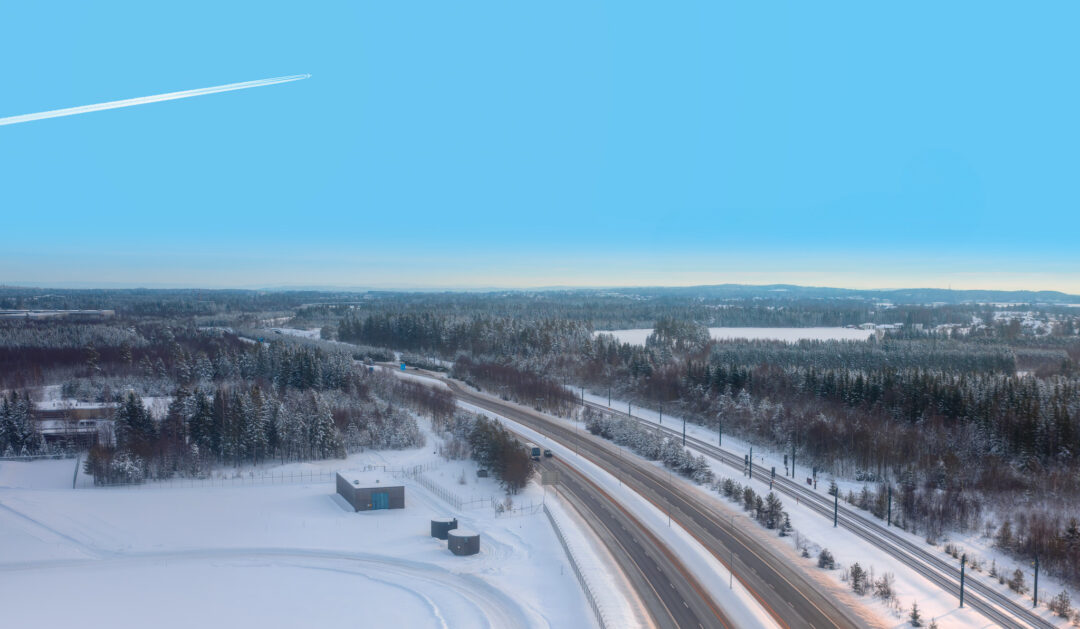
Getting to Venabydsfjellet involves flying into Oslo Gardermoen Airport then taking a two and a half hour train journey through Nordic countryside to Ringebu station. The railway station is downstairs in the same building as Oslo Gardermoen Arrivals Terminal.

What flights should I book?

Book a morning flight into Oslo Gardermoen. From there you need to be on one of these trains to Ringebu, because these are the arrivals our transfer meets:

  • 14:29, arriving Ringebu 16:53
  • 16:29, arriving Ringebu 18:49
  • Some Saturdays, 15:59, arriving Ringebu 18:35

Leave at least an hour between landing and your train leaving. The station is downstairs in the same building as arrivals, so an hour is plenty unless you want to stop for a coffee.

How do I book train tickets?

Book directly through vy.no/en, the Norwegian national rail operator. Tickets cost around £30 each way and are not included in your trip price.

Tickets are released roughly 90 to 60 days before travel. Until then the site will usually tell you the train is unavailable or sold out, which looks alarming and means nothing. It simply is not on sale yet. Search again as your dates come into that window and the trains will appear.

If you are still seeing that message around 30 days out, drop us a message. That is late enough to be worth looking at, and we can help you work out an alternative route.

Book as soon as your date opens up, because the earlier trains fill first and they are the ones our transfer meets.

What if I arrive on a different train?

Book a morning flight into Oslo Gardermoen. From there you need to be on one of these trains to Ringebu, because these are the arrivals our transfer meets:

  • 14:29, arriving Ringebu 16:53
  • 16:29, arriving Ringebu 18:49
  • Some Saturdays, 15:59, arriving Ringebu 18:35

Leave at least an hour between landing and your train leaving. The station is downstairs in the same building as arrivals, so an hour is plenty unless you want to stop for a coffee.

How do departure transfers work?

We drop you at Ringebu station for the 12:06 train (arriving Oslo 14:21) or 13:57 train (arriving Oslo 16:20). Book afternoon or evening flights from Oslo Gardermoen with at least 2 hours between train arrival and flight departure.

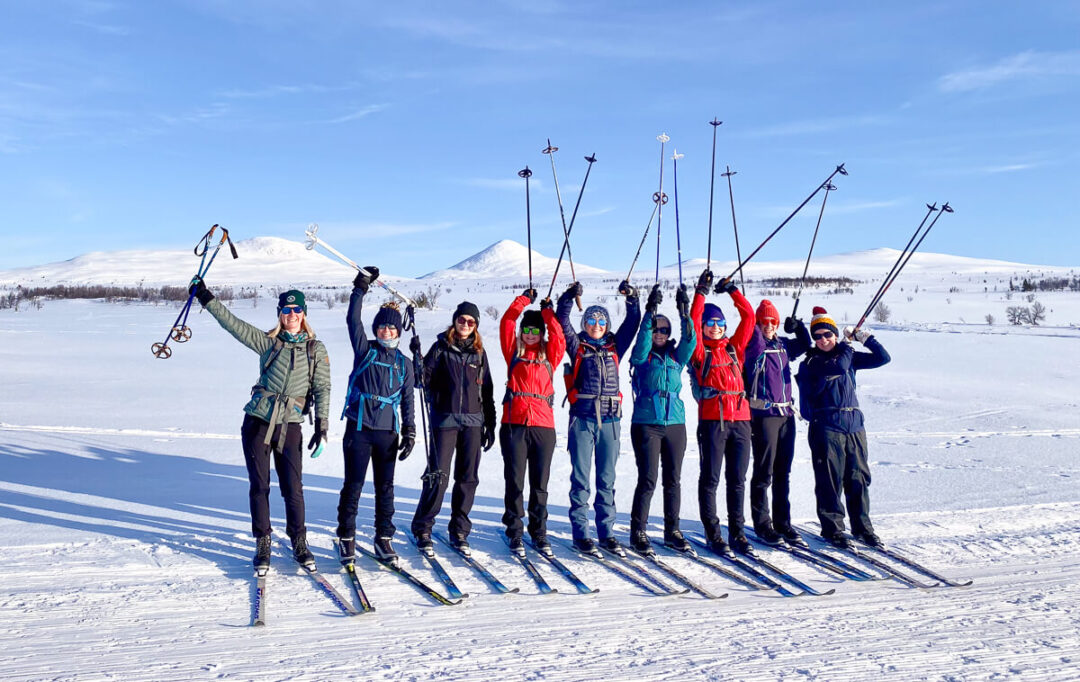
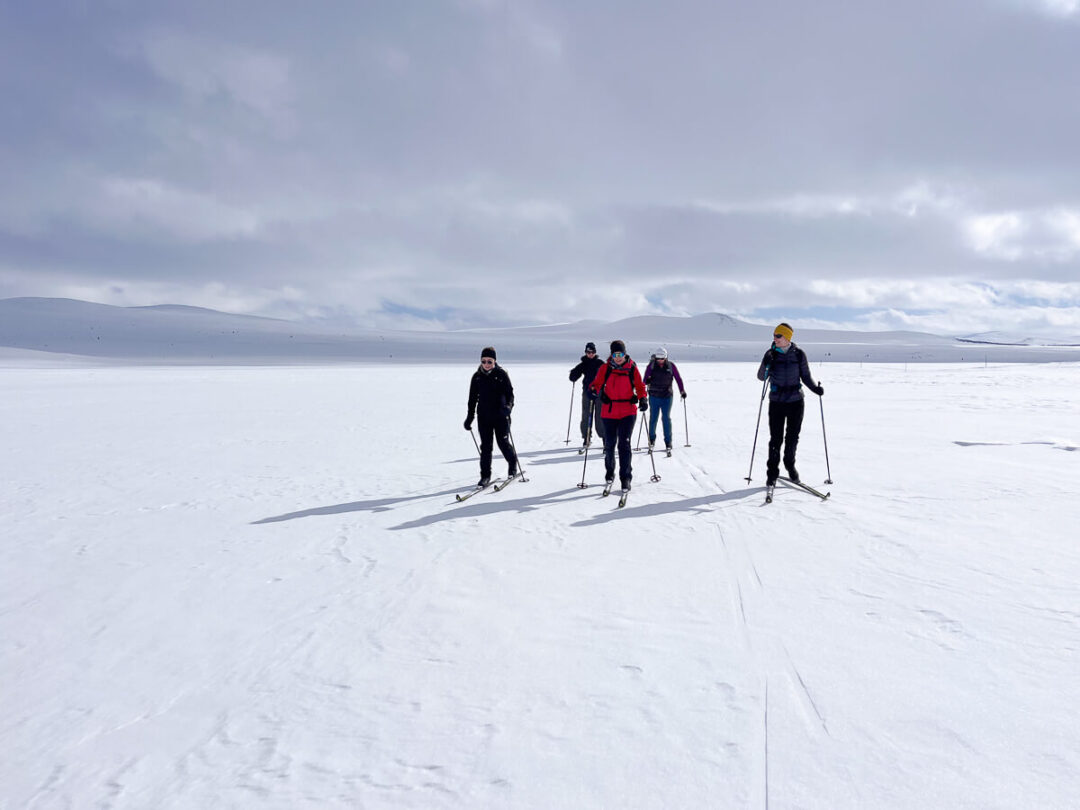
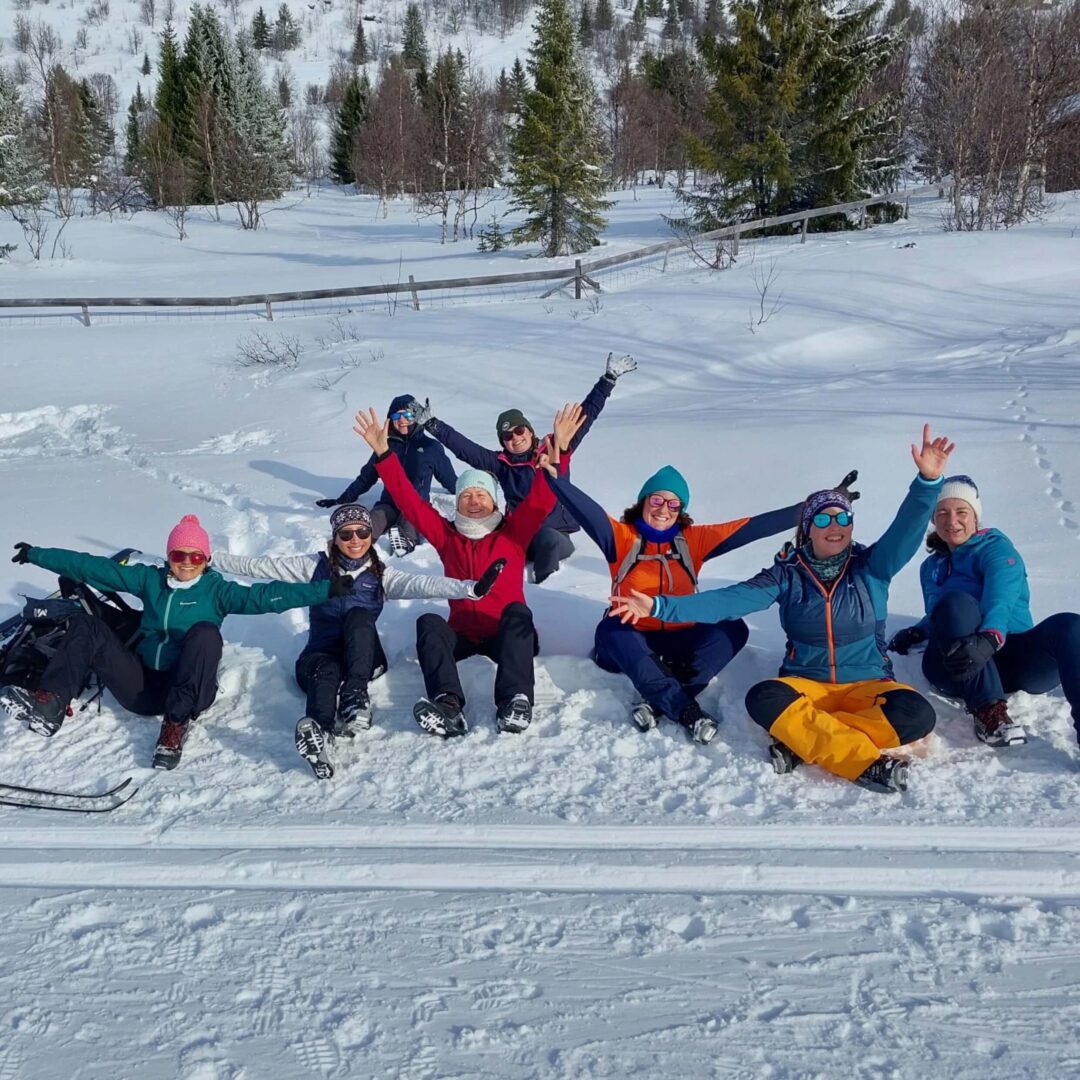
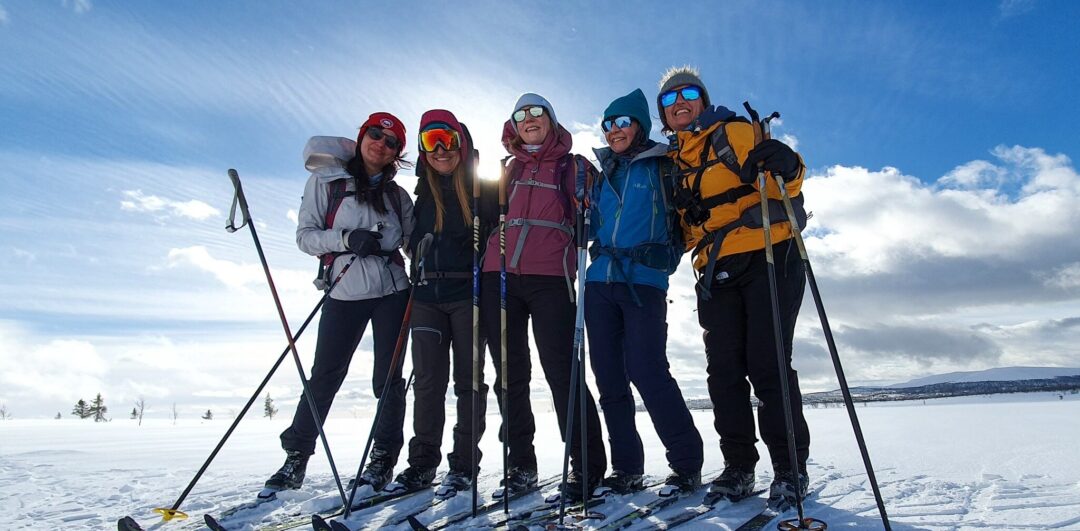
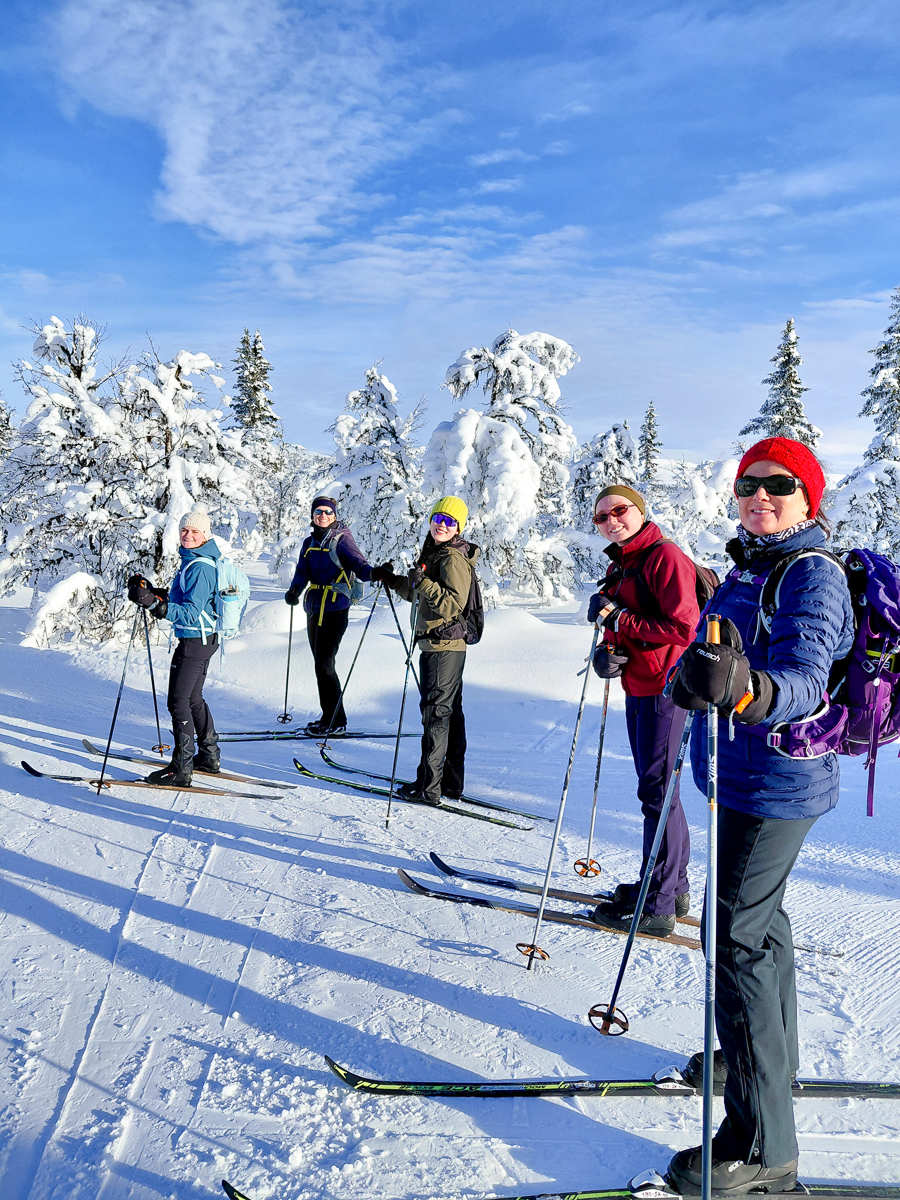
Women cross-country skiing group in snowy Norway landscape with mountains under blue sky

Fitness & Skill Level

This trip is rated moderate and designed for beginners with no previous cross-country skiing experience.

The conditions

Three days on skis: two full days of six to seven hours, usually split either side of lunch, and one morning only. Distances run from around 8km to 18km depending on the day and the snow. Prepared tracks across an open plateau, with rolling gradients and some hills to learn on. Temperatures sit around -10°C, occasionally -20°C, warming to between -5°C and 5°C by March.

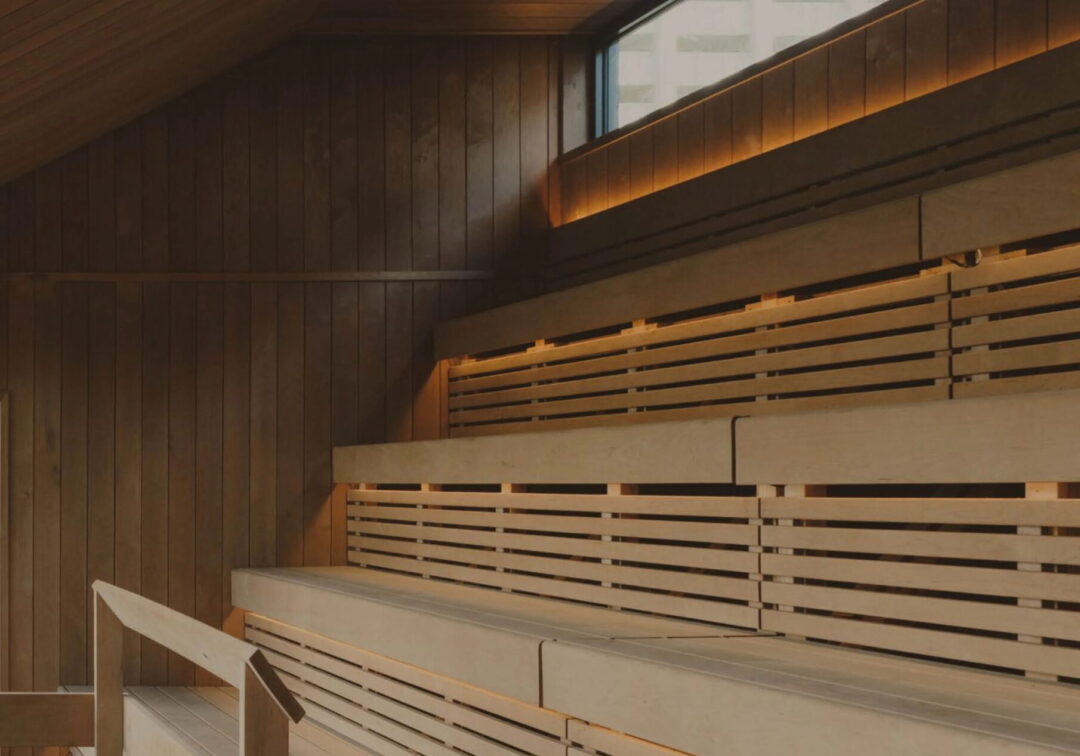
Cross-country skiing uses your whole body, arms through the poles as well as legs, and beginners burn more energy than experienced skiers because you spend the first day fighting the skis rather than gliding. Expect day two to tire you more than the distance suggests. You are in a hotel each night though, with hot showers, three-course dinners, a sauna and three yoga sessions, so recovery is not part of the challenge.

Fitness

Cardio and endurance take longer to build than most people expect. Aerobic fitness responds within a few weeks, but the muscular endurance that gets you through a second and third consecutive day builds far more slowly, so give yourself a proper run-up rather than a sprint finish.

Aim for medium to high-intensity cardio three times a week, 45 minutes to an hour, hard enough that you are breathing heavily. Running, cycling, spin, HIIT or a brisk uphill walk all count. Add one longer walk at the weekend, plus some leg and core work, and some balance work, which matters more here than on most trips because skinny skis with a loose heel demand it.

If you already train at that level, carry on. If you are active but inconsistent, six to eight weeks of building will get you there. If you are starting from no base at all, be honest with yourself: three months will not be enough, and we would rather you gave yourself six months or more and came properly ready than arrived hoping to cope. Build distance before intensity, and consider getting advice from a coach or trainer on where to start, because going too hard too soon is how people pick up an injury before they even travel. Cramming in the fortnight before you fly will not work.

Will my fitness level be enough?

If you do medium to high-intensity cardio three times a week for around 45 minutes, you will have a good week. If you are active but inconsistent, six to eight weeks of building will get you there. If you are starting from very little, allow around three months. The trip is rated Moderate rather than Challenging, so this is not about being an athlete, it is about being able to go again on the second and third day.

How should I train for this?

Cardio three times a week, 45 minutes to an hour, hard enough that you are breathing heavily. One longer walk or hike at the weekend on top. Some strength work for legs and core, and some balance work, which pays off on skis more than you would think. Build over six to eight weeks if you are already reasonably active, or around three months from a low base.

Do I need cross-country skiing experience?

None at all. This trip is built for complete beginners and the instructors start with the basics in the tracks outside the hotel. Downhill experience helps a little, but skinny skis with a loose heel are a different thing, so you are learning either way.

What if I don't like sliding or falling?

Cross-country skiing is a gliding motion and you will pick up speed on gentle slopes. You will also fall over while you are learning, which is soft and low-speed but does keep happening. If the sensation of sliding makes you genuinely anxious rather than just nervous, this may not be the sport for you, and we would rather talk it through before you book than after.

What if I find it too difficult or can't keep up?

Groups are a maximum of 8, and your instructor adapts the session to the range of abilities in front of them. Prepared tracks help here, because skiers at different paces can use the same trail without anyone getting left behind. What you cannot do is skip the skiing altogether, because it is the trip. On any given day you can take a shorter option or head back to the hotel, but if you are hoping to opt out for most of the weekend, a different trip will suit you better.

Is this trip right for me?

Think about the last time you did something physical for three days in a row. If that sounds fine and you are willing to be a beginner at something in front of other people, you will get a lot out of this. If it has been a while, you have six to eight weeks of walking and cardio to change that, and it is worth doing.

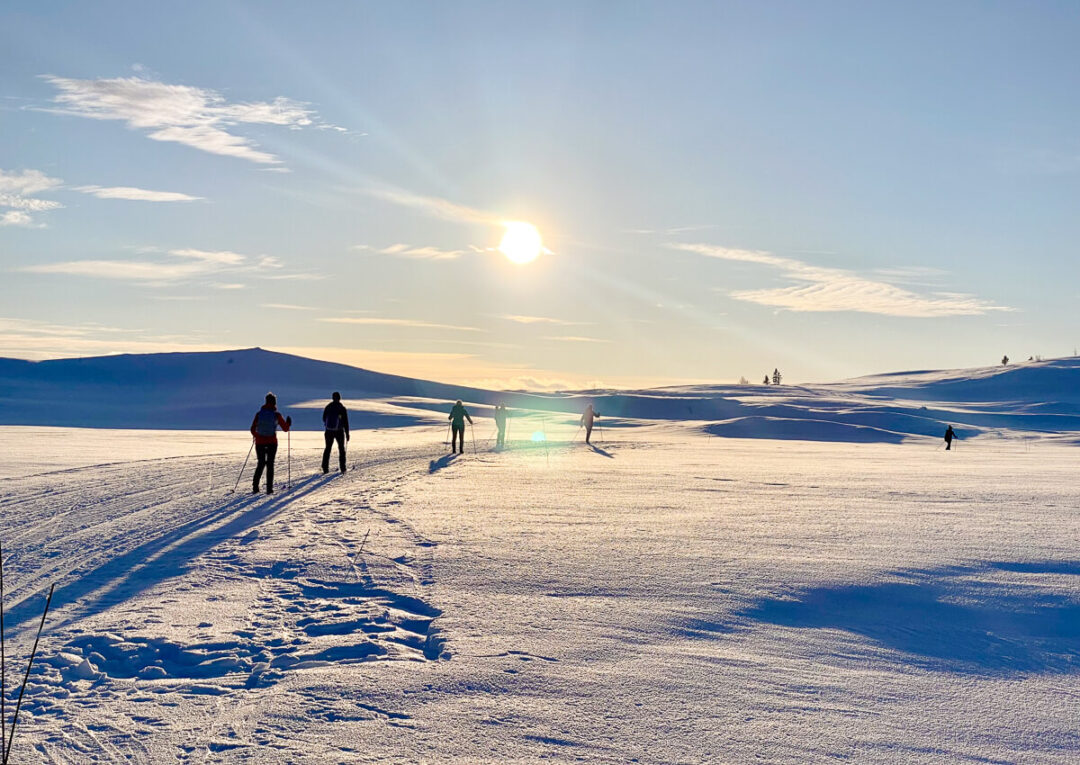
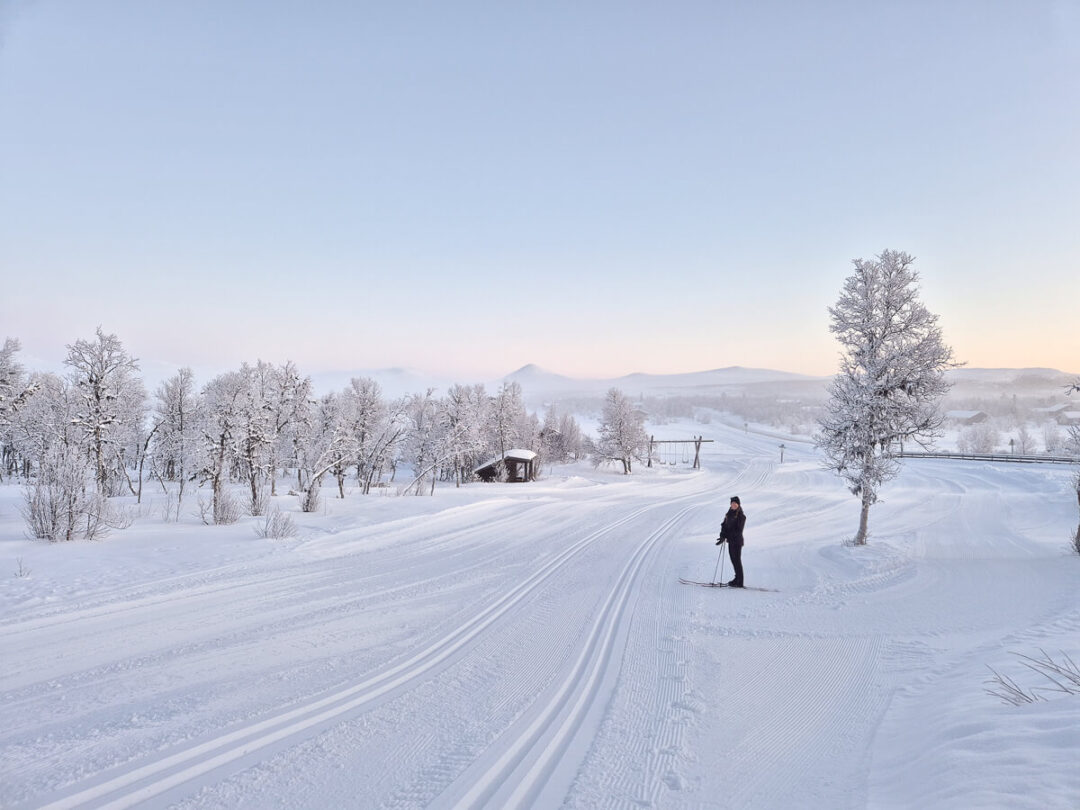
Women cross-country skiing on snowy hills at sunrise

Sleep & Eat

You’ll stay in a family-run hotel known as a “fjellhotell” – a warm, cosy mountain hotel focused on friendly hospitality and excellent food. The views of lakes, mountains and forest are spectacular, and you can ski right from the door.

There’s a spacious lounge with open fire and bar. Complimentary teas and coffee are always available. There’s a drying room and dedicated ski storage. Please be aware this hotel is dog-friendly, so expect to see some dogs in the lounge area (never in the dining room).

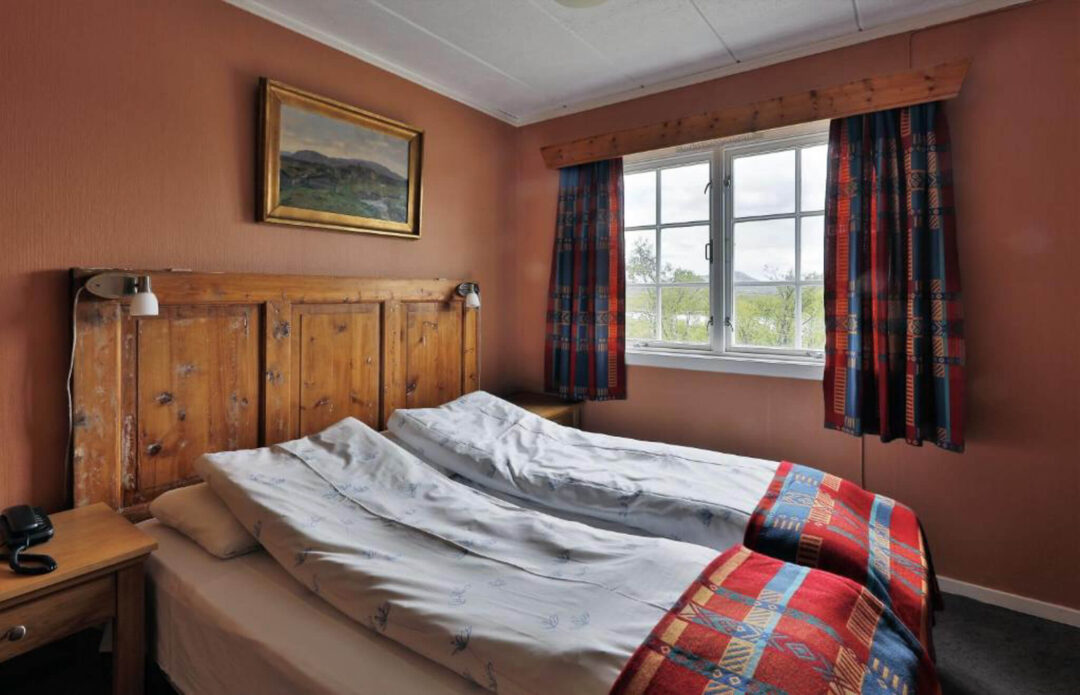
Rooms are simple, light and airy with great mountain views from many bedrooms. All meals included from dinner on arrival to lunch on departure. Traditional homemade food using local ingredients – three-course set menu dinners, breakfast buffet, and packed lunches.

What are the rooms actually like?

Rooms are simple and pared back, in traditional Norwegian mountain style. Every room is a twin, and you can book it as a twin share or as a single. If there are three of you travelling together we can request a triple, so get in touch and we will ask the hotel.

Two things worth knowing. There are no TVs in the rooms. And a single is a twin room with sole use rather than a room with a double bed, so you may well get a standard single bed.

Can you cater for dietary requirements?

Yes, the hotel caters for all dietary requirements and allergies. We’ll request information prior to arrival. Dinner is a three-course set menu, so make sure any foods you can’t eat or dislike are clear well in advance.

Is there WiFi available?

WiFi is patchy in this remote location. You’ll be offline during daily activities anyway.

What's the meal atmosphere like?

All meals are social occasions where the group eats together. The three-course dinners and breakfast buffets use quality local ingredients where flavours speak for themselves.

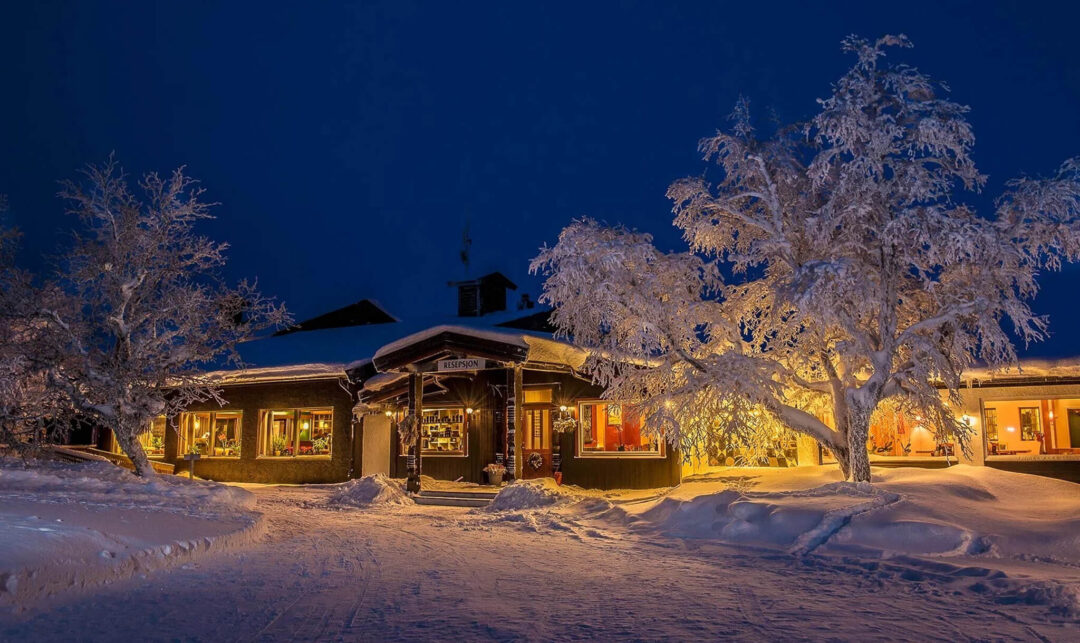
Snow-covered wooden cabin at night with warm lights and pine trees, winter landscape
Cozy bedroom with a double bed, wooden headboard, and large window with patterned curtains

Weather

Temperatures around -10°C are considered perfect for cross-country skiing, sometimes reaching -20°C. This is a “dry” cold which tends to feel less cold than “damp” cold. You’ll be active most of the time generating warmth, but you cool down quickly when stopped.

What happens if weather affects activities?

Mountain weather can be unpredictable, so our guides adjust daily plans to ensure the best and safest experience. We design flexibility into every trip because weather and conditions can change.

How should I dress for the conditions? 

Cross-country skiing is hard work, so you will be sweating even in the cold, then cooling down fast the moment you stop. Layers handle it: merino or synthetic base layers, a windproof, breathable waterproof jacket with a hood, and a warm insulated jacket to pull on at rest stops.

What should I avoid wearing?

Avoid cotton clothing as it gets wet and cold and doesn’t dry fast. Cross-country skiing does not require the same sort of clothing as downhill skiing because warm, padded downhill clothing accounts for sitting still on chairlifts.

What's recommended for layering?

Variety of wool or synthetic base layers, topped by a windproof, breathable waterproof hiking jacket with hood, with warm insulated jacket in backpack for rest stops. Windproof, water repellent, breathable soft shell fitted trousers or leggings on legs.

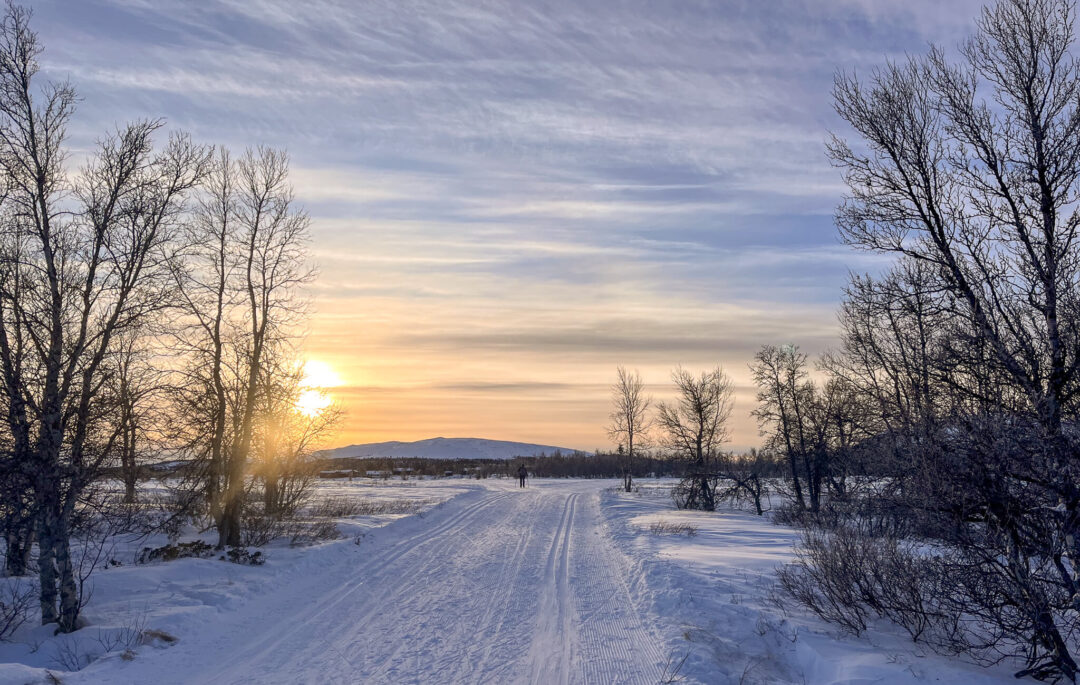
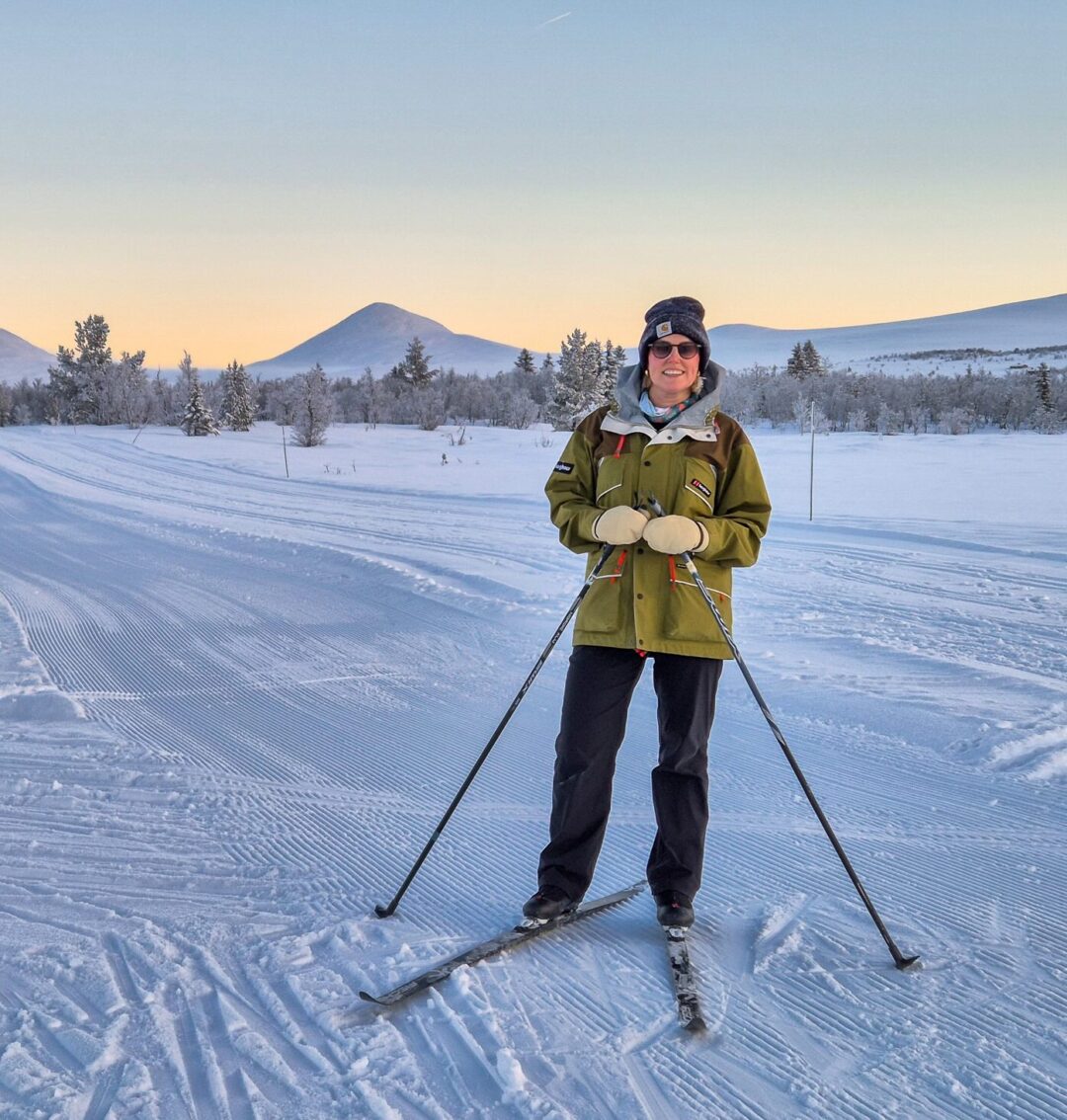
Snow-covered cross-country ski trail through wintry trees at sunrise

Good to Know

Money: Everywhere accepts cards, so Norwegian Krone cash isn’t necessary. Budget for drinks and personal extras – alcohol is expensive in Norway. All meals, activities and technical equipment are included in your trip price.

Tipping: Tipping is not compulsory on our adventures, but if you’ve had a great trip and brilliant service, a tip for your guide or host is always appreciated. We recommend giving 200-300 NOK, or whatever you can or feel is the right amount.

Communication: The hotel has WiFi throughout, though connection can be patchy in this mountain location. Mobile coverage is generally good, but you’ll be offline during skiing activities in remote areas. Emergency communication is always available through guides and hotel staff.

Are the guides and instructors always female?

We use female instructors and guides whenever possible, but can’t guarantee this due to fewer women in the outdoors industry. Our priority is working with the most experienced, patient and passionate instructors who excel at building confidence. Guide gender becomes less important than their ability to teach and inspire safely.

What happens if I get injured or need medical attention?

Our guides are trained in mountain first aid and emergency procedures. The hotel can coordinate local medical services if needed. Comprehensive travel insurance covering outdoor activities and medical emergencies is mandatory. Emergency evacuation from remote skiing areas is possible but expensive without coverage.

How many guests on this trip?

Max. 9 guests.

How much should I budget for extras?

Drinks are the main extra expense – beer costs around £8-12, wine similar. If you want snacks or souvenirs, expect Norwegian prices to be 30-50% higher than UK.

Women cross-country skiing on snowy tracks through a winter landscape in Norway
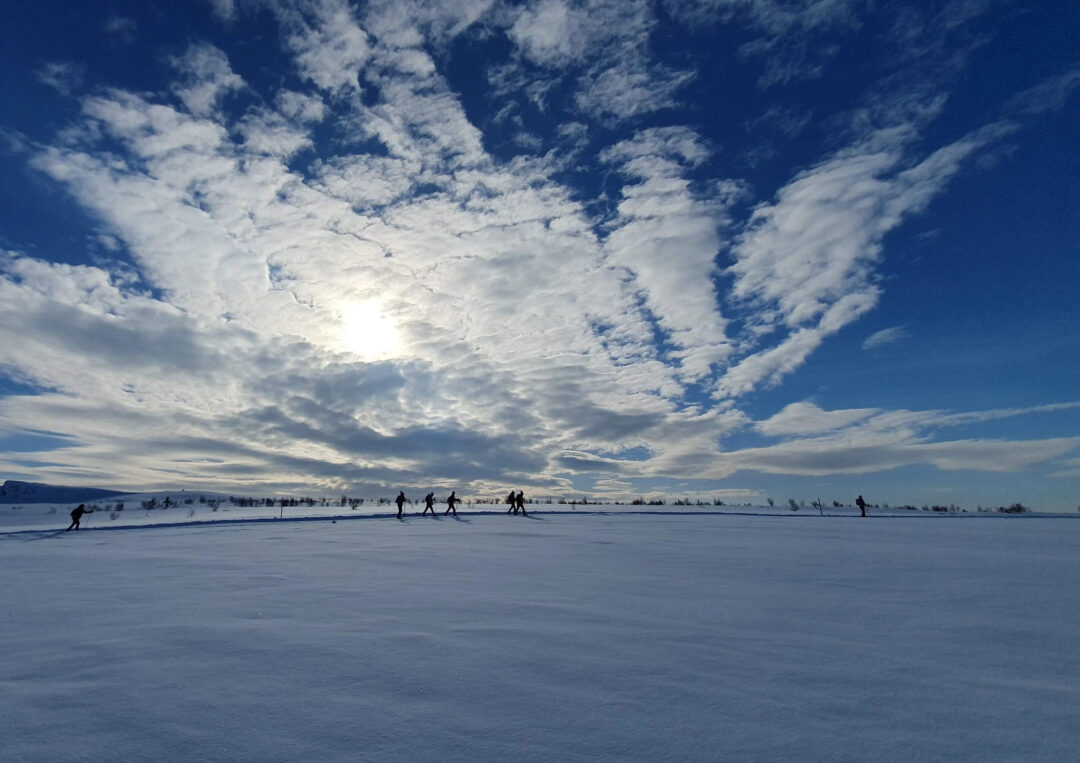
Women cross-country skiing across snowy Norwegian landscape in a group, with ski poles on a track.

Packing List

What we provide

  • Cross-country skis, ski boots and poles

What You Need to Bring

Cross-country ski kit

  • 25 litre daypack
  • Base layer tops, merino or synthetic. Bring a selection, as you may want to layer two on colder days
  • Long johns, merino or synthetic
  • Fleece mid-layer
  • Breathable, waterproof shell jacket. A hiking waterproof works well
  • Soft shell winter hiking trousers: windproof, water-repellent and breathable
  • Warm packable insulated or down jacket, for stops and cold days
  • Waterproof trousers, optional but worth having for cold or snowy conditions
  • Selection of wool socks in different thicknesses, for getting the right fit in hire boots
  • Warm hat
  • Sunglasses, polarised if you have them
  • Buff, two if you can: one for your neck, one as a headband
  • Ski gloves, two pairs in case one gets wet. Warm mittens are best if you run cold
  • Thin gloves for warmer sessions when you are generating heat
  • Glove liners or hand warmers if you suffer from cold hands

Off the skis

  • Yoga wear for evening sessions
  • Casual evening clothes
  • Nightwear
  • Slippers for the hotel
  • Sturdy shoes or boots for evenings. The ski boots cover everything else
  • Swimwear for the sauna. Norwegians go nude, but that is entirely up to you

Personal kit

  • Insulated water bottle, not a Camelbak-style bladder, as the tube will freeze
  • Thermos for hot drinks on the trails
  • Snacks for the trails
  • High-SPF sunscreen, as snow reflects UV even on grey days
  • Toiletries and any prescription medication
  • Paracetamol and ibuprofen, significantly more expensive in Norway
  • Compeed or Moleskin blister plasters
  • Dry bags for inside your daypack
  • Soap flakes for hand-washing base layers if you are packing light
  • Waterproof phone case, optional
  • Camera, optional

Packing Tips

Short trip, same kit: You will be on skis for three days, two of them full days of six to seven hours, so what you wear matters as much as it would on a longer trip. Do not underpack on layers just because it is only four nights.

Layering does the work: Cross-country skiing generates real heat on the climbs and flat sections, then you cool down fast the moment you stop. A base layer, a fleece mid-layer and a windproof waterproof shell cover most conditions. The insulated jacket is for lunch stops and cold starts, not for when you are working hard.

Gloves will get wet: Bring two pairs: warm mittens or thick gloves for cold starts and rest stops, and a thinner pair for when you are moving. If you run cold, add glove liners and hand warmers.

Sock thickness matter: Bring a selection of wool socks in different thicknesses so you can dial in the fit of your hire boots on day one. A good fit makes the whole weekend more comfortable.

Women cross-country skiing on snowy tracks in Norway at sunrise

Trip Code NORVENXCB4 – Include this code in any message so we can find your trip straight away.