Latest blog post articles
Upcoming
Types of Skiing Explained: Alpine, Nordic, Touring & SkateFancy joining...
What to Expect
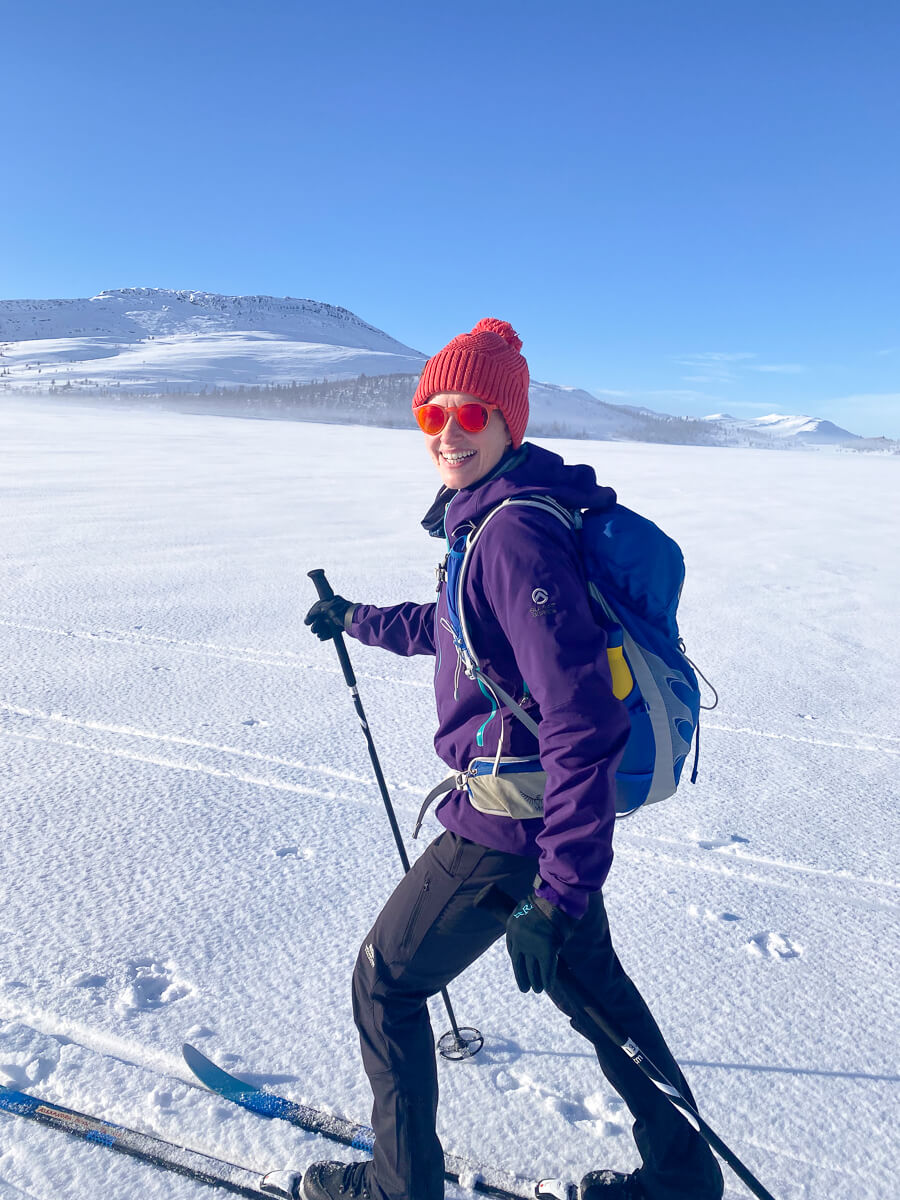
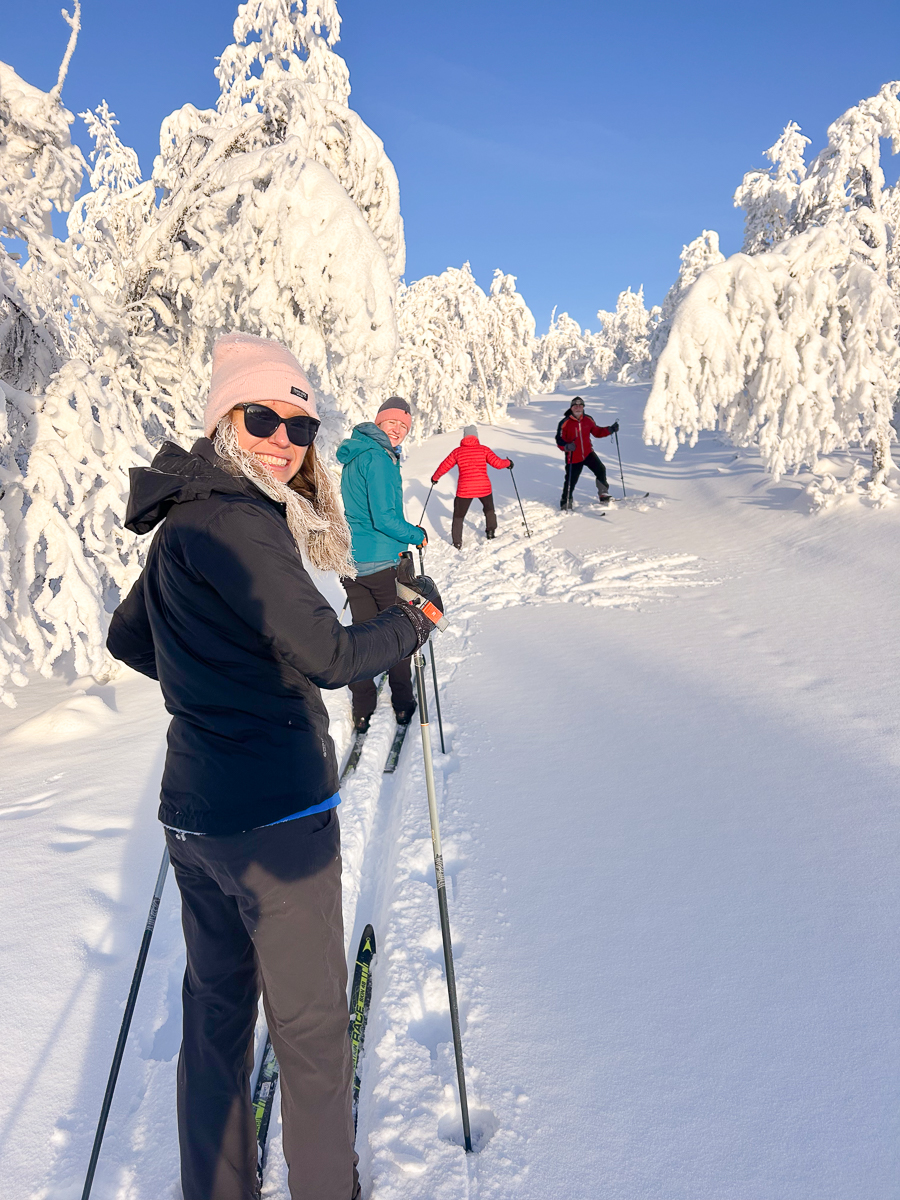
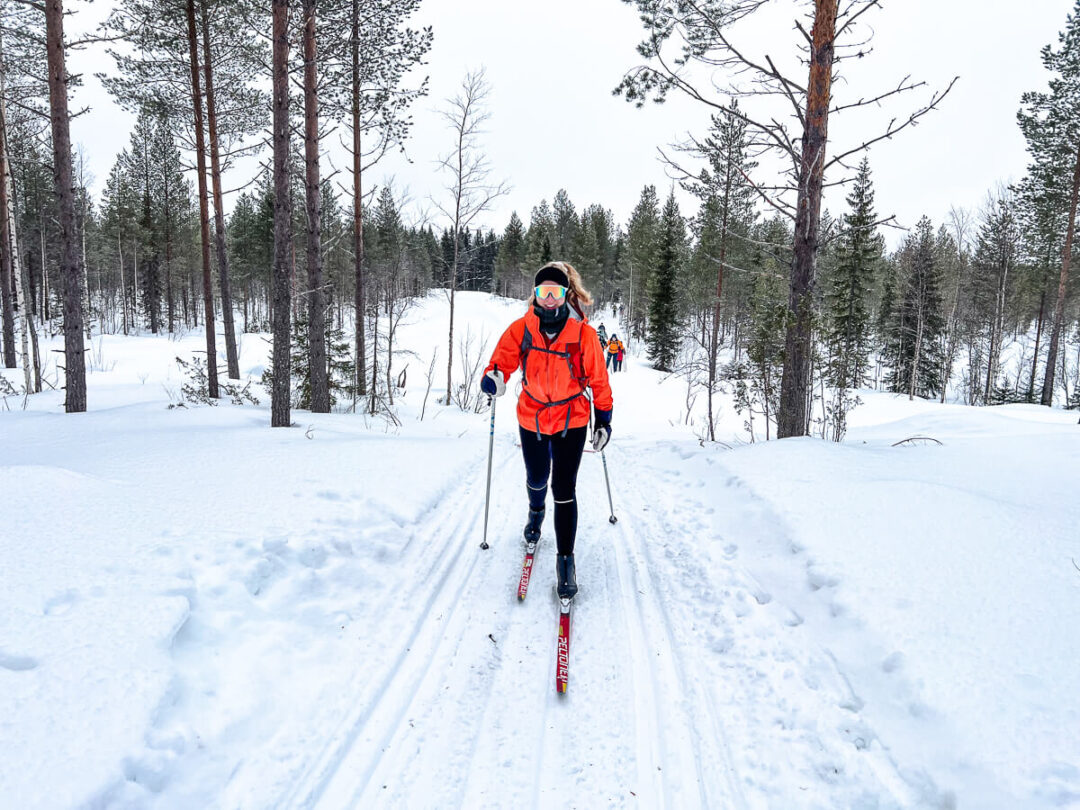
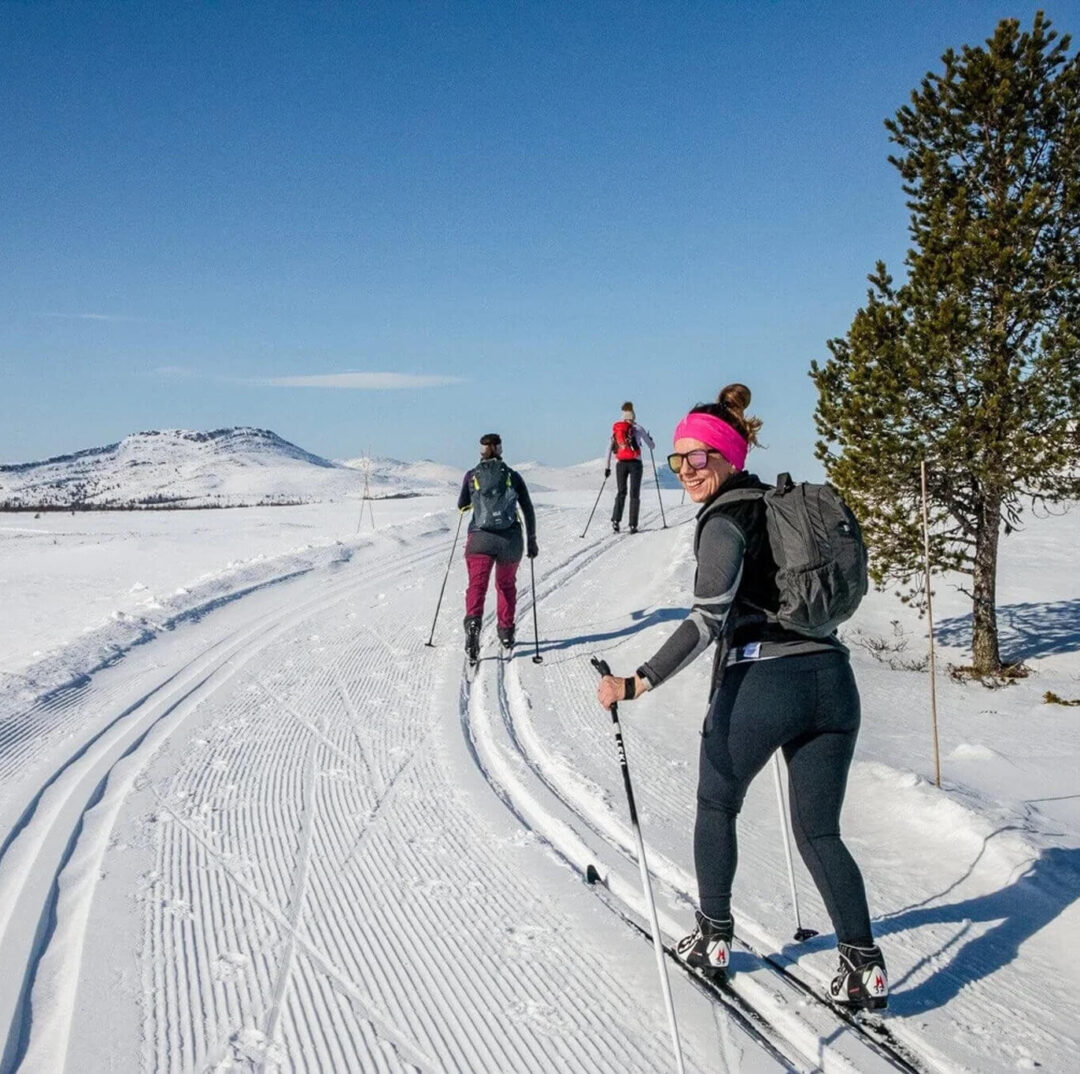
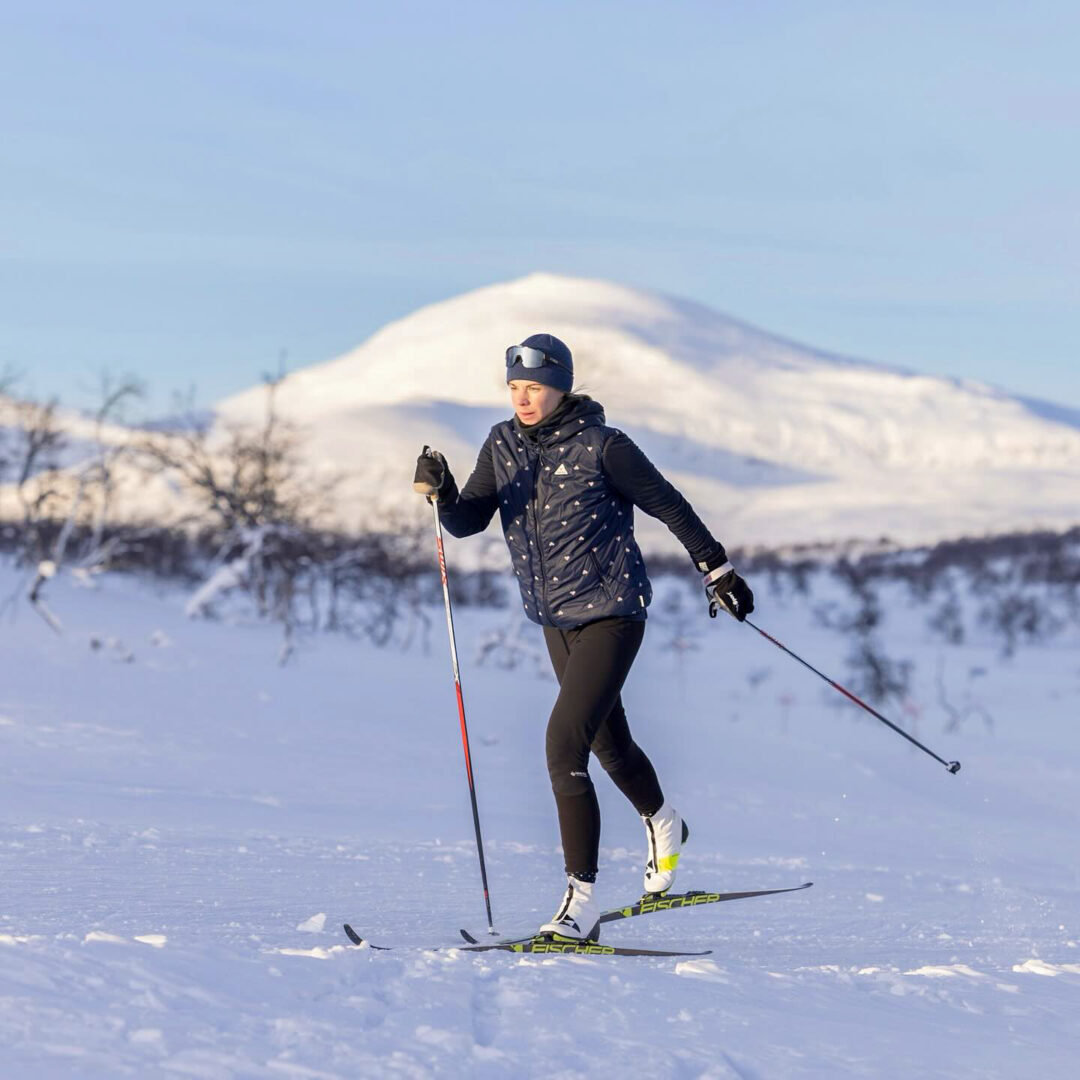
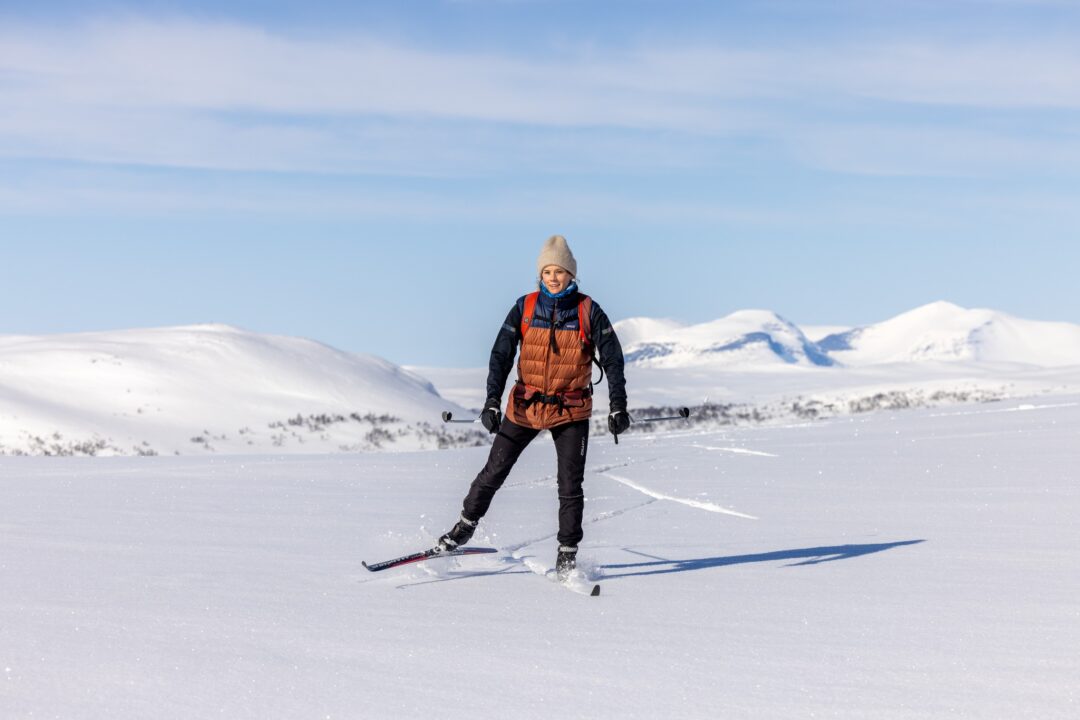
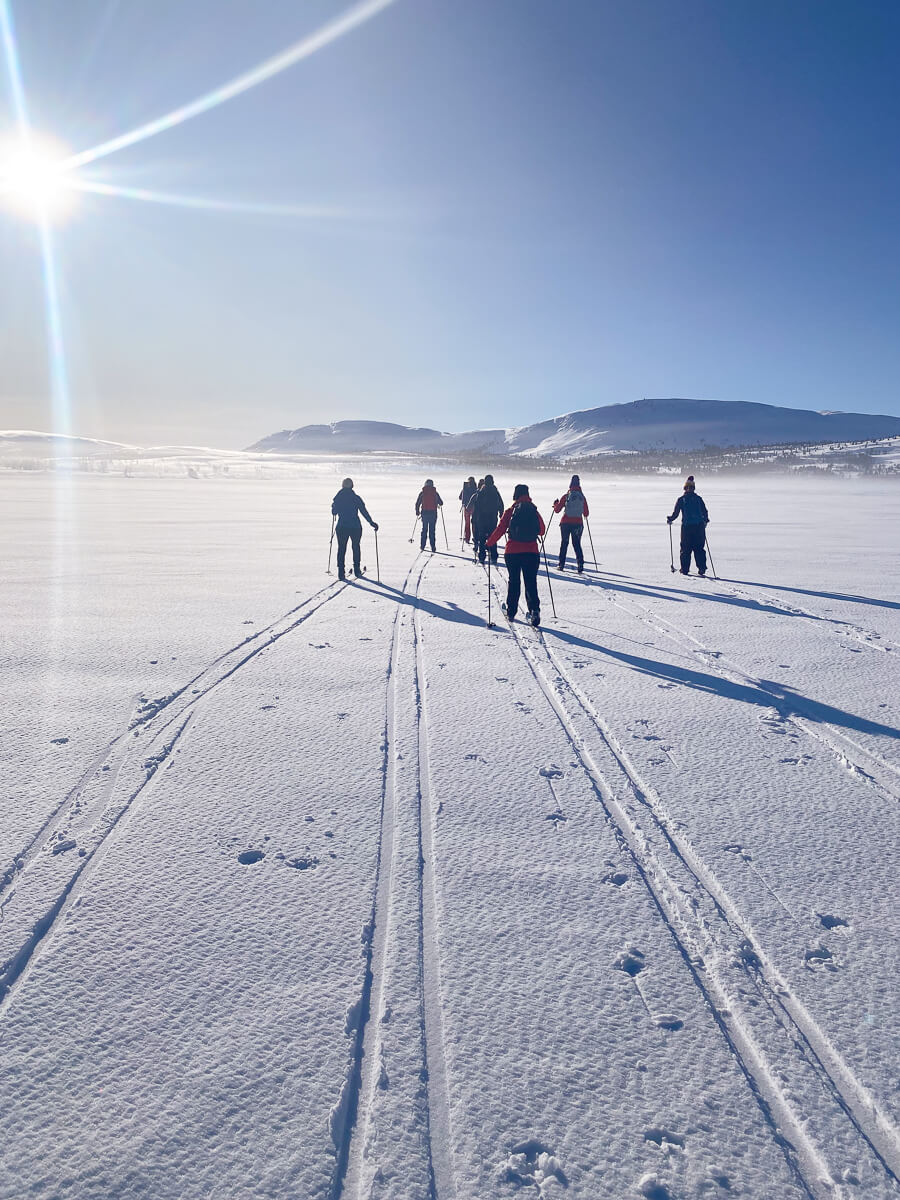
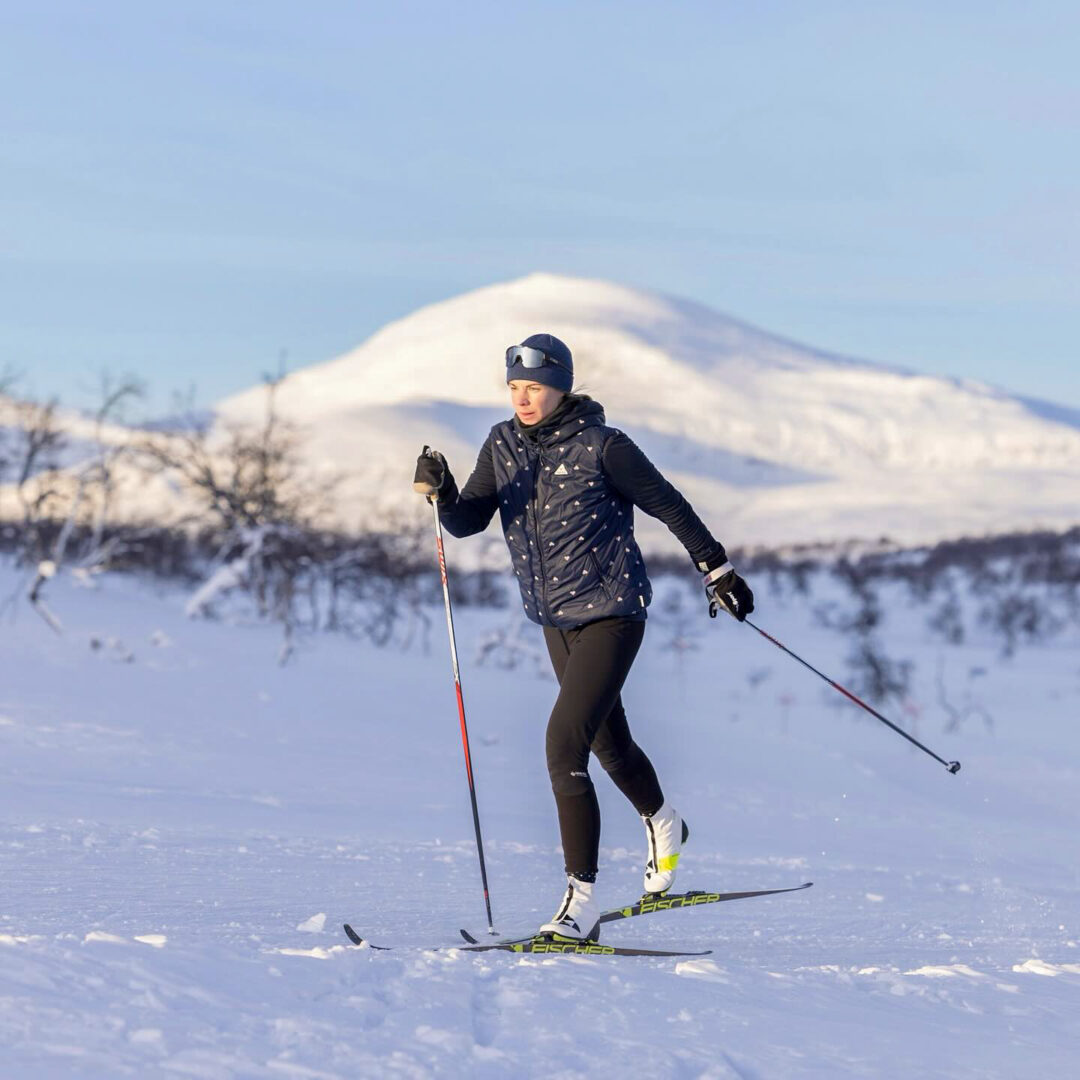
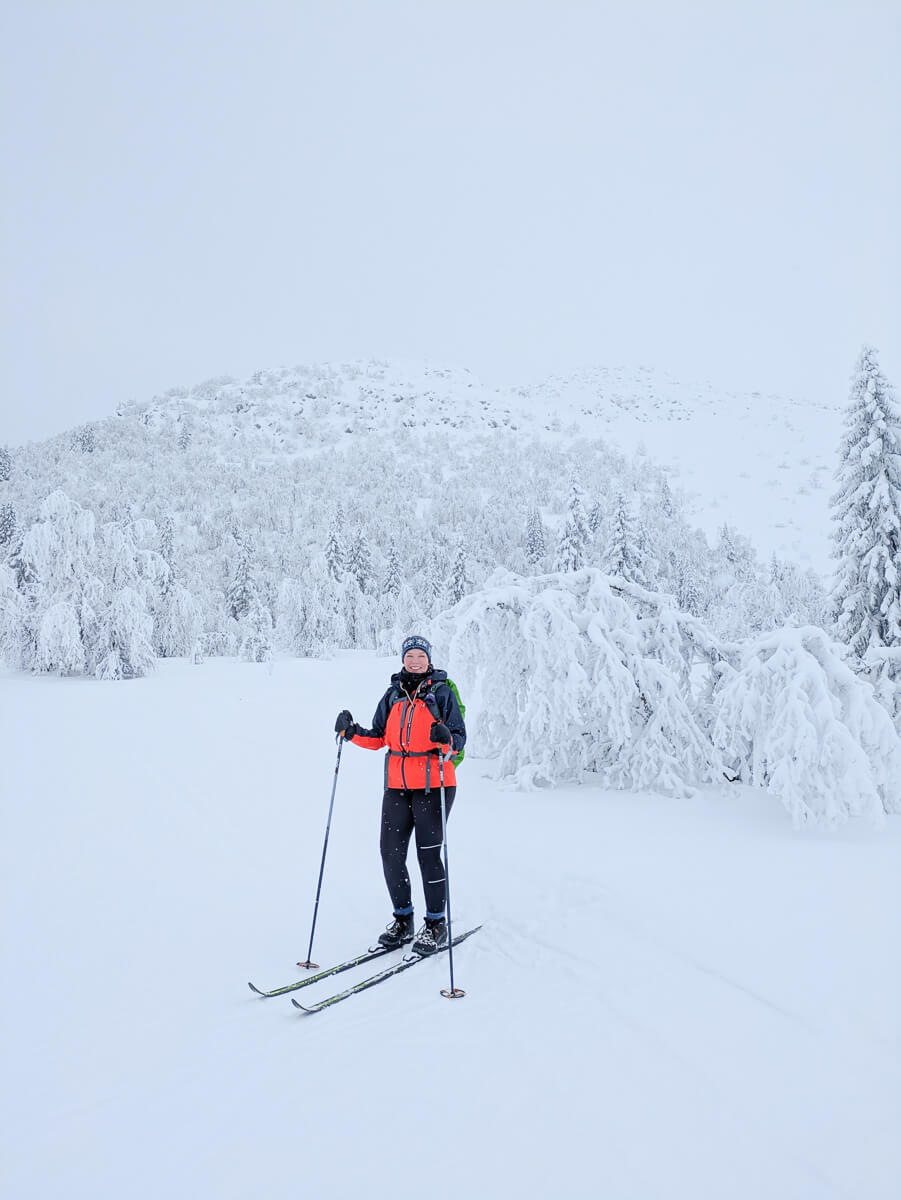
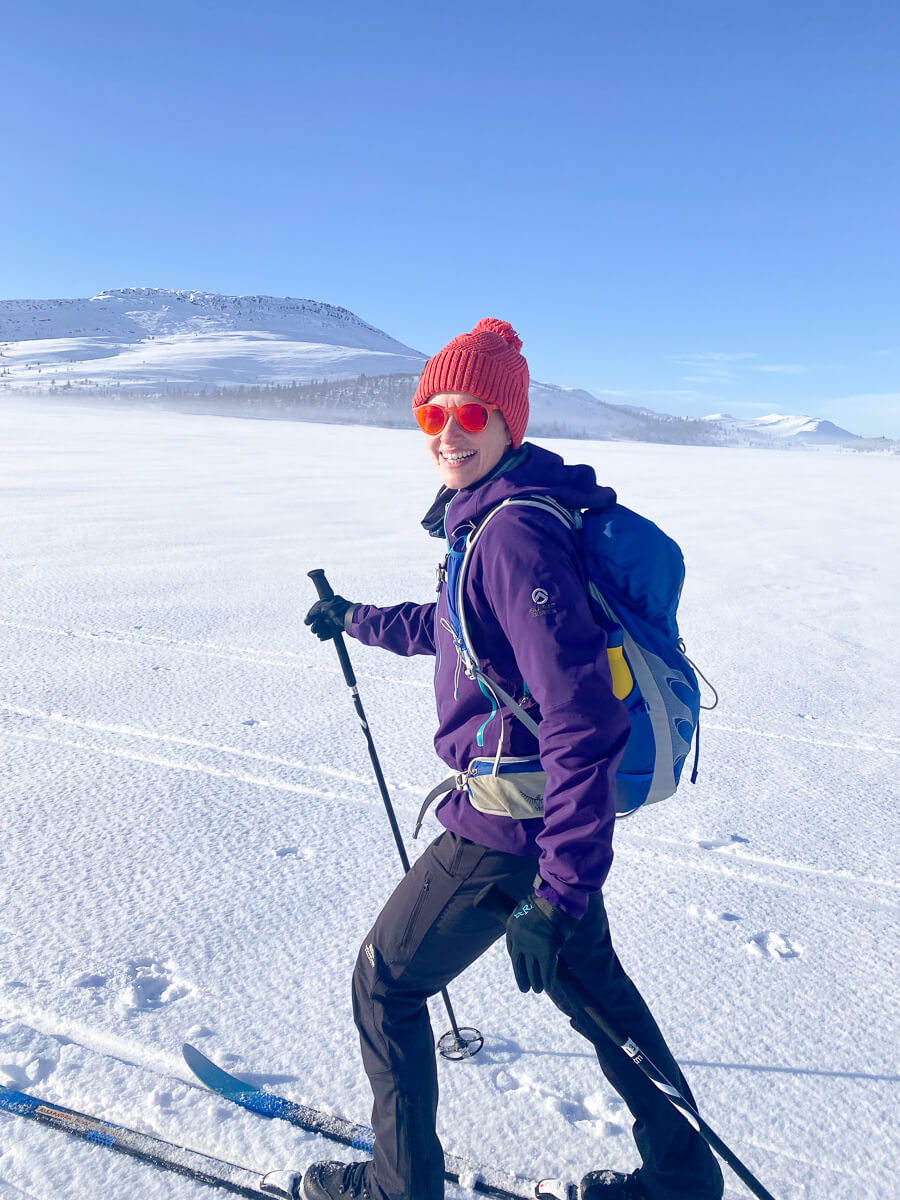
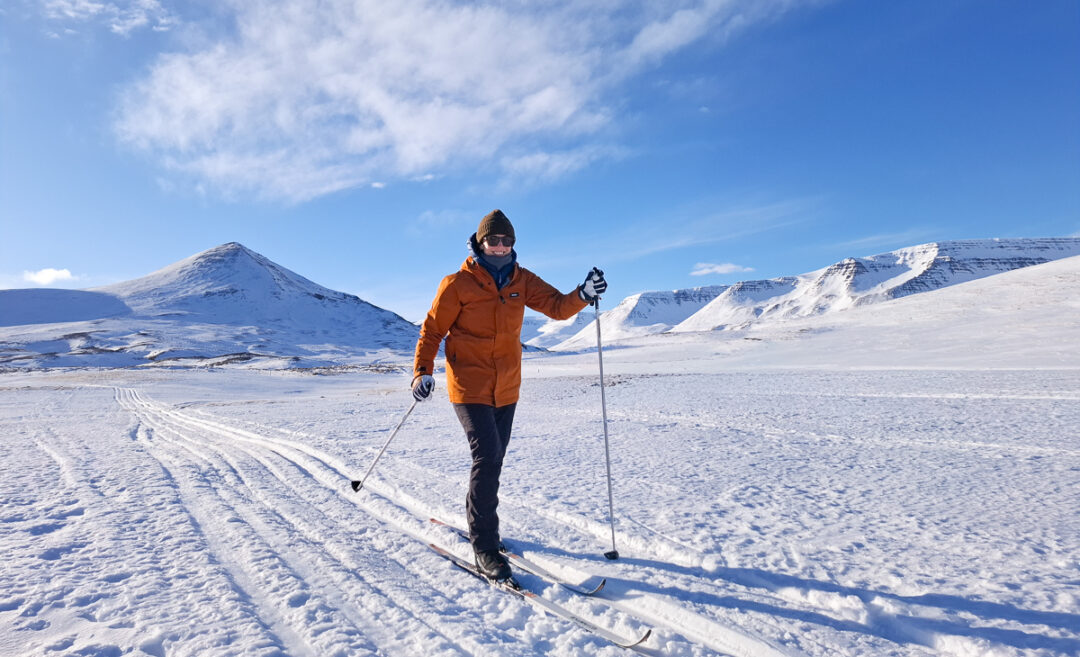
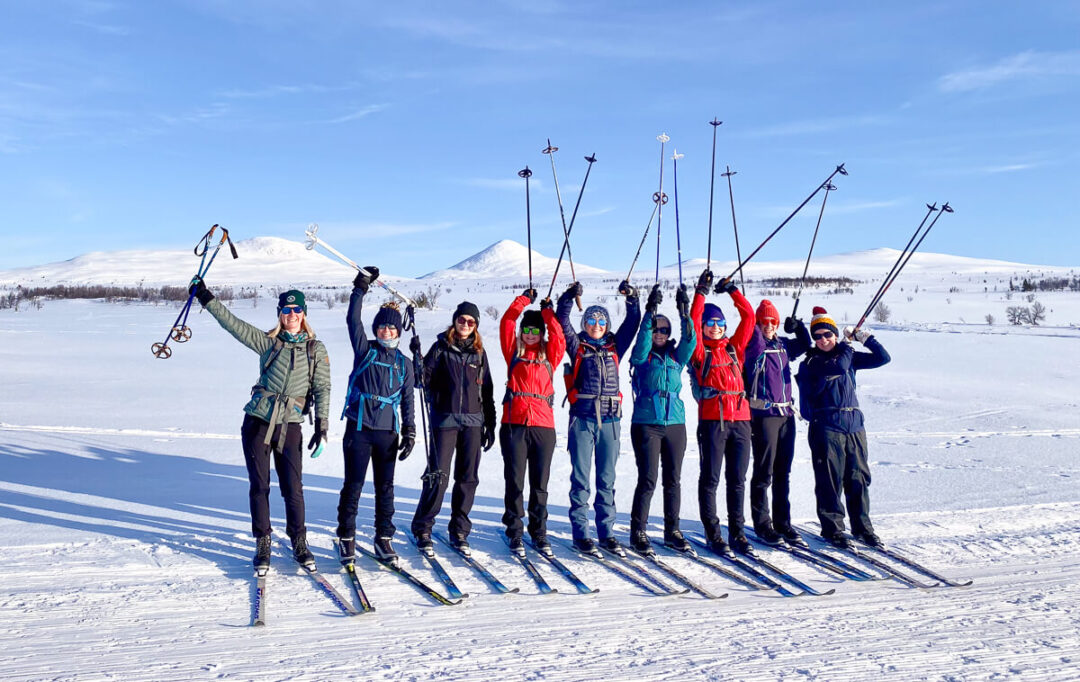
Cross-country skiing, langlauf, sometimes called Nordic skiing, feels a bit like “running with skis on” — you generate speed and momentum yourself (there’s no ski lift on these trips). We explore flat terrain, take on some uphill climbs and make some speed on the way down. You will fall, but not as much as in downhill skiing.
Picture yourself here
Beginner & Intermediate Trips
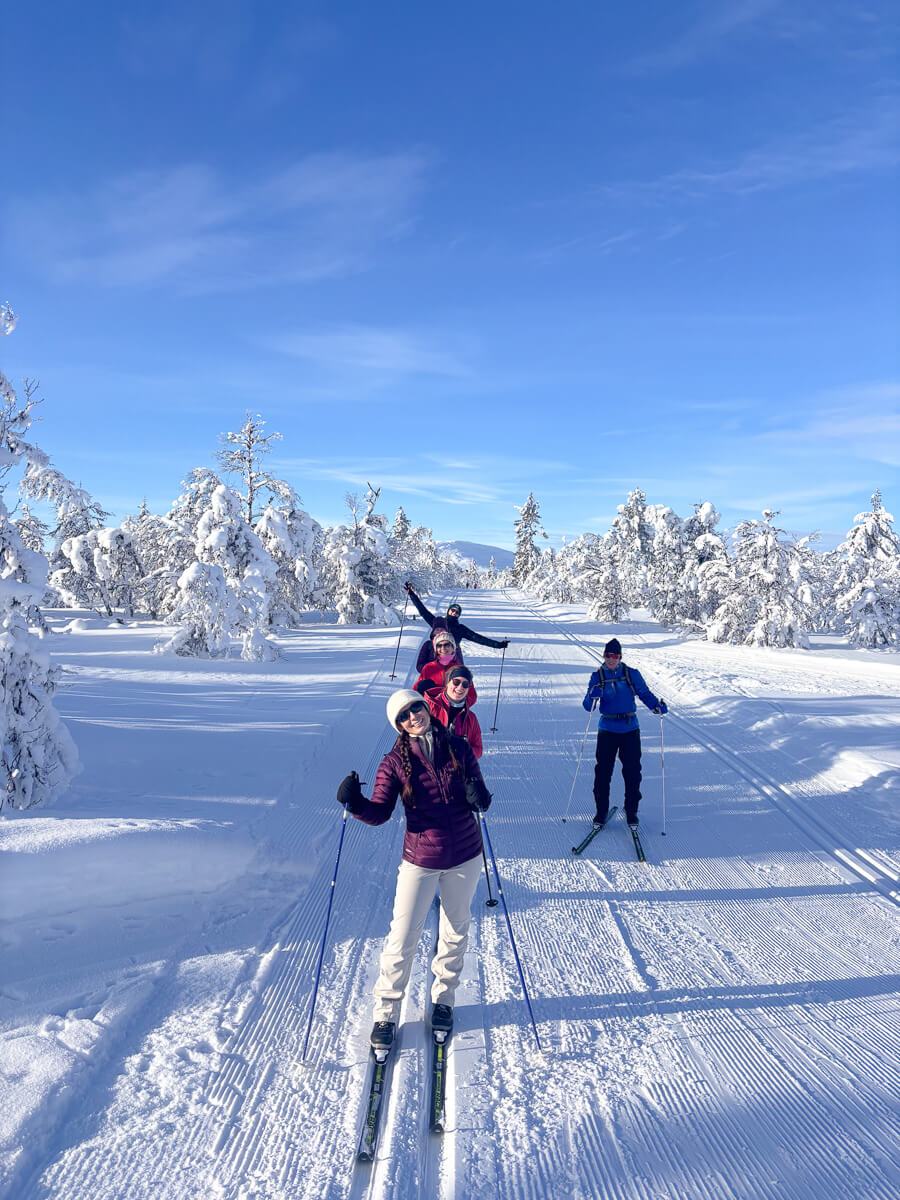
One thing we love about cross-country skiing is its fast learning curve; you’ll make real progress over just a few days. With our expert instructors, beginners will quickly learn how to use skinny skis to propel themselves through the snow. We’ll learn techniques for up and downhill, and then we’ll head out into the valleys on groomed trails for a backcountry adventure.
Cross-country skiing is a different sport compared to downhill skiing; you don’t rely on gravity, you have to create momentum yourself. So, even if you have alpine experience, you’ll also need to start as a beginner.
We run adventures for both beginners and intermediate cross-country skiers, so you can join a trip that suits your level.
Stunning spots, great snow
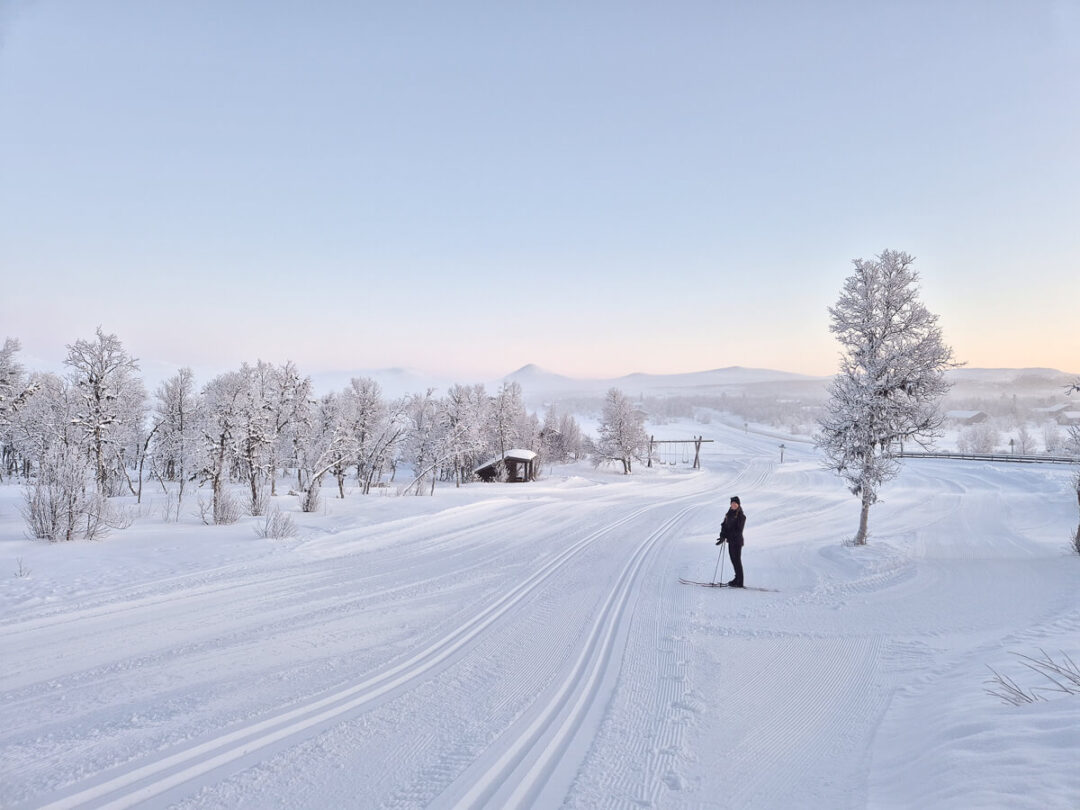
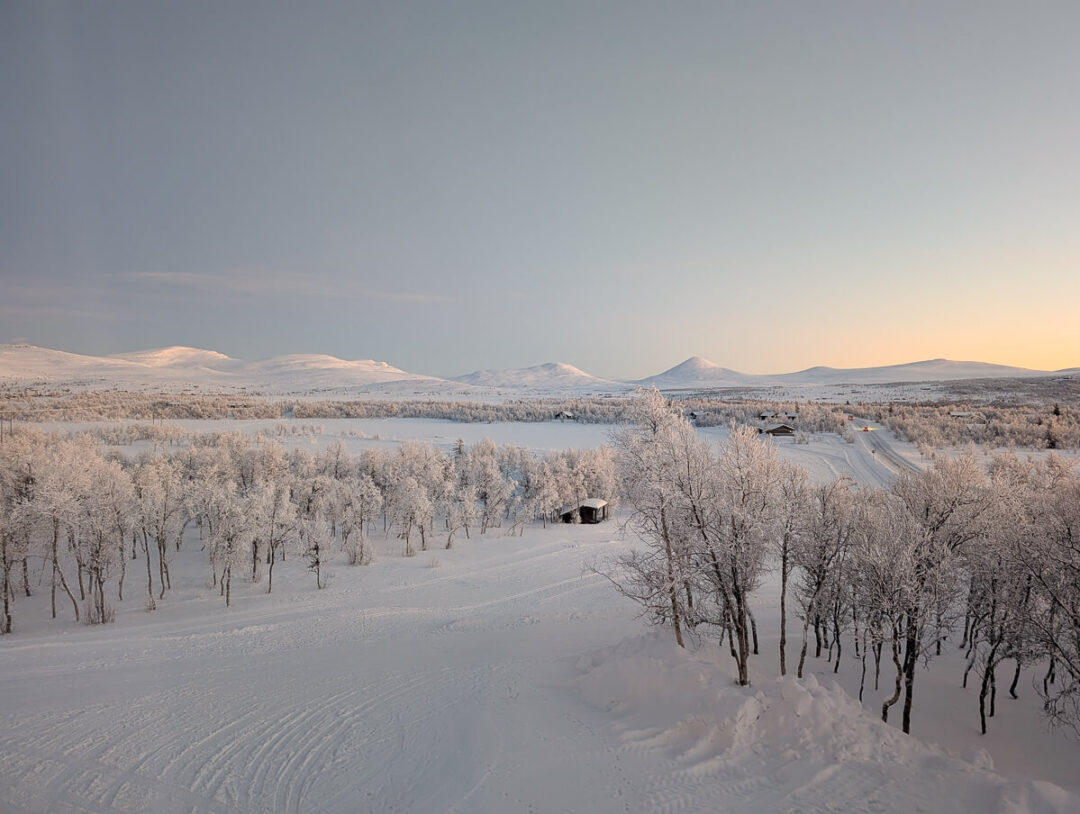
The mountain valleys in the Rondane National Park are perfect for learning. With reliable snow, gentle gradients and frozen lakes, you’ll quickly build confidence and technique.
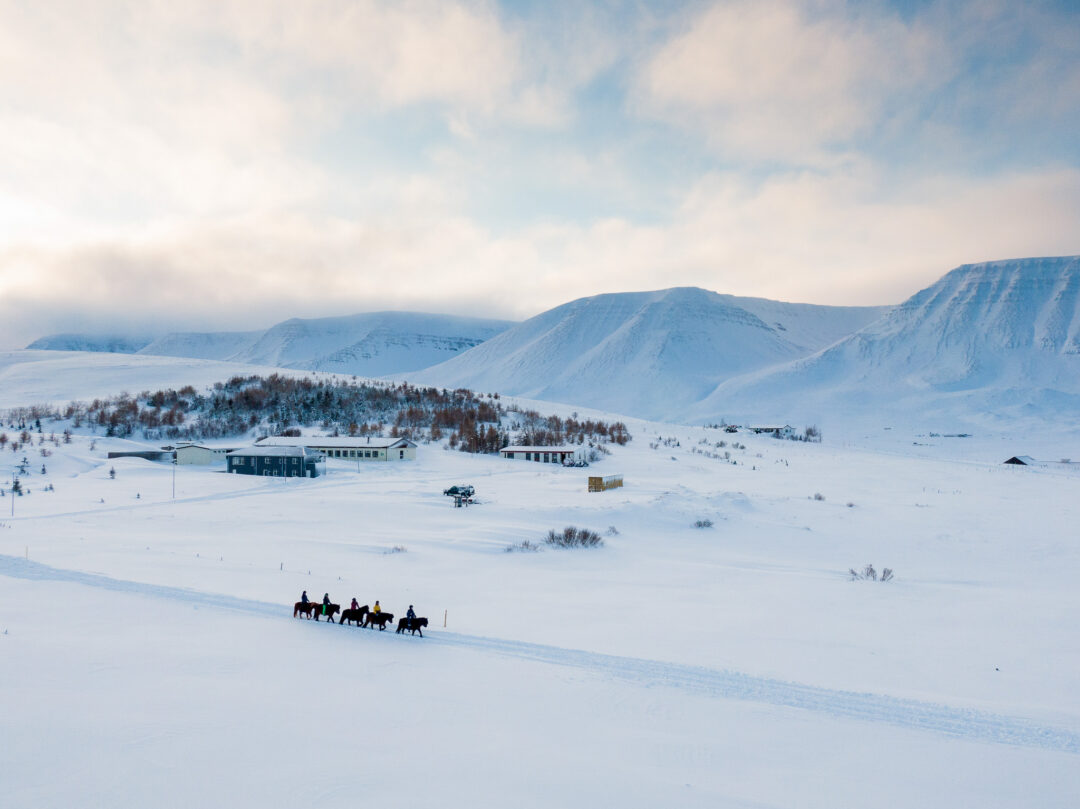
Ski through history in the Fljót Valley. Explore the rugged landscape in an area where skiing is part of day-to-day life.
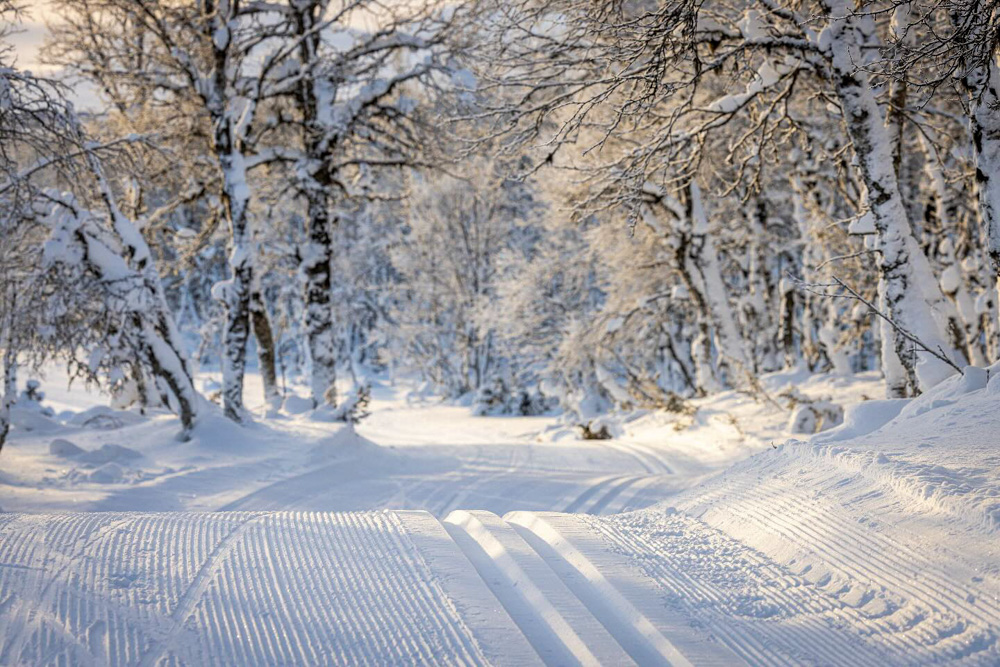
Bruksvallarna is a quiet village known for its great snow, strong ski culture, epic views, and direct access to one of Europe’s largest cross-country trail systems.
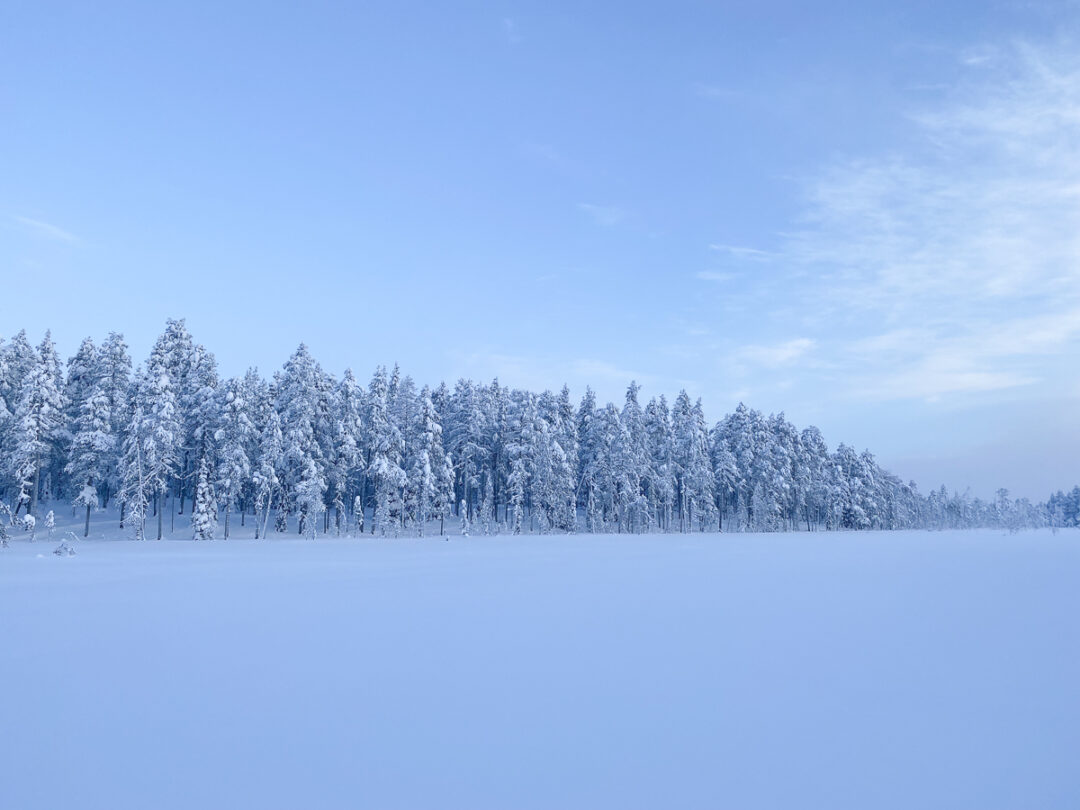
For the seasoned skiers, we head to the iconic Hossa National Park to ski through pristine forests, across frozen lakes and more challenging terrain.
A full winter experience
Some of our skiing adventures also include other winter activities; think snowshoeing, sledging, dips in icy lakes, and warming up in the sauna. Choose a cross-country skiing trip, or one of our multi-activity winter adventures for a taste of it all.
Cross Country Ski Holidays
On every winter skiing holiday, you get expert instruction from our local guides.
We create an environment where you have the space and time to learn, with zero pressure. Plus, we send a Gutsy Girls host who sorts logistics and planning – so you can switch off and enjoy.
We've got you covered
Cross-country skiing – sometimes called Nordic skiing, skilanglauf, or ski de fond – takes you through landscapes most winter travellers never see. Using a kick-and-glide technique closer to running or hiking than downhill skiing, you cover ground through snow covered landscapes under your own power, away from resort crowds and lift queues. It remains the dominant winter sport across Norway, Sweden and Finland, and the trail networks in Scandinavia are among the best in the world.
Almost everything. Downhill skiing uses lifts to get you up and gravity to bring you down so the skill is in the descent. Cross-country skiing uses your own legs for propulsion across varied terrain, with no lifts and no designated runs.
The equipment is also completely different. Cross-country skis are narrower and lighter, boots attach only at the toe so your heel lifts freely, and technique is built around generating momentum through gliding rather than controlling a descent. The physical demand is also different — downhill skiing is intense in short bursts; cross-country skiing is sustained endurance exercise over several hours. If you’ve only ever skied downhill, expect to start from scratch.
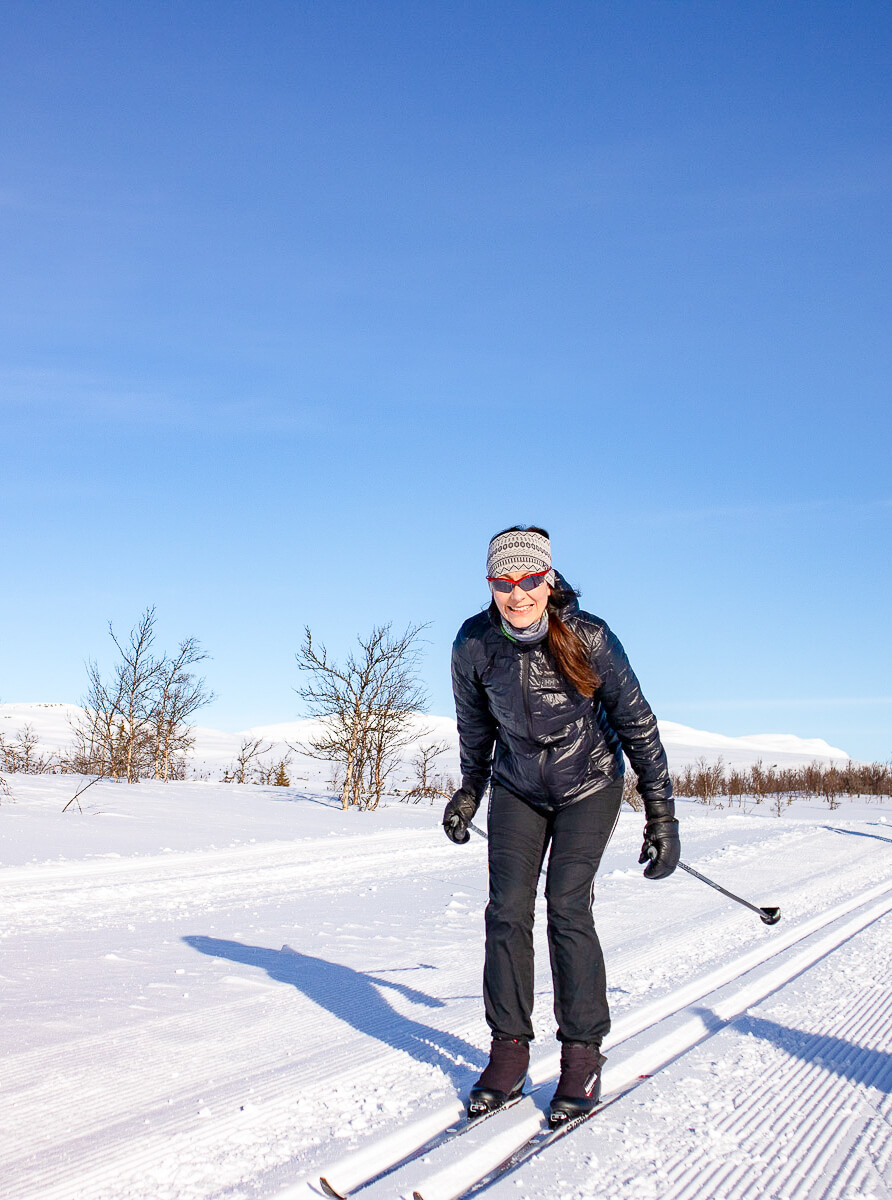
Classic and skate are two distinct techniques that use different equipment and movement patterns — they’re effectively two different sports that happen to share a name. Classic cross-country skiing uses parallel tracks set into the snow; you push one ski forward and glide on it, alternating legs in a long striding motion. It’s the technique most beginners start with. Skate skiing uses a V-shaped motion similar to ice skating. You push diagonally off each ski to generate speed, which requires wider groomed trails and considerably more fitness and coordination. Skate skiing is faster and harder to learn, which is why most beginner cross-country holidays focus exclusively on classic technique.
The basic forward motion – kick and glide on flat terrain – is straightforward to pick up in a day. What takes longer is making it efficient: generating real momentum, managing uphills without losing pace, and handling downhill sections confidently without the edge control of an alpine ski. The honest version: the first day feels awkward, the second starts to click, and by day three most people are covering ground and enjoying it. Falls happen throughout, particularly on descents, but they’re softer than when alpine skiing and part of the learning process.
The learning curve is much faster than downhill skiing. Most people are moving confidently and enjoying themselves within the first day of cross-country, which isn’t always the case with downhill. There’s also no chairlift anxiety, no steep black runs and no need to master parallel turns on a slope.
Most people can cover ground confidently on flat groomed trails within a day or two. Getting comfortable on uphills and downhills, where technique matters more and falls are more likely, can take most of a week though.
A dedicated beginner’s holiday of five to seven days, with full instruction, will take you from complete novice to someone who can ski several hours a day with real enjoyment. What you won’t have after a week is efficiency: experienced cross-country skiers make it look effortless because they’ve learned to generate power through gliding rather than just effort. That takes longer, and it’s what an intermediate trip is for.
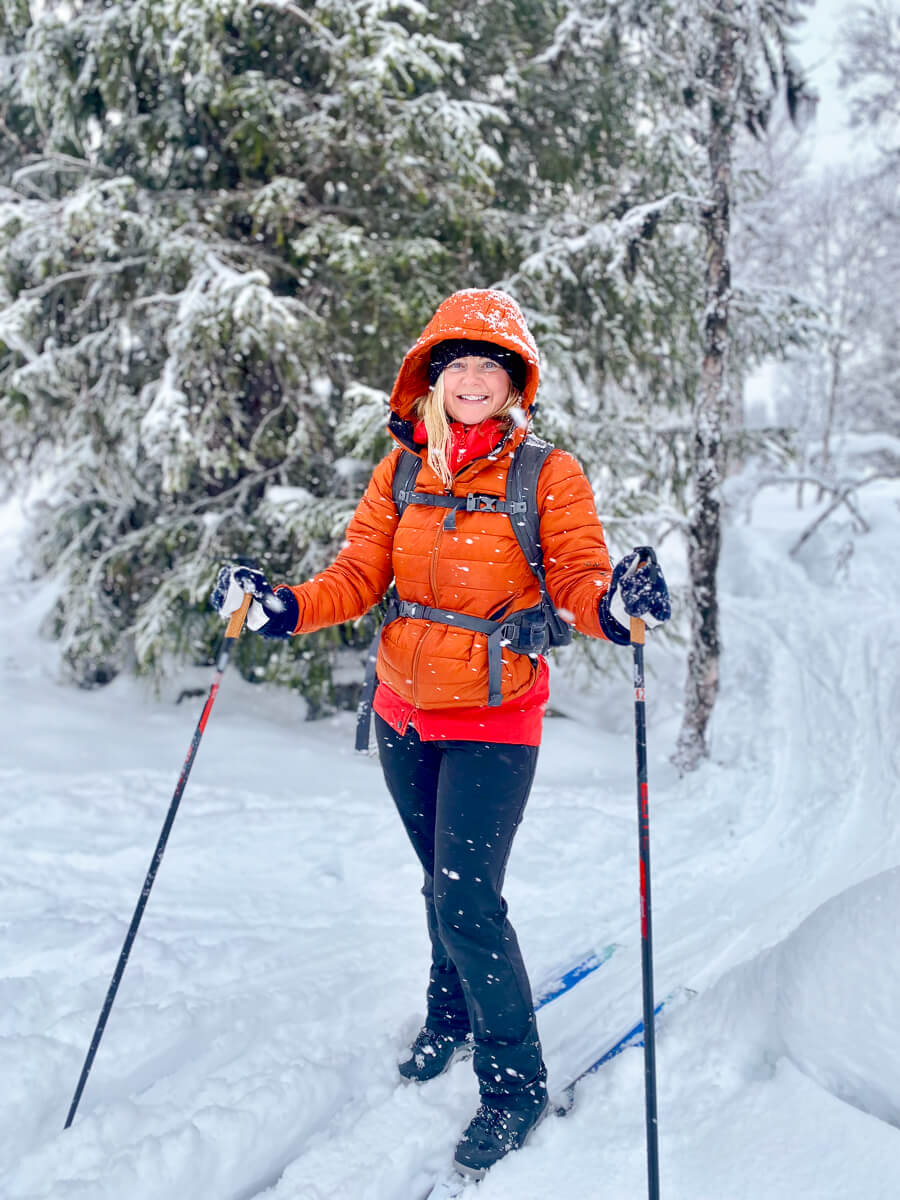
Cross-country skiing generates significant body heat and the biggest mistake beginners make is overdressing. Think running or cycling kit rather than ski holiday kit as you’ll be warm within minutes and sweating hard on uphills.
A moisture-wicking base layer, a light mid layer and a windproof outer is the standard setup, then you can add and remove layers as your body temperature dictates.
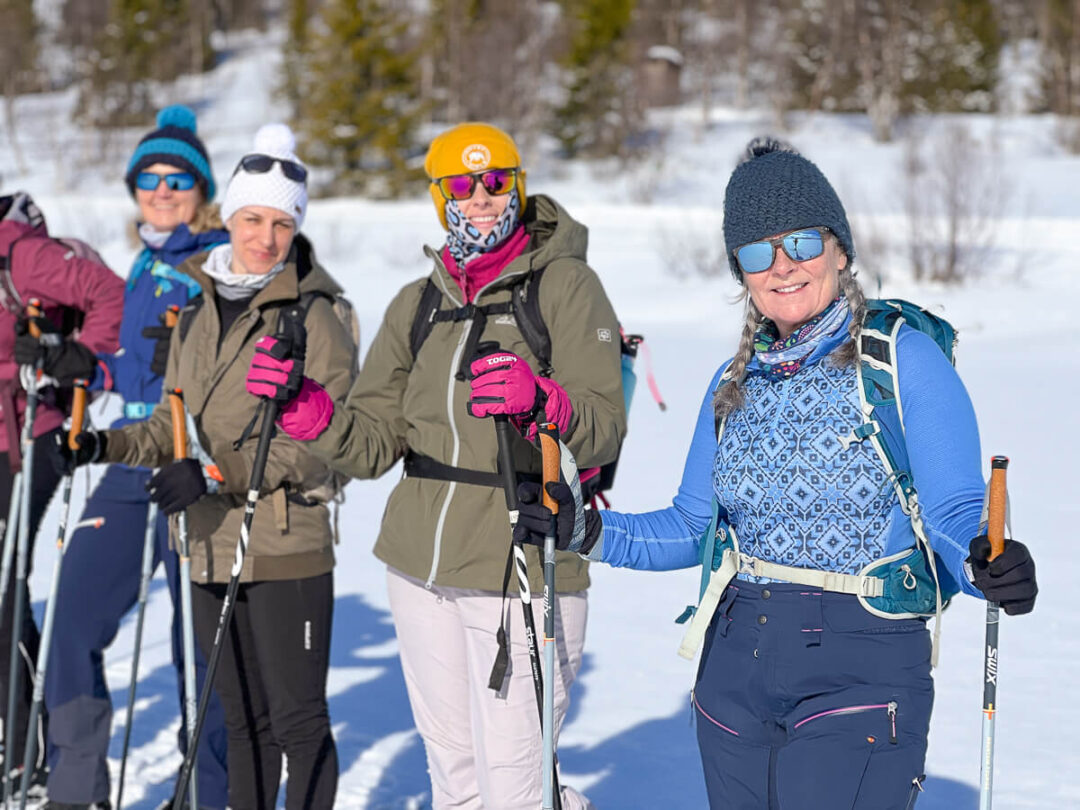
Most people starting out can find suitable items in their existing wardrobe if they exercise in winter. Avoid heavy insulated jackets or thick salopettes, designed for standing around on a chairlift. Thin gloves while moving, a warmer pair for breaks, hat, buff and goggles or sunglasses completes the kit.
Norway is the stronger choice for first-timers. The central Norwegian mountain valleys offer gentle gradients, reliable snow and frozen lakes that work as natural practice areas. It’s terrain that lets you build technique without being confronted by steep descents before you’re ready. Sweden’s terrain is hillier and faster, excellent once you have some confidence, but it’ll test you earlier. If you want to build a solid foundation, start in Norway.
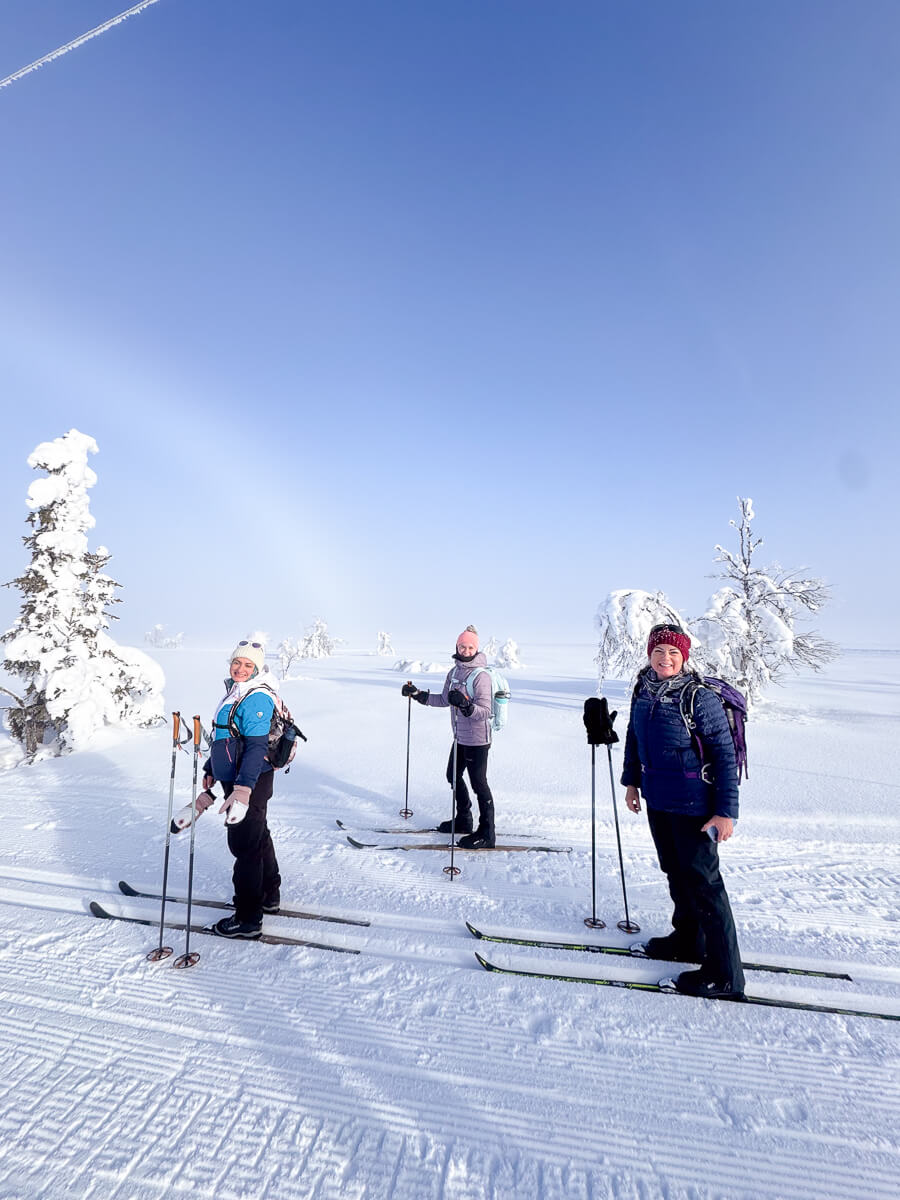
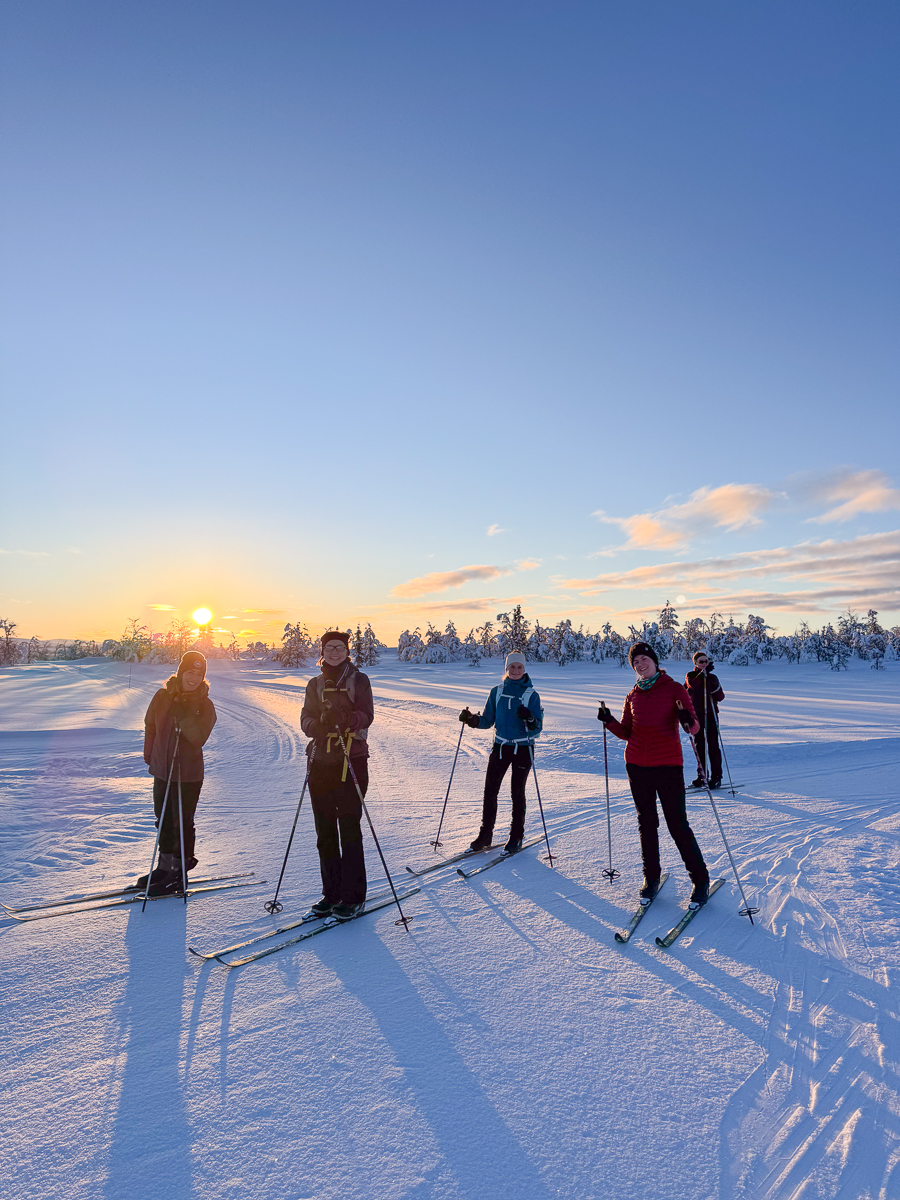
Very different from a standard ski holiday. There are no lift queues, no crowded pistes and no après-ski bars at the bottom of a run. You’re typically based at a mountain hotel or lodge and ski out directly onto trail networks through forests, across frozen lakes and up to mountain viewpoints. Days are structured around skiing sessions led by instructors, a break at midday, then more in the afternoon. Evenings are for food, sauna and recovery. It’s a really active holiday that leaves you tired by the end of each day in the best possible way.
Scandinavia is where cross-country skiing is taken most seriously, with the most extensive trail networks and the most reliable snow. Norway suits beginners best; Sweden offers more varied and challenging terrain. Finland is quieter and less well-known internationally, but the terrain and snow are excellent. For those who want an alpine setting, the Italian Dolomites and parts of Austria have established cross-country trail networks too, but for the classic Scandinavian experience, Norway and Sweden are where to go.
Fitter than most people expect. Cross-country skiing has been described as running with skis on. It’s a full-body workout that engages your legs, core and arms simultaneously and on a cross-country ski holiday you’ll be active for 6-7 hours daily, covering 8-15km. Long flat sections and uphill climbs are a big physical ask, not a gentle glide through snowy scenery.
As a benchmark: you should be doing regular cardio such as running, cycling or spin, not just walking. If sustained aerobic exercise for several hours is something you do regularly, you’ll be fine. If it isn’t, we recommend starting now otherwise the trip will be much harder than anticipated.
Norway and Sweden are the most consistent, with reliable snow from December through to April across the mountain regions. The cold is drier than UK winters and the snowpack builds steadily through the season rather than depending on a single dump. Finland is equally reliable further north. Scandinavian resorts don’t carry the same risk as alpine destinations of a green Christmas or rain at lower altitudes, the terrain and climate are really suited to winter snow. For cross-country skiing specifically, where you need snow on trails rather than just at altitude, Scandinavia is a safer bet than the Alps, where lower elevation tracks can be patchy early or late season.